INTERACTIVE ART INSTALLATIONS
for urban and public spaces
INTERACTIVE ART INSTALLATIONS
for urban and public spaces
Today, in all developed countries, interactive installations have become a powerful tool for shaping a city’s identity, attracting tourists, and turning ordinary streets into unique points of attraction. At SKYFORM STUDIO, we create interactive art objects that become true symbols of the city. Combining bold artistic vision, modern materials, and engineering precision, we deliver projects that engage people, inspire awe, and remain relevant for decades.
Why interactive installations matter
An interactive installation is not just decoration—it is an infrastructure of experiences that increases the value of an area and delivers measurable impact for both the city and business.
- Shapes the city’s identity — creating a recognizable symbol and a “calling card” for the location.
- Boosts the economy — increasing tourist flow, footfall, and interest from investors/developers.
- Generates media impact — driving organic PR, social media reach, and a steady stream of UGC content.
- Elevates the city’s status — reinforcing the image of a modern, innovative, and attractive environment.
Our approach to creating interactive installations
At SKYFORM STUDIO, we combine creativity and engineering technologies to build durable and expressive art objects:
- Custom concepts reflecting the spirit of the city and the context of the place.
- Materials resistant to weather conditions and time.
- Interactive elements that engage residents and visitors.
- Full cycle: from idea and design to installation and maintenance.
OUR CONCEPTS OF INTERACTIVE INSTALLATIONS
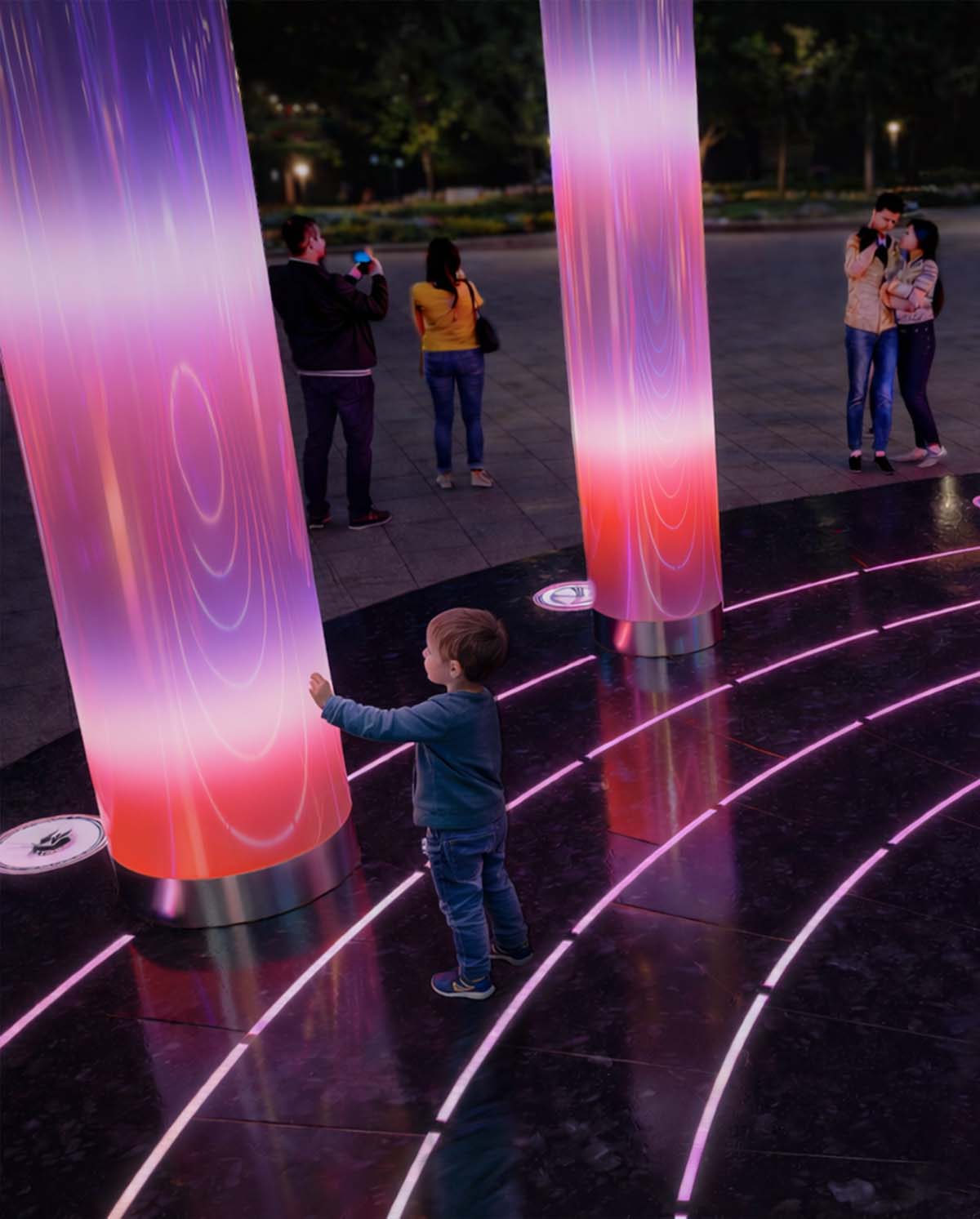
“Wealth of the Nation” is a monumental light-and-music installation that reveals the key national values of Kazakhstan through architecture, light, and sound. Fourteen four-meter columns arranged in a 14-meter-diameter circle form an integrated public space where the person becomes the center of the composition and an active participant in the experience.
Each column symbolizes one of the country’s riches — from historical foundations to contemporary aspirations — and possesses its own distinct light and sound identity. Upon touch, a dynamic scenario is activated: light rises vertically, and the space is filled with a unique sound fragment.
At the center stands a podium with a relief map of Kazakhstan, uniting the territorial and symbolic image of the country.
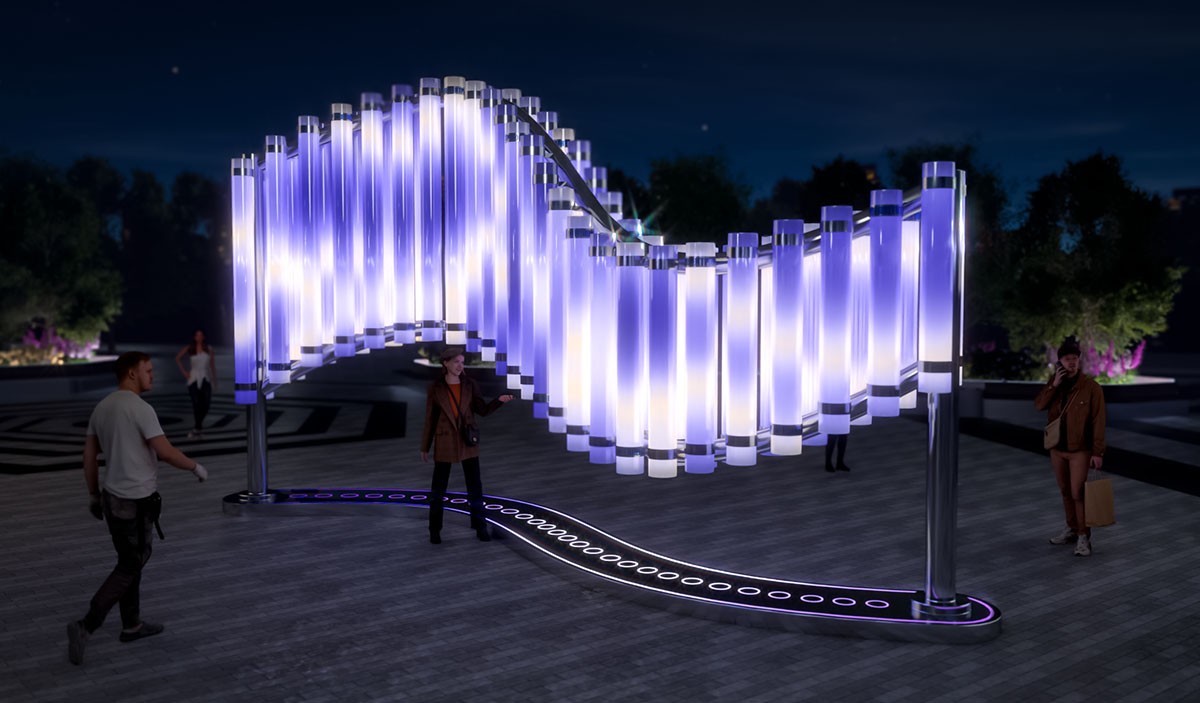
“Magic Flow” is an interactive light-and-sound installation where space responds to the presence of a person. Two wave-like lines composed of 50 light columns form a dynamic structure associated with water flow, sonic vibration, and a digital signal.
As viewers approach, the light intensifies, individual impulses appear, and musical notes emerge — the object transforms into a musical instrument that reacts to touch.
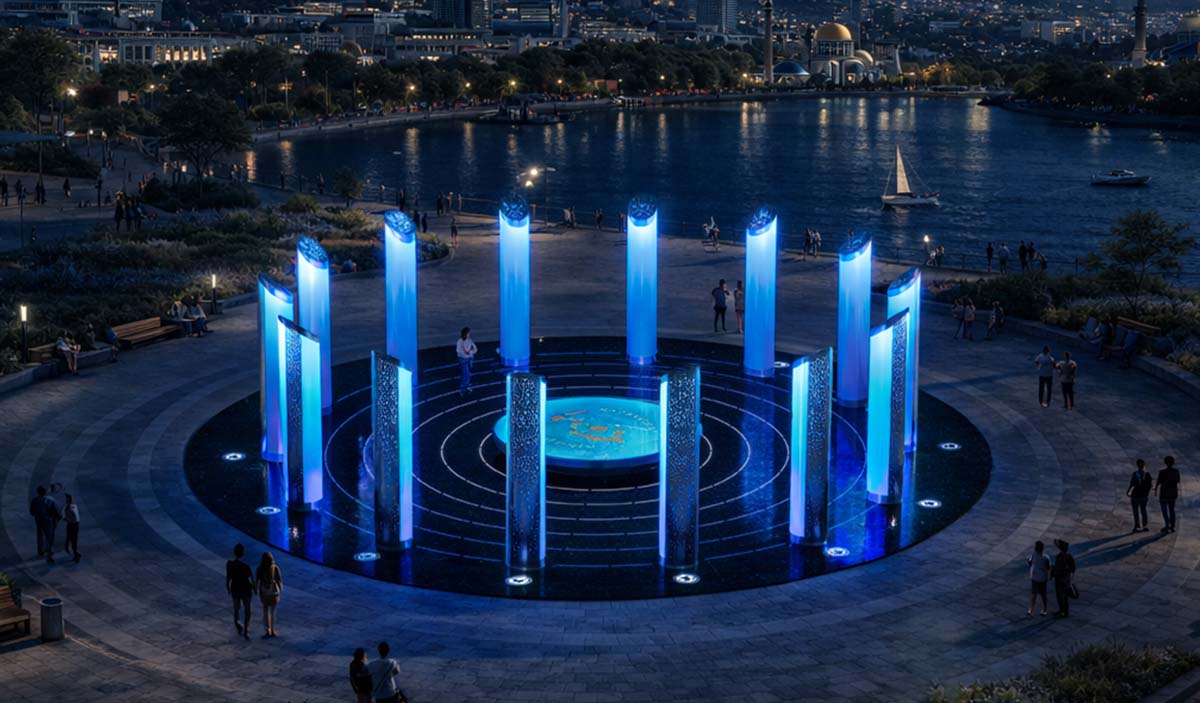
“Wealth of the Nation. Contemporary” is a contemporary light-and-music installation dedicated to the national values of Kazakhstan. Fourteen light columns form a circle of values — a space of unity where the person stands at the center of the composition.
Each column possesses its own light and sound identity: upon touch, an individual scenario is activated, while perforated codes create the image of the country’s digital DNA.
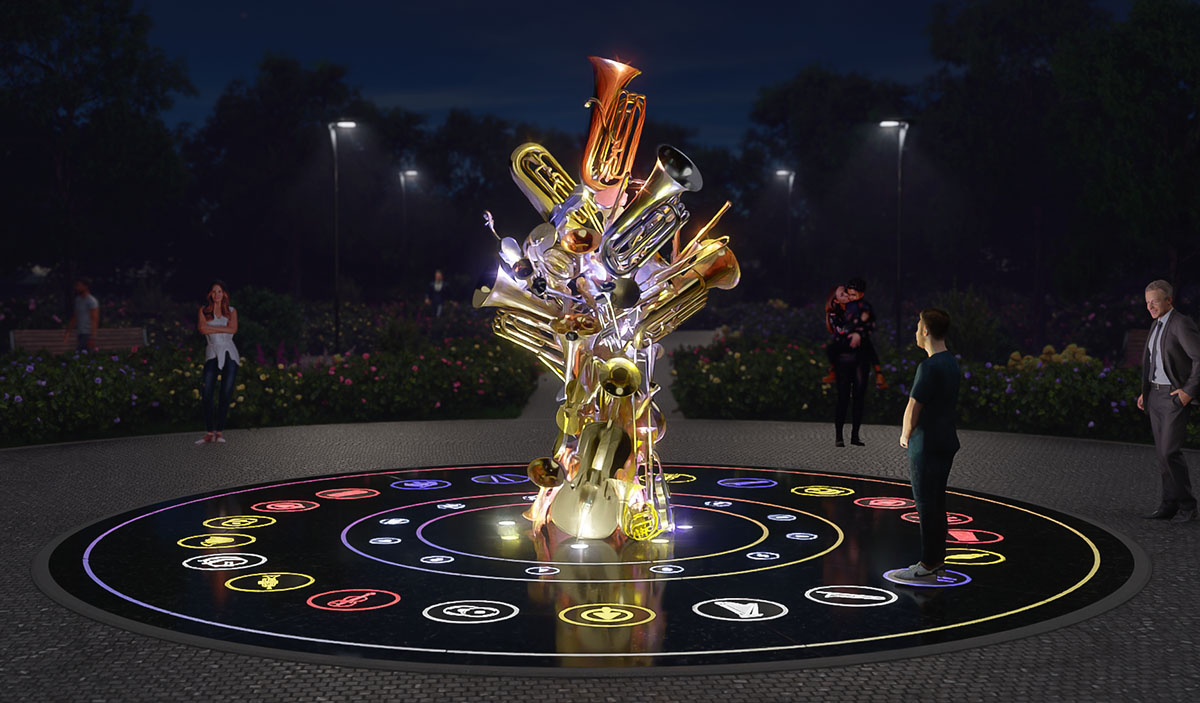
“Orchestra” is an interactive urban installation where a person becomes the musician of space. The central sculpture, 3.25 meters high and assembled from 63 musical instruments, symbolizes harmony and unity — both in an orchestra and in a city.
Sensor buttons are embedded into the granite plaza: by stepping on them, visitors amplify the sound of individual instruments, creating a live composition in real time. The music emerges from within the sculpture through an all-weather acoustic system, while light rings and architectural illumination respond to the rhythm, generating a fully immersive experience.
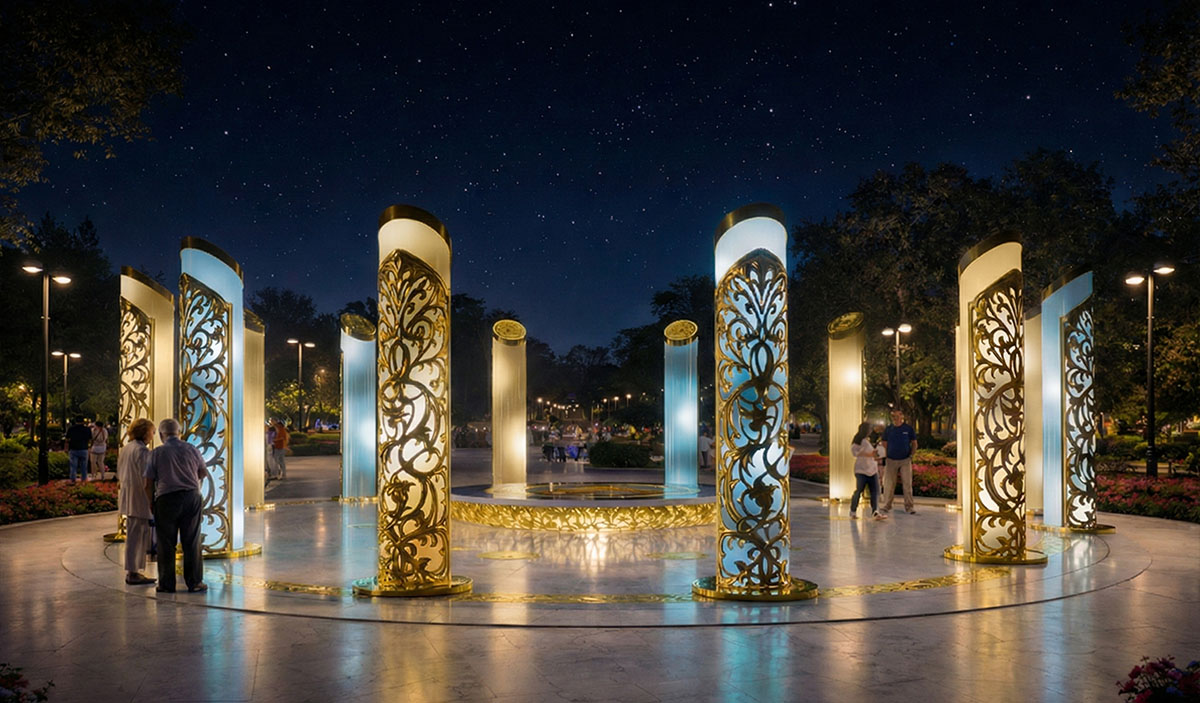
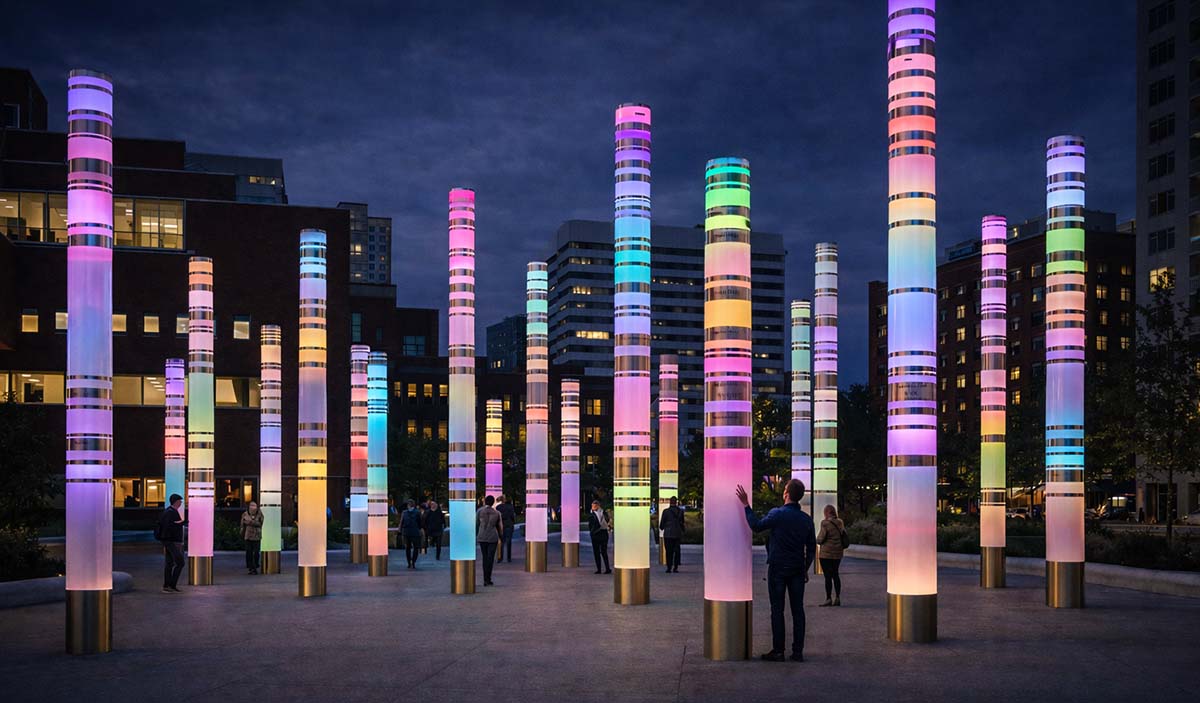
“Light of the Centuries” is a light-and-music installation that reveals twenty centuries of Kazakhstan’s history through the language of light and space. A composition of 20 columns forms an architecture of time, where each era resonates with its own rhythm and character.
The height of the columns reflects the demographics of the centuries, while golden rings symbolize the memory of generations. Upon touch, an individual light and sound response is activated, transforming history into a personal dialogue with the past.
FAQ: INTERACTIVE INSTALLATIONS for cities and businesses
Public art installations are large-scale works of contemporary art created specifically for public spaces such as city squares, parks, waterfronts, airports, train stations, museums, hotels, shopping malls, and other urban environments. Unlike museum exhibits, public art is accessible to everyone — it lives within the city, shapes the emotional perception of space, and makes it more expressive, inspiring, and memorable.
Modern public art projects combine art, architecture, design, and engineering, turning into powerful symbols of a place and cultural landmarks. They define the atmosphere of the urban environment, strengthen city branding, and serve as an important PR tool for commercial properties.
Why public art installations are created:
- They transform urban environments and shape a city’s unique identity.
- Strengthen the character and recognizability of a location.
- Increase the value and attractiveness of public and commercial spaces.
- Create new points of attraction for residents, tourists, and investors.
- Stimulate community development and cultural dialogue.
At SKYFORM STUDIO, we create distinctive public art installations that organically integrate into architecture and landscapes, highlight the identity of a territory, and form iconic landmarks that become city symbols while increasing cultural and investment potential.
Public art encompasses a wide range of artistic formats — from traditional monuments to high-tech multimedia environments. All of them serve the same purpose: to transform spaces, engage people, and highlight the unique identity of a place.
Main forms of public art:
- Sculptures and monuments. The most classical form of public art that defines the character of a space. These can be monumental works, abstract compositions, or figurative pieces reflecting history and culture. While traditional forms remain symbolic, they are increasingly giving way to more contemporary formats.
- Interactive spaces. One of the most in-demand trends today. Visitors become participants — floor panels and sensor tiles respond to steps with light and sound, multimedia tunnels create immersive effects, and sensor-equipped zones bring public spaces to life. This format works both day and night, generating “Instagrammable spaces” and PR opportunities.
- Kinetic installations. Moving art objects animated by wind, water, or precision-controlled winches. These include sculptures, façades, and large-scale compositions that respond to viewers, creating a sense of life and constant motion.
- Light art. Light sculptures, projection mapping, and media façades. Particularly impressive in the evening, they transform spaces into focal points of attraction.
- Sound art. Installations where sound is the primary medium — from sound sculptures and musical playgrounds to audio works using natural noises.
- Integration into architecture. Public art embedded into buildings and infrastructure: dynamic façades, art pavilions, or functional art such as benches and bridges that blend aesthetics with utility.
- Land art and eco projects. Installations integrated into nature: sculptures in parks and along waterfronts, eco-projects made of recycled materials, or works powered by renewable energy. They create harmony between people and the natural environment.
- Digital art. Holograms, multimedia panels, AR/VR installations. This format demonstrates how technology becomes part of art, shaping the imagery of the future.
In summary: Public art today is multifaceted — static or dynamic, interactive or digital. At SKYFORM STUDIO, we create solutions that not only beautify spaces but make them alive, engaging, and unforgettable.
The cost of SKYFORM STUDIO artworks is always calculated individually since each public sculpture or installation is a unique combination of art, engineering, and architecture. We follow the principle of full transparency: every client receives a detailed cost estimate that covers all stages — from concept design and 3D visualizations to production, delivery, and installation.
Key factors affecting cost:
- Size and scale. Larger works require more materials, production resources, and time, directly impacting the budget.
- Design and engineering complexity. Unique artistic forms, kinetic elements, interactive features, and non-standard structures require more work but create status-defining results.
- Materials. Premium materials such as artistic glass, bronze, stainless steel, or natural stone cost more than aluminum or composites but ensure durability and a prestigious appearance.
- Technology. LED lighting, sensors, multimedia systems, projection mapping, and specialized software add to the cost.
- Installation conditions. Foundations, soil reinforcement, site specifics, and geography influence pricing.
- Deadlines. Urgent projects with compressed timelines require extra resources.
- Documentation. A full package of drawings, visualizations, and animations costs more but guarantees precision.
- Artist’s fee. Covers creative work and the unique artistic vision of the project.
Approximate price ranges:
- Small art objects and interior sculptures — from 30,000 USD
- Medium-scale installations and sculptures — 50,000–200,000 USD
- Large public sculptures and complex installations (including kinetic and interactive) — from 200,000 USD and above (with no strict upper limit).
Our approach:
We offer flexible pricing and tailor solutions to project requirements. Clients receive not just an art object, but a unique landmark that enhances space, attracts attention, and builds the cultural and commercial identity of a place.
Timelines always depend on project specifics. At SKYFORM STUDIO, we carefully plan each stage to meet deadlines while ensuring perfect quality. On average, creating a public art object takes 3–4 months, but large-scale or technologically complex projects may extend to 6–12 months.
Factors affecting timelines:
- Project complexity. Simple sculptures are faster than kinetic or interactive works.
- Object size. Larger works require longer production, transport, and assembly.
- Materials. Stone carving takes longer than working with metal or glass.
- Technology. Kinetics, sensors, and lighting systems require additional time for development and testing.
- Site conditions. Terrain, foundation work, or underground utilities may extend the schedule.
- Approvals. Securing permits from authorities can take extra time.
Stages of implementation:
- Concept development — sketches and preliminary 3D visualizations.
- Technical design — drawings, calculations, specifications, and budget.
- Approvals — coordination with stakeholders and authorities.
- Production — manufacturing of components.
- Delivery — logistics and transport.
- Installation — on-site assembly and construction.
- Commissioning — testing mechanics, lighting, and interactive systems.
- Handover — project delivery with full documentation.
Our principle: We create detailed schedules, maintain regular client communication, and ensure transparency. SKYFORM STUDIO’s approach is to minimize production time without compromising artistic or technical quality.
Yes, at SKYFORM STUDIO 3D visualizations are a mandatory part of the design process. We understand how important it is for architects, developers, city officials, and property owners to preview the final look before production and installation.
Benefits of 3D visualization:
- Clarity. Realistic renderings show form, proportions, textures, materials, and lighting far better than sketches.
- Accuracy. Models are created with real dimensions and engineering parameters.
- Flexibility. Design changes are easy and cost-efficient at this stage.
- Dynamics. For kinetic and interactive projects, we create animations showing movement, light, and user interaction.
- Marketing. Renderings and videos can be used in investor presentations, partner meetings, PR, and media.
Workflow:
- Collect technical requirements and site data.
- Create detailed 3D models using professional software (including Syncronorm).
- Apply realistic textures and lighting.
- Render high-quality static images and animations.
- Present and refine visualizations based on feedback.
Our approach:
We use advanced visualization tools to ensure clients fully understand the project before construction begins. From small-scale works to monumental installations, SKYFORM STUDIO transforms bold ideas into clear, tangible images.
Durability of public art depends on three factors: materials, engineering, and regular maintenance. At SKYFORM STUDIO, we combine all three to ensure artworks remain expressive and reliable for decades.
Materials and protection:
We use weather-resistant materials such as stainless steel, bronze, aluminum, reinforced concrete, and treated natural stone. Surfaces are protected with:
- anti-corrosion coatings,
- UV-resistant finishes,
- anti-graffiti layers.
Engineering solutions:
Our team calculates load capacity, wind resistance, and foundation strength. We also ensure accessibility for inspection, cleaning, and repair.
Maintenance and service:
We provide clients with detailed service plans that include:
- regular inspections,
- surface cleaning,
- preventive care of engineering systems,
- technical support when needed.
Result:
This approach allows SKYFORM STUDIO installations to maintain visual appeal and structural reliability even under heavy use. Our works continue to inspire viewers and strengthen the identity of places for decades.
At SKYFORM STUDIO, we recognize that public art is built for decades and must be both aesthetically striking and technically reliable. That’s why we offer transparent, long-term warranties confirming the quality of materials, engineering, and craftsmanship.
Warranty coverage:
- Sculptures and static installations — standard 2-year warranty covering structural integrity, materials, and finishes.
- Structural elements (stainless steel, aluminum, bronze, reinforced concrete, natural stone) — extended warranty up to 5 years depending on the project.
- Protective coatings and finishes — coverage against corrosion, UV damage, and defects during the warranty period.
- Kinetic and technological objects — warranty on mechanisms, lighting, and control systems provided individually based on project specifics.
What the warranty covers:
- Defects in materials (cracks, corrosion, structural damage).
- Repair or replacement of faulty components.
- Correction of manufacturing defects (welding, assembly).
- Compliance with international safety and durability standards.
Service and support:
We recommend pairing warranty coverage with regular technical maintenance. Optional service contracts include inspections, cleaning, preventive measures, and minor repairs. This approach extends lifespan and reduces future costs.
Result:
Our warranty is not just a legal guarantee — it reflects SKYFORM STUDIO’s philosophy: to create artworks that preserve their artistic and technical excellence for decades.
Yes — interactive public art is one of the fastest-growing trends in the field. Unlike static monuments, interactive installations “live” through engagement with people and the environment, inviting participation in real time. This makes them not only visually striking but also memorable and emotionally engaging.
Our approach at SKYFORM STUDIO:
We design artworks that turn spaces into living platforms for interaction. To achieve this, we integrate technologies such as:
- motion and touch sensors,
- interactive lighting systems (DMX, LED),
- soundscapes and responsive audio,
- kinetic moving elements,
- mobile apps and AR/VR layers for digital engagement.
Significance of interactive public art:
Interactive installations transform urban spaces into dynamic environments. They spark curiosity, encourage social exchange, and create emotional bonds between people and place.
For cities, airports, malls, museums, and cultural institutions, interactive art is more than decoration — it is a magnet for visitors, boosting engagement, enhancing identity, and building strong cultural brands.
Absolutely. SKYFORM STUDIO actively collaborates with architects, interior designers, landscape architects, engineers, and other specialists. We understand that public art is often part of a larger architectural or urban concept and must seamlessly integrate into it.
Collaboration formats:
- Consulting. Expert advice on art forms, materials, technologies, and engineering solutions.
- Concept co-creation. Working hand-in-hand with design teams to merge artistic vision with architectural context.
- Technical development. Full engineering package including load calculations, construction schemes, and control systems.
- Production and installation. High-quality fabrication and assembly based on approved designs.
- Artistic supervision. On-site monitoring to ensure flawless execution.
Benefits of working with SKYFORM STUDIO:
- Expert synergy. Combining knowledge of art, architecture, and engineering for holistic results.
- Efficiency. Clear role distribution streamlines workflow and saves time.
- Understanding. Open communication ensures accurate execution of project goals.
- Uniqueness. Joint work results in art objects that become cultural symbols of their environment.
Our goal is to create not just an addition to a project, but an iconic centerpiece that enhances identity and inspires pride.
At SKYFORM STUDIO, we make commissioning a public art project simple and transparent. Each project is based on close collaboration: we listen carefully, adapt to your goals, and transform your vision into a landmark art object.
Step 1. Initial contact
Reach us via:
- Phone:
USA: +1 (312) 877-2681
Kazakhstan: +7 (727) 311-53-82 - Email:
USA: info@skyformstudio.com
Kazakhstan: infoKZ@skyformstudio.com - Website form: fill in project details.
Step 2. Consultation
We organize a meeting (in-person or online) to clarify goals, share expertise, and discuss potential timelines and budget.
Step 3. Concept development
We create 3D visualizations and animations showing how the artwork will look. Feedback is incorporated until the concept is approved.
Step 4. Agreement and contract
The contract defines:
- object description (size, materials, technologies),
- production and installation timelines,
- costs and payment schedule,
- warranty and maintenance conditions.
Step 5. Technical documentation
Preparation of detailed drawings, calculations, and material specifications.
Step 6. Production
Fabrication of components with strict quality control.
Step 7. Delivery and installation
Full logistics and professional assembly on-site.
Step 8. Commissioning and handover
Testing, adjustments, delivery of documentation, and staff training (if required).
Step 9. Long-term support
Maintenance services ensure reliable operation for decades.
Our commitment:
We provide transparency, flexibility, and consistent communication at every stage. With SKYFORM STUDIO, you receive not just an artwork, but a cultural landmark that becomes a point of attraction and a symbol of pride for cities, communities, and brands.
TRANSFORM YOUR SPACE WITH US!
We will create an art piece for you that will become a true center of attraction.