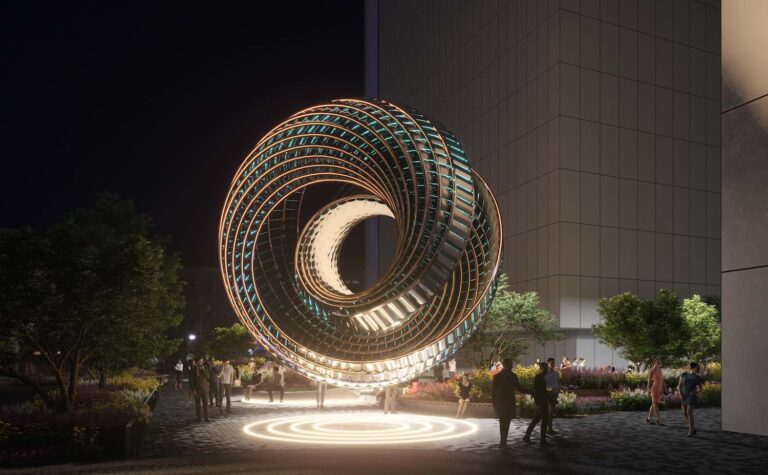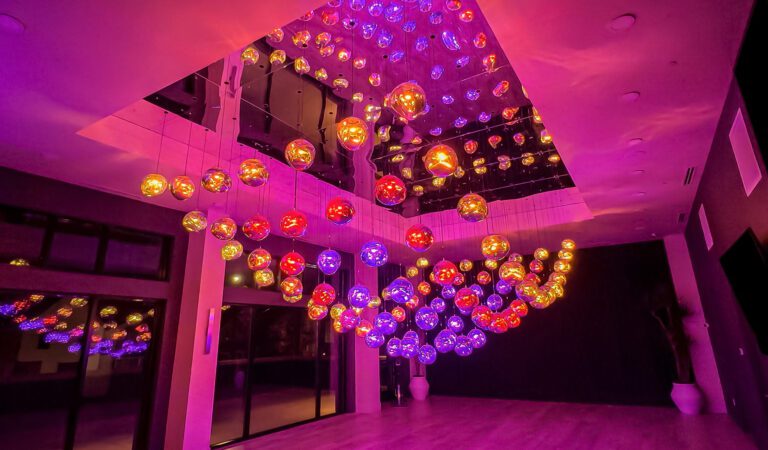
Large contemporary buildings rarely function as purely architectural objects. Airports, museums, shopping centers and cultural districts are complex spatial environments that accommodate thousands of people moving through them every day. Within these environments, designers increasingly search for ways to introduce visual focus and spatial identity.
This is where kinetic art becomes particularly relevant. The question of what is kinetic art is no longer limited to art history or gallery practice. In architecture and urban design, kinetic installations operate as spatial devices. They introduce movement into otherwise static environments, helping structure perception within large interiors and open public spaces.
Instead of acting as decorative elements, kinetic sculptures often become architectural landmarks. Their motion attracts attention, organizes spatial hierarchy and creates memorable experiences within environments that might otherwise feel anonymous.
What is kinetic art
The definition of kinetic art describes artworks that incorporate real physical movement as part of their form or concept. The word “kinetic” comes from the Greek kinesis, meaning motion. In artistic practice, this movement may be generated through natural forces such as wind or gravity, through mechanical systems, or through digitally controlled mechanisms.
To define kinetic art in architectural contexts, movement must be understood as an additional spatial dimension. A kinetic sculpture does not exist as a fixed composition. Instead, it evolves over time. The installation continuously changes its form, producing shifting visual configurations that alter the perception of space.
This idea emerged during the twentieth-century kinetic art movement, when artists began experimenting with motion as a fundamental element of artistic expression. Artists such as Naum Gabo and László Moholy-Nagy explored the relationship between movement, light and space. Later, Alexander Calder introduced mobile sculptures that responded to air currents, demonstrating how balanced forms could create constantly evolving compositions.
Today, kinetic art has expanded beyond galleries into architectural environments where movement interacts directly with scale, circulation and spatial perception.
Kinetic sculpture definition in architecture
When discussing what kinetic sculptures are, scale becomes an essential factor. Contemporary kinetic installations often occupy large spatial volumes such as atriums, plazas and airport terminals.
A kinetic sculpture definition in architectural environments refers to a sculptural system designed to move as part of the spatial composition of a building or landscape. The movement may be subtle—slow oscillations or rotations—or highly choreographed sequences controlled by digital systems.
These installations transform large interiors by introducing dynamic focal points. Because the human eye is naturally drawn to motion, kinetic sculptures immediately capture attention. This makes them particularly effective in environments where visitors must navigate complex spatial layouts.
As a result, sculptures that move are called kinetic sculptures, but in architecture they also perform an important spatial function. They establish orientation points and visual hierarchy within large public environments.

Landmark kinetic installations around the world
Some of the most influential kinetic artworks today are integrated directly into major architectural projects.
One of the most famous examples is Kinetic Rain at Singapore’s Changi Airport Terminal 1. Suspended above the escalator hall, the installation consists of more than 1,200 bronze droplets attached to motorized cables. The droplets rise and fall in synchronized patterns, forming fluid shapes inspired by flight. The installation transforms the terminal interior into a constantly evolving visual experience and acts as a landmark within the building.
Airports frequently incorporate kinetic installations because of the scale of their interiors. At Chicago O’Hare International Airport, large digital kinetic installations animate concourses and create immersive spatial experiences for travelers moving through long corridors.
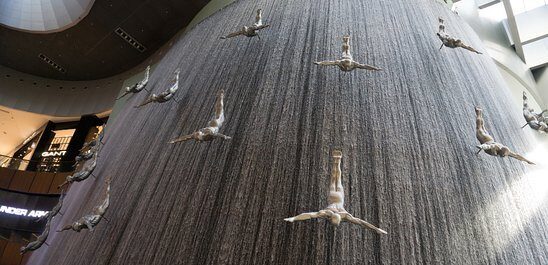
Another well-known installation appears in the Dubai Mall. In the central atrium, a dramatic waterfall sculpture featuring diving figures descends through multiple floors of the mall. The flowing water introduces motion into the enormous interior space and provides a clear visual reference point within the building.
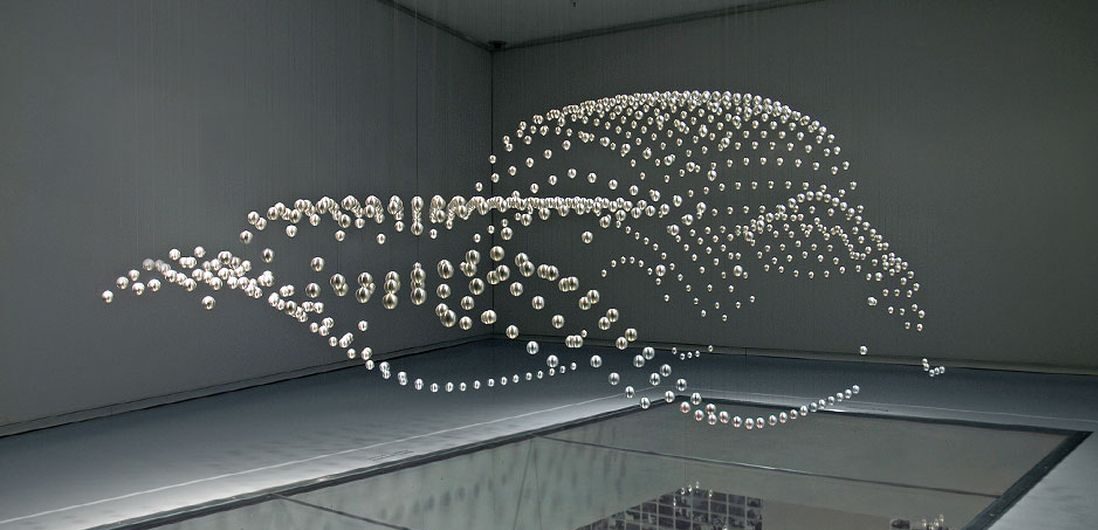
Museums have also embraced kinetic works. At the BMW Museum in Munich, suspended sculptural elements appear to float through the central atrium, visually echoing the concept of motion central to automotive engineering. The installation reinforces the narrative of movement embedded within the architecture of the museum itself.
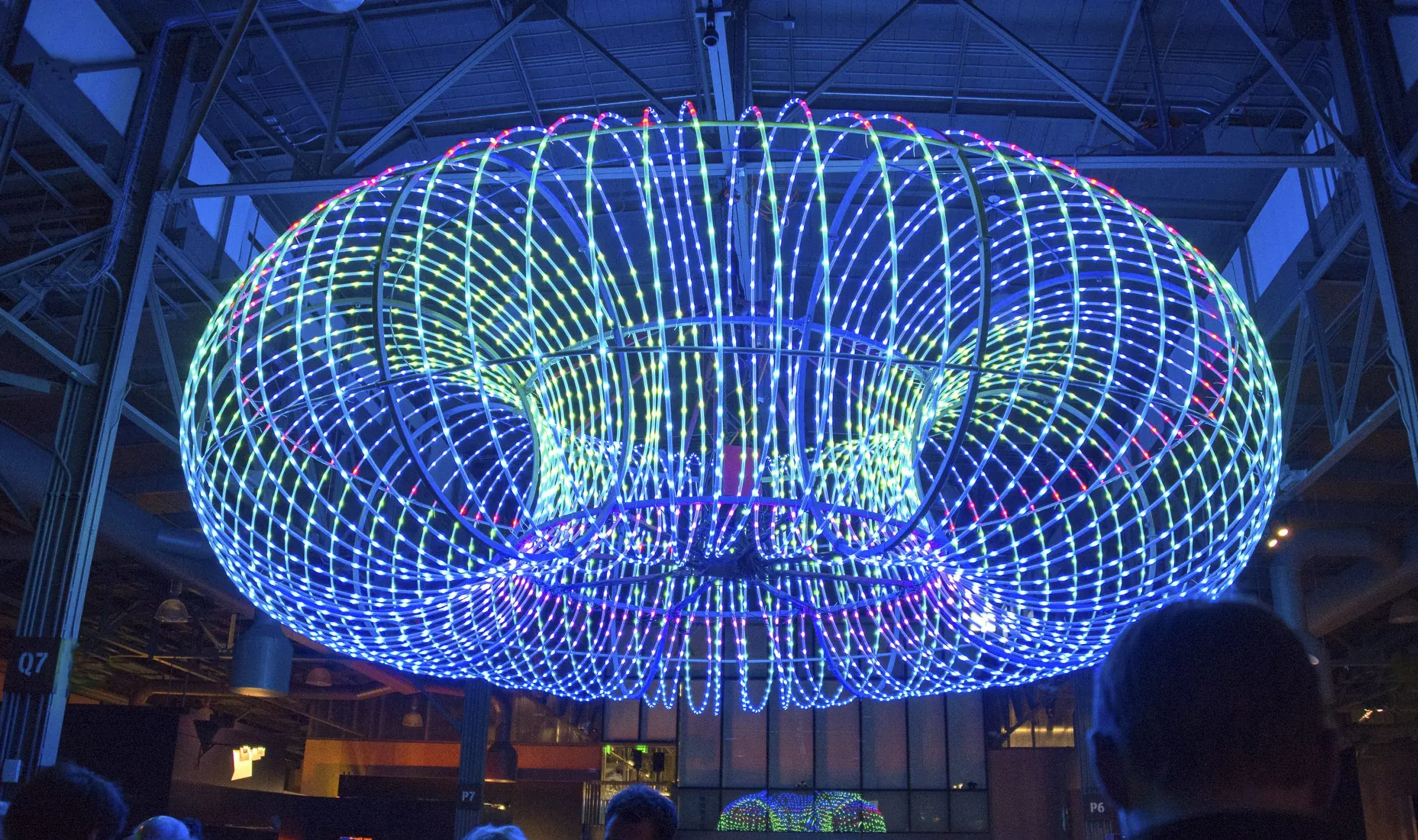
Environmental kinetic sculptures represent another important category. Artist Ned Kahn has created installations that respond directly to wind movement. At the Exploratorium in San Francisco, thousands of reflective panels ripple across the building façade in response to coastal air currents. The building envelope becomes a dynamic surface that reveals otherwise invisible environmental forces.
Similarly, at Brisbane Airport, Kahn designed a kinetic façade composed of lightweight aluminum panels that move with shifting wind patterns. The installation transforms the terminal exterior into a constantly changing visual field.
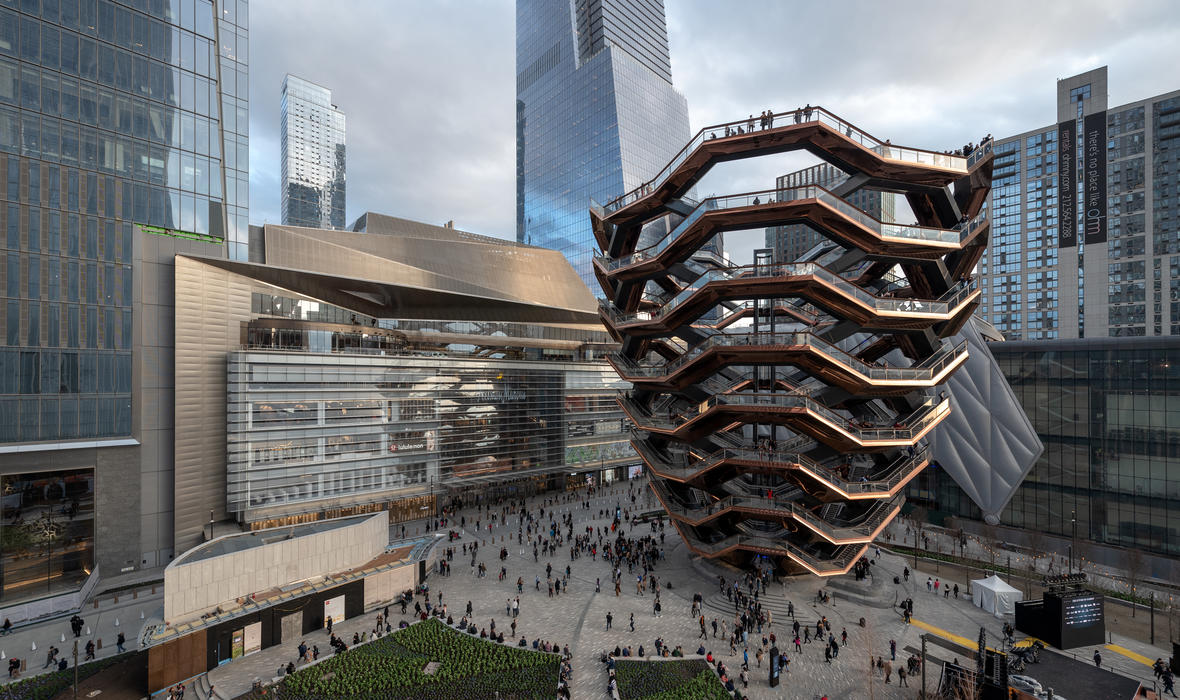
Large public spaces have also embraced kinetic sculpture. At Hudson Yards in New York, monumental installations occupy plazas and open spaces between towers, helping structure the urban environment of the district.
These examples illustrate how kinetic installations increasingly function as architectural landmarks within contemporary developments.
Kinetic installations in large architectural environments
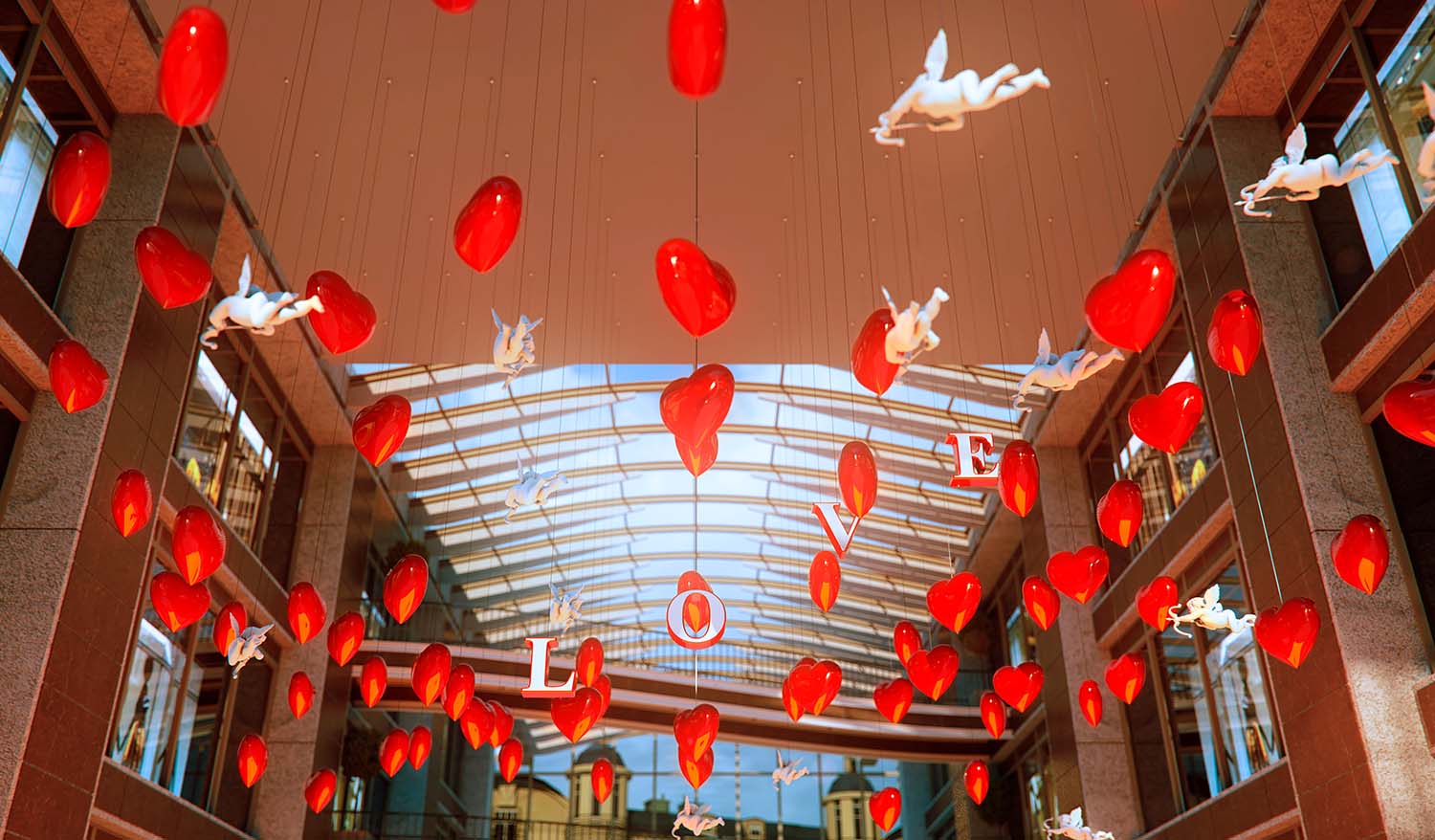
Modern architecture often contains spaces comparable in scale to public squares. Airport terminals, shopping malls and cultural complexes frequently include atriums reaching heights of thirty or forty meters.
Without strong visual anchors, these environments can feel disorienting. Visitors may struggle to understand spatial relationships within large open interiors.
Kinetic installations address this challenge by introducing dynamic focal points. Because movement naturally attracts attention, a kinetic sculpture becomes immediately visible within a large space.
Architects often position these installations at key circulation nodes—junctions where multiple paths intersect. Suspended sculptures placed above escalators, entrances or atrium centers become intuitive orientation markers.
Visitors navigating large buildings unconsciously use these landmarks to understand their position within the environment. In this sense, kinetic installations function similarly to towers, domes or monuments in historic cities.
At Skyform Studio, kinetic installations are conceived precisely with these spatial principles in mind. Projects developed for airports, commercial centers and public environments combine sculptural design, engineering systems and digital technologies to create landmark elements that structure large architectural spaces.
How kinetic sculptures work
Understanding how kinetic sculptures work reveals the close relationship between art and engineering.
Many installations rely on mechanical systems. Motors, cables and rotating joints allow sculptural elements to move in carefully choreographed sequences. In large installations, hundreds of individual components may move simultaneously.
Digital control systems often coordinate these movements. Programmable software synchronizes motion patterns, speed and timing. The resulting sequences may appear fluid and organic even though they are precisely engineered.
Other kinetic sculptures rely on environmental forces. Wind-powered installations use carefully balanced forms that respond to air currents. Even small variations in wind speed can generate visible movement.
Sensors and responsive technologies are also increasingly integrated into kinetic installations. These systems allow sculptures to react to environmental data such as light levels, wind speed or human presence.
This integration of sculpture, engineering and digital technology has expanded the possibilities of kinetic artistry in contemporary architecture.

Kinetic art and sustainable technology
One of the most interesting directions in kinetic art involves environmental responsiveness.
Wind-driven sculptures demonstrate how natural forces can generate movement without electrical power. Installations powered by airflow or gravity align with broader architectural goals of sustainability and adaptive design.
Some installations also incorporate responsive lighting systems that adjust to daylight conditions or environmental changes. These systems allow kinetic sculptures to remain visually active while minimizing energy consumption.
This intersection between kinetic art and sustainable technology innovations suggests a future in which artworks may function as environmental indicators as well as visual landmarks.
As cities increasingly prioritize sustainable design, kinetic installations may become part of responsive architectural systems that interact with climate and environmental conditions.
Characteristics of kinetic art
Several defining kinetic art characteristics distinguish these works from traditional sculpture.
The most obvious characteristic is movement. Kinetic artworks change continuously over time, creating evolving visual compositions.
Another important characteristic is scale. While early kinetic sculptures were often small gallery objects, contemporary installations frequently operate at architectural scale, occupying entire atriums or building façades.
Kinetic artworks also introduce temporality into architecture. Because the installation constantly changes, the spatial experience evolves throughout the day.
Finally, kinetic installations often emerge through collaboration between artists, engineers and architects. These interdisciplinary processes allow artworks to operate simultaneously as sculpture and architectural infrastructure.
Kinetic art has evolved from experimental sculpture into an important element of contemporary architecture and urban design. Today, kinetic installations appear in airports, museums, commercial centers and public plazas around the world.
Their movement introduces rhythm and visual focus into large environments, helping structure spatial perception and create memorable landmarks.
For architects and urban designers, kinetic sculptures offer more than aesthetic spectacle. They provide tools for shaping how people experience space—guiding orientation, reinforcing identity and transforming static environments into dynamic public places.
As cities continue to explore interactive and responsive forms of architecture, kinetic art will likely play an increasingly important role in defining the future of public space.
Frequently asked questions (FAQ)
Kinetic art refers to artworks that incorporate real physical movement as part of their form or concept. The motion may be generated by mechanical systems, environmental forces such as wind, or digital technologies.
A kinetic sculpture is a type of artwork designed to move. The movement is an essential element of the artwork and shapes how it is perceived over time.
Kinetic sculptures may use motors, cables and rotating joints to produce controlled movement. Other installations rely on wind, gravity or responsive technologies that react to environmental conditions.
Kinetic installations frequently appear in large architectural environments such as airports, museums, public plazas, cultural districts and commercial centers where movement can animate large spaces.
Movement naturally attracts attention. Kinetic sculptures therefore help create landmarks, structure spatial hierarchy and improve orientation within large public environments.
Author of the article