In contemporary commercial real estate, architecture alone rarely defines the success of a building. Office towers, mixed-use complexes, retail centers, and corporate campuses increasingly compete through experience rather than purely through floor area or location. Developers today recognize that successful projects must function not only as buildings but also as destinations.
This shift explains the growing integration of interactive art in commercial buildings. Over the past decade, kinetic sculptures, digital façades, interactive fountains, and responsive media installations have become key tools in placemaking strategies. These installations help developers transform otherwise neutral architectural environments into recognizable landmarks that attract visitors, strengthen tenant demand, and increase long-term asset value.
In many cases, public art in commercial real estate functions as a spatial infrastructure rather than decoration. When carefully planned, installations influence circulation patterns, encourage longer visitor stays, and reinforce the identity of the development within the urban landscape.
For developers, the question is no longer whether art belongs in commercial buildings, but how it can be integrated strategically to maximize both spatial and financial impact.
Why commercial buildings use public art
Historically, developers commissioned sculptures primarily for symbolic reasons — to communicate prestige or cultural investment. Many corporate plazas in financial districts contain monumental artworks intended to signal institutional stability and civic engagement.
Today the logic has evolved. Public art is increasingly used as a placemaking strategy that shapes how people experience space.
Large commercial developments often contain vast plazas, atriums, and circulation corridors that can feel visually neutral. Without strong spatial anchors, these environments lack identity and orientation. A carefully positioned commercial building sculpture can resolve this problem by creating a focal point that structures the surrounding space.
Architects often place installations at the intersection of primary pedestrian routes or at the end of long visual axes. In these positions, sculptures become orientation markers that visitors subconsciously use to navigate the environment.
In major developments, the installation effectively becomes part of the building’s spatial logic — a reference point around which circulation and activity organize themselves.
How interactive art attracts visitors
Interactive installations operate differently from traditional sculpture because they actively engage human perception.
Humans are highly sensitive to movement, light variation, and responsive behavior. Even slow motion or subtle visual change can capture attention in ways static architecture cannot. This makes interactive art commercial buildings particularly effective in high-traffic environments.
In retail and mixed-use developments, interactive installations frequently increase visitor dwell time. Studies in retail architecture show that engaging visual features can increase dwell time by approximately 15–30 percent in large public environments. When people stop to observe an installation, they often remain longer within the surrounding commercial areas.
For developers, this effect is highly valuable. Increased dwell time translates directly into greater exposure for surrounding retail tenants, restaurants, and public amenities.
Installations also create what developers call destination points. Visitors often travel specifically to experience unique architectural features, particularly when installations become widely shared through social media.
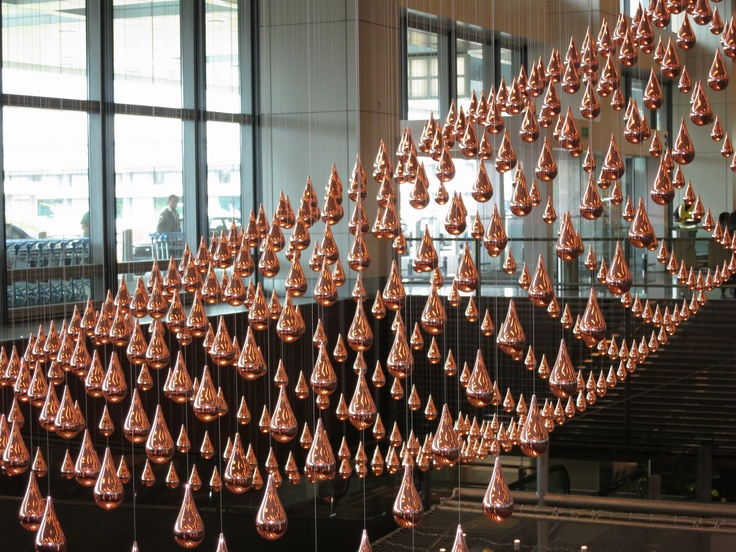
The massive indoor waterfall at Jewel Changi Airport is a clear example. Although technically part of an airport complex, the building functions as a retail destination attracting millions of visitors each year largely because of its central installation.
Interactive installations as branding tools
Commercial buildings increasingly function as branded environments.
In dense urban markets, multiple office towers or retail complexes may compete for tenants within the same district. Architecture alone may not be sufficient to create distinction, particularly when buildings share similar glass façades or structural typologies.
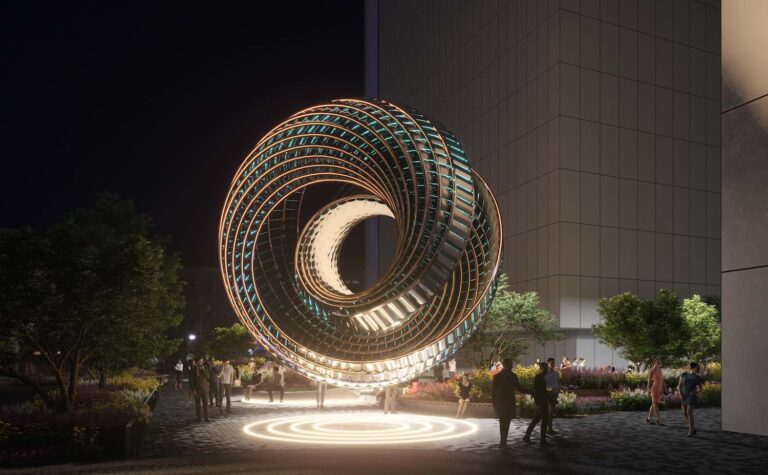
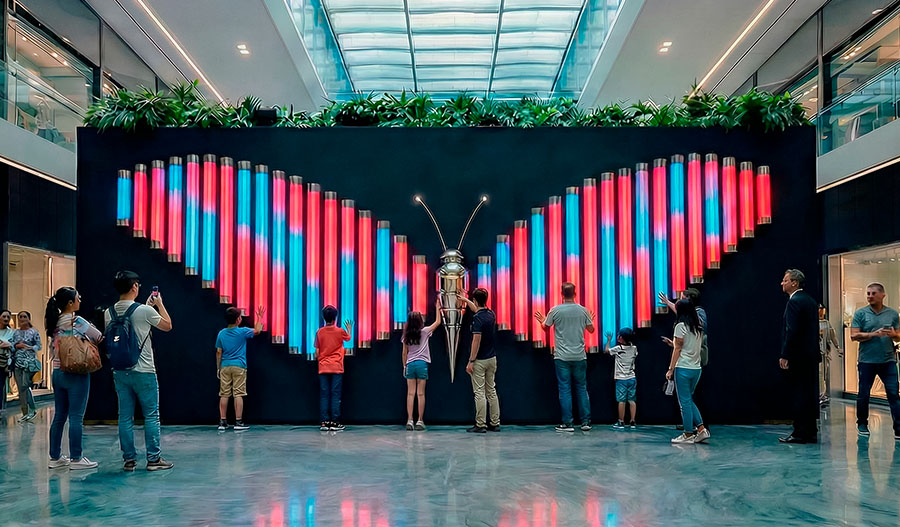
Interactive installations offer a powerful branding mechanism. A distinctive building landmark sculpture can become the defining visual symbol of an entire development.
Digital façade installations demonstrate this effect particularly well. The famous wave installation at COEX K-Pop Square transformed an otherwise conventional commercial building into one of the most recognizable media façades in the world.
The building itself houses retail and exhibition spaces, yet the animated wave installation has become the primary visual identity of the site. Visitors photograph and share the installation globally, turning the building into a widely recognized urban landmark.
For developers, such real estate branding art creates significant visibility without altering the core architectural structure.
Impact on property value and foot traffic
The influence of public art within commercial real estate can be measured through several performance indicators.
First is foot traffic. Installations located within plazas or atriums often become gathering points that naturally attract pedestrians. When placed strategically along circulation routes, they can increase movement across multiple areas of a development.
Second is tenant perception. High-quality installations signal that the developer has invested in creating a premium environment. This perception can influence leasing decisions, particularly for flagship retail tenants or corporate offices seeking prestigious addresses.
Third is destination value. Developments that incorporate memorable public environments tend to attract visitors beyond their immediate user base.
A well-known example is the public space at Hudson Yards, where the monumental structure known as the Vessel became one of the most photographed attractions in the city shortly after opening. Although controversial as architecture, the installation succeeded in drawing enormous attention to the surrounding commercial development.
These examples demonstrate how real estate art installations can influence both experiential and economic performance.
Typical budgets for interactive installations
One of the most common questions developers ask concerns the cost of integrating interactive art.
Budgets vary widely depending on scale, complexity, and technology. However, typical ranges in commercial projects often follow several general patterns.
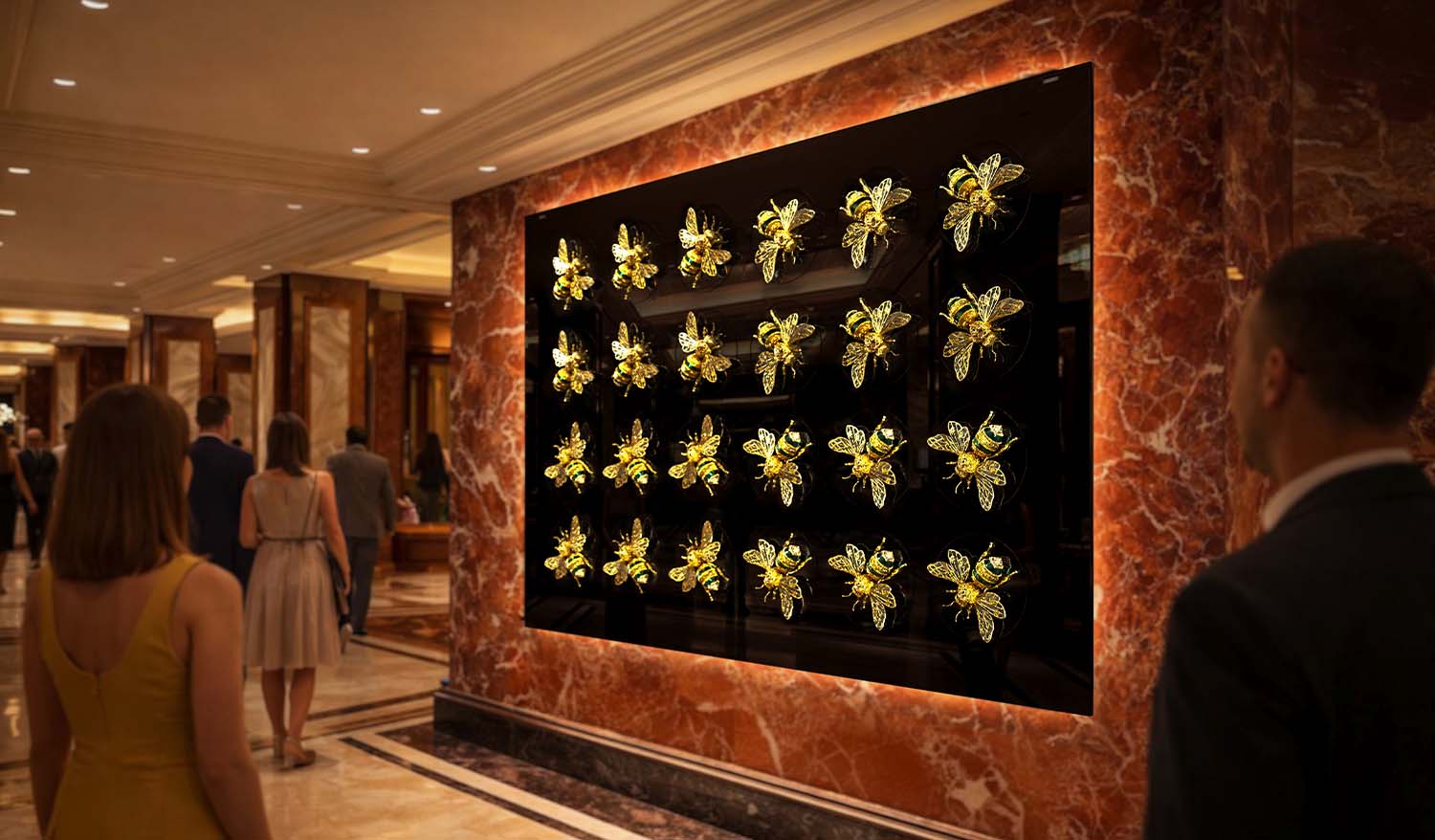
A small interactive lobby installation in an office building might cost between $80,000 and $200,000, particularly if it uses lighting systems or modest kinetic components.
Medium-scale atrium sculptures or kinetic installations in retail complexes often range between $300,000 and $2 million, depending on the number of moving elements and the complexity of the control system.
Large digital façades or monumental kinetic systems integrated into architecture can exceed $5–10 million, particularly when they involve thousands of mechanical components or large LED surfaces.
These costs may appear significant, but they are often relatively small compared with the overall construction budgets of major commercial developments.
Where developers place interactive installations
Placement strategy plays a crucial role in the success of an installation.
Developers typically prioritize locations where installations will have maximum visibility and interaction with pedestrian flows. Three locations consistently produce the strongest impact.
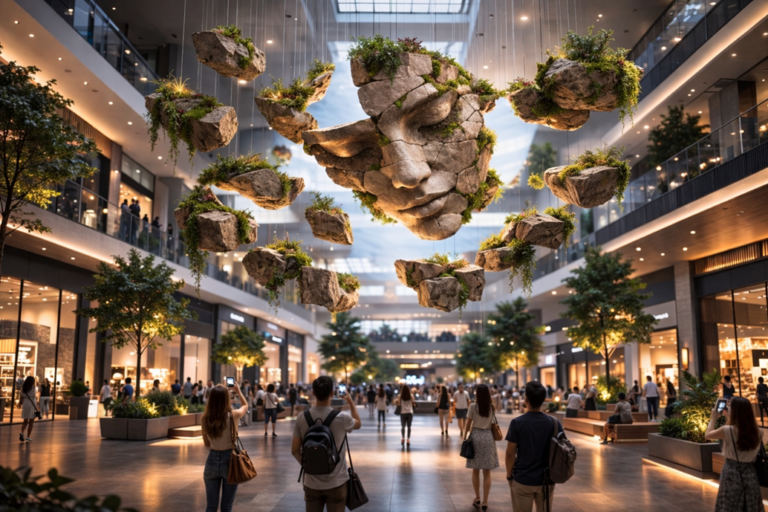
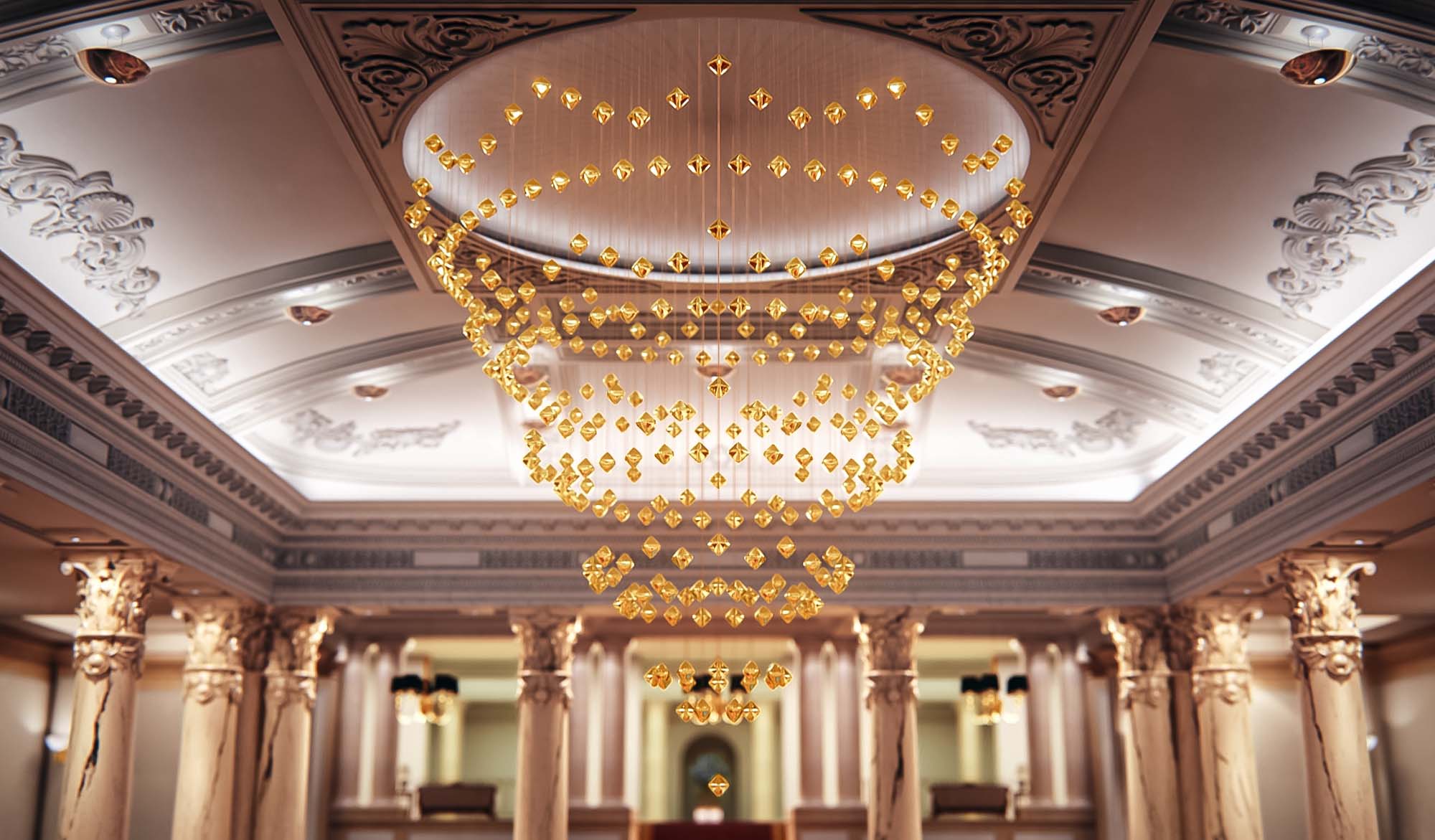
Central atriums are among the most effective environments because installations can be viewed from multiple levels simultaneously. Suspended kinetic sculptures often work particularly well in these spaces.
Entrance plazas also offer strong opportunities. A commercial plaza sculpture placed at the main entry can define the identity of the development and create an immediate visual landmark.
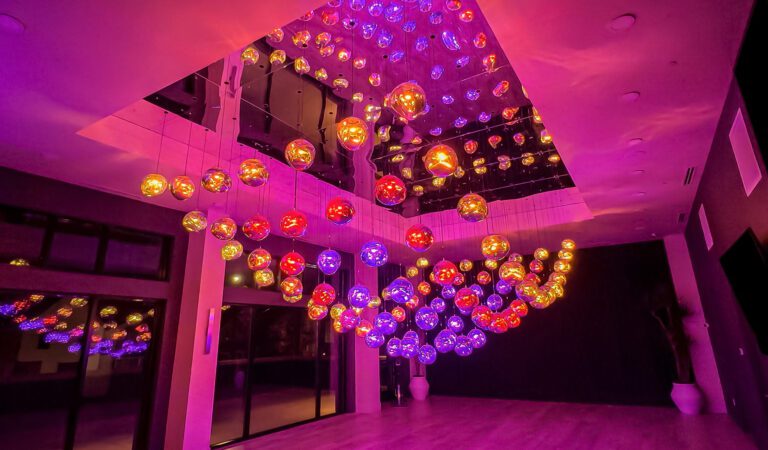
Finally, lobby spaces are increasingly used for interactive lobby installations that welcome visitors and establish the character of the building from the moment people enter.
When installations are positioned at intersections of major circulation routes, they naturally attract attention and guide pedestrian movement through the development.
Common mistakes developers make
Despite their benefits, interactive installations can fail if poorly planned.
- One common mistake is placing installations in low-traffic zones. Even impressive sculptures lose impact if visitors rarely encounter them.
- Another problem involves excessive technical complexity. Systems that rely on fragile mechanisms or poorly designed software platforms may become difficult to maintain over time.
- Visibility is also critical. Installations that cannot be seen from multiple vantage points often fail to become effective landmarks.
Developers must therefore balance artistic ambition with operational reliability. Installations should be visually compelling but also designed for long-term durability and accessible maintenance.
Skyform Studio often collaborates closely with architects and engineers during early design stages to ensure that kinetic systems integrate seamlessly into the building’s structure and infrastructure.
How developers plan interactive art
The most successful projects integrate art during early masterplanning rather than adding it later.
During the conceptual design phase, architects analyze pedestrian circulation, sightlines, and spatial hierarchies within the project. Installations are then positioned where they can reinforce these spatial relationships.
Technical infrastructure must also be planned early. Interactive installations require electrical systems, control networks, and structural supports that are difficult to retrofit once construction is complete.
Developers increasingly treat installations as architectural elements similar to landscape features or lighting systems. When integrated from the beginning, these installations strengthen the coherence of the overall design.
Interactive installations have become a powerful strategic tool within contemporary commercial real estate. By integrating dynamic artworks into buildings, developers can transform ordinary architectural environments into memorable destinations.
These installations attract visitors, reinforce spatial identity, and contribute to the branding of major developments. When thoughtfully integrated into architectural design, interactive art in commercial buildings can significantly enhance both the cultural and economic performance of a project.
As cities continue to compete for attention and investment, public art in commercial real estate will likely remain one of the most effective ways developers create distinctive and engaging urban environments.
Contact Us
Ready to create a landmark that elevates your commercial project? Explore our portfolio or contact the SKYFORM STUDIO team to discuss your development.
In today’s commercial real estate, interactive art is no longer a decorative addition — it is a strategic design tool. Within office towers, retail centers, and mixed-use developments, sculptural installations act as spatial infrastructure. They define focal points, organize pedestrian flows, and create strong visual identity in environments that would otherwise remain neutral.
Kinetic and interactive installations go even further. By introducing movement, light, and responsive behavior, they transform static architecture into dynamic experiences. These installations increase dwell time, attract visitors, and turn commercial buildings into destinations — enhancing both user engagement and long-term asset value.
At SKYFORM STUDIO, we design and engineer interactive and kinetic installations specifically for commercial environments. Our projects are developed in close collaboration with architects and developers, ensuring seamless integration into building systems and spatial concepts. The result is not just art, but a functional element that strengthens branding, improves user experience, and defines the identity of contemporary developments.
More materials on the topic: Public art , Kinetic installations , Blog .
Frequently asked questions (FAQ)
Interactive installations attract visitors, increase dwell time, and help buildings establish recognizable identities within competitive urban environments.
While difficult to measure directly, installations often improve visitor engagement, strengthen branding, and increase tenant demand, which can positively influence property performance.
Atriums, entrance plazas, and lobby spaces typically provide the highest visibility and interaction with visitors.
Costs range from around $80,000 for small lobby installations to several million dollars for large kinetic or digital façade systems.
Ideally during the earliest architectural design phases, when installations can be fully integrated into the building’s spatial and technical infrastructure.
Author of the article