Interactive installation as a point of attraction
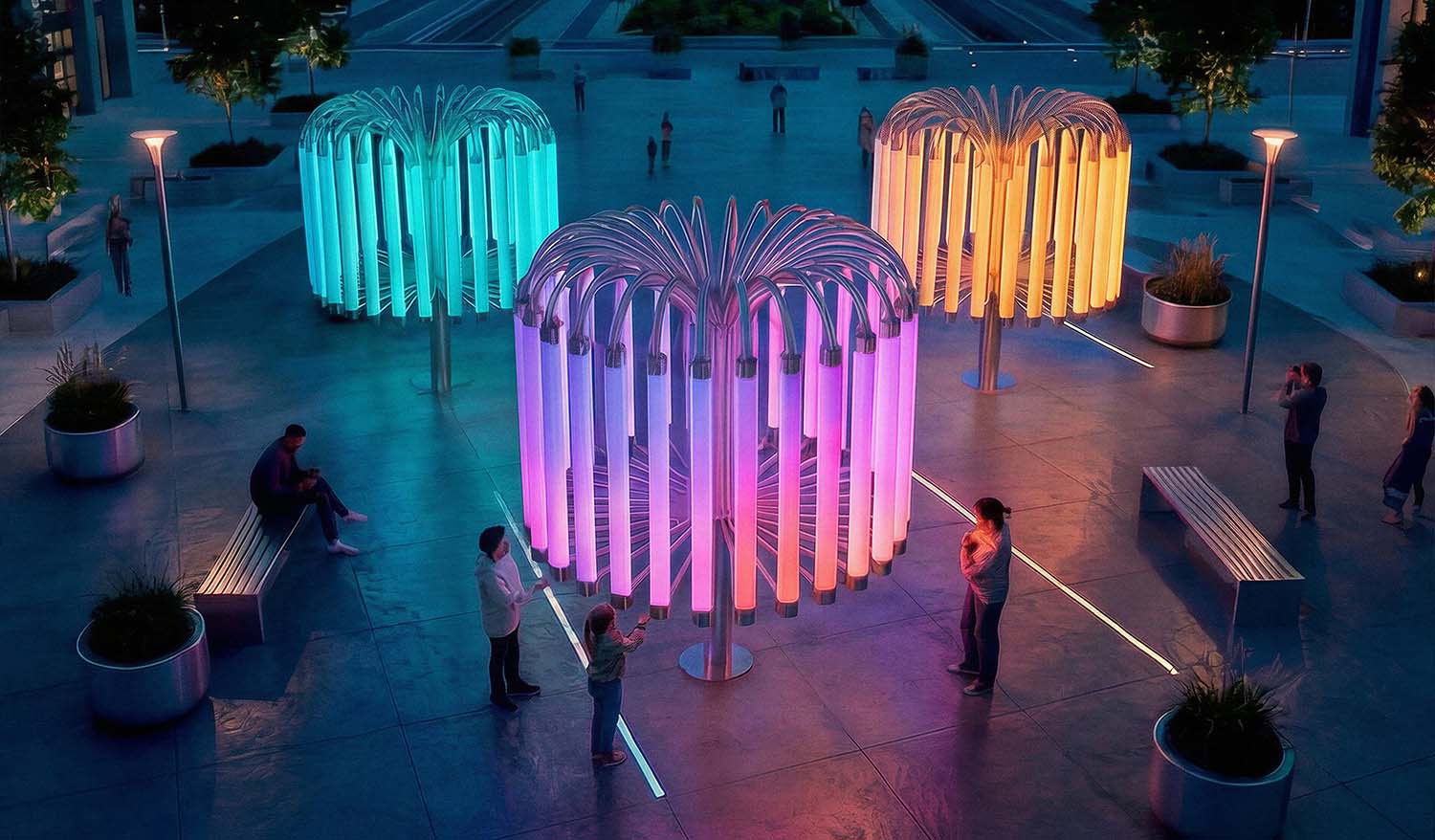
“Pulse of Light” is an interactive light-and-sound installation in the field of Public Art, where advanced technologies, architectural plasticity, and live human participation come together in a single artistic experience. The object is designed as a contemporary focal point for public space — visually striking, emotionally engaging, and memorable.
Light as a material
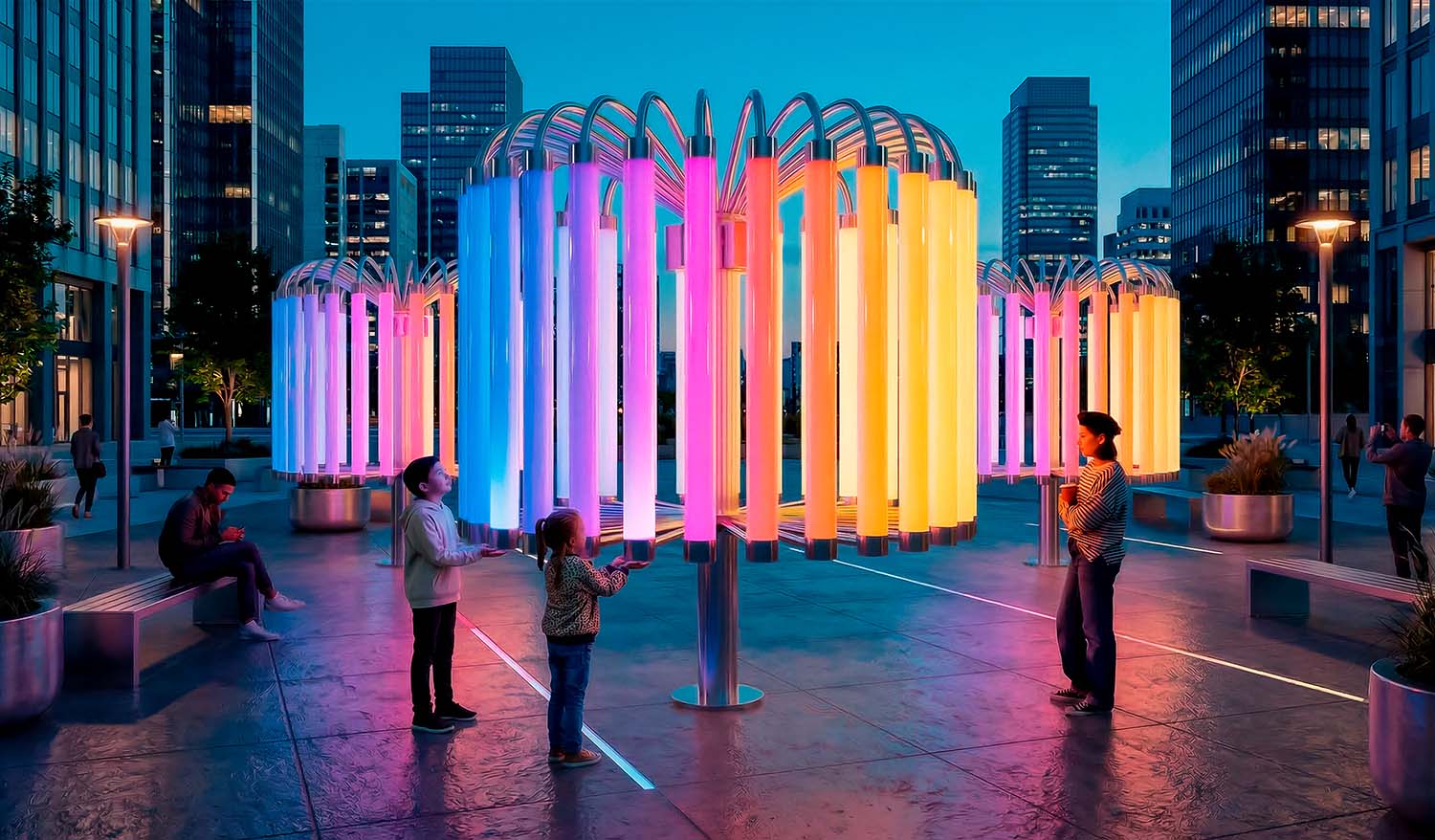
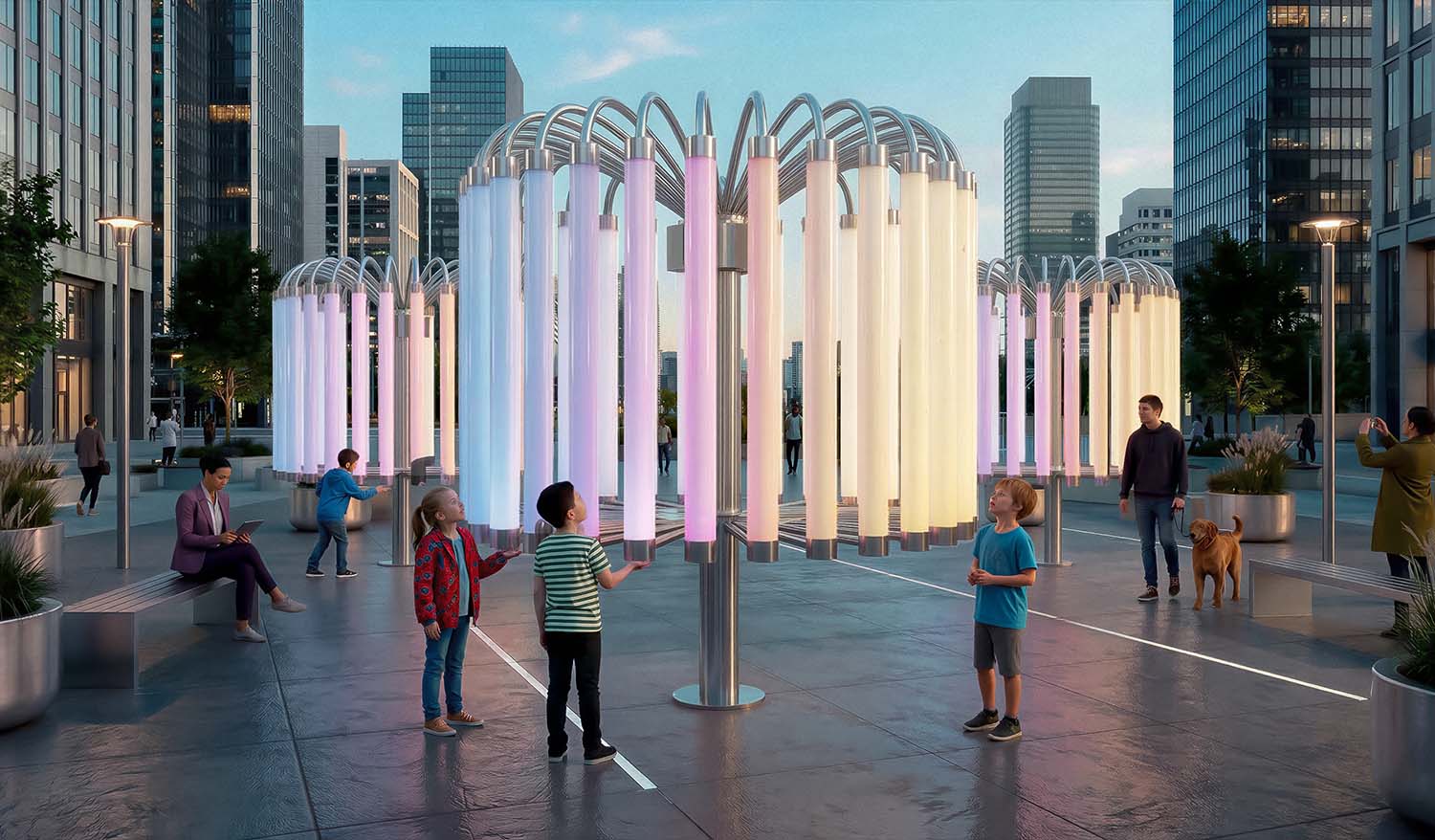
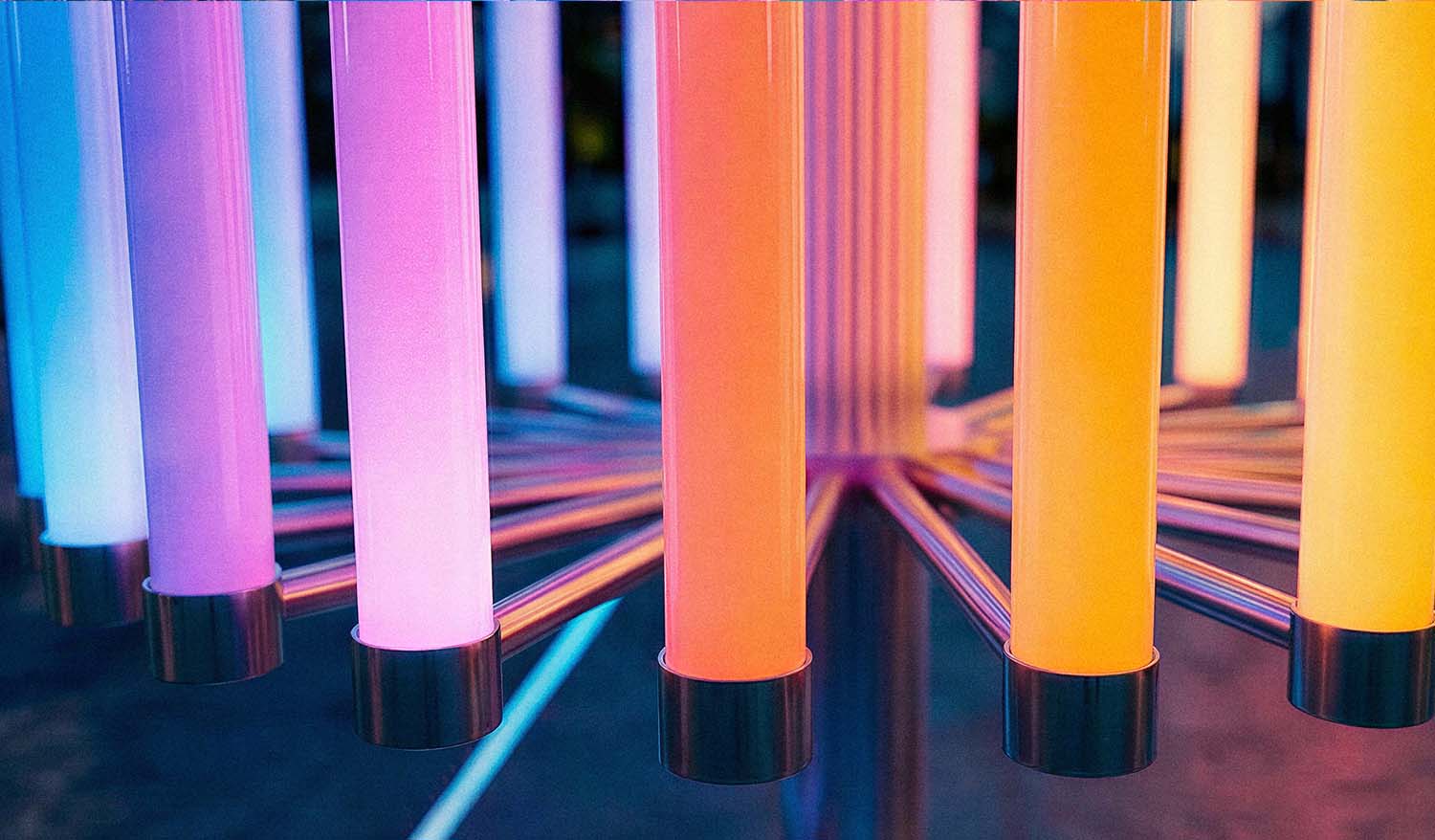
The composition is a выразительный spatial volume with a diameter of 3 meters and a height of 3.5 meters, assembled from 30 vertical polycarbonate tubes with integrated lighting. Each tube is 2 meters long and 150 mm in diameter, allowing the installation to feel at once monumental, cohesive, and light. The structure is made of stainless steel, emphasizing the object’s contemporary character, technological aesthetics, and durability. The illuminated polycarbonate elements produce a soft, deep, and even glow, turning light into an independent artistic material — pure, насыщенный, and almost tangible.
A living dialogue between man and technology
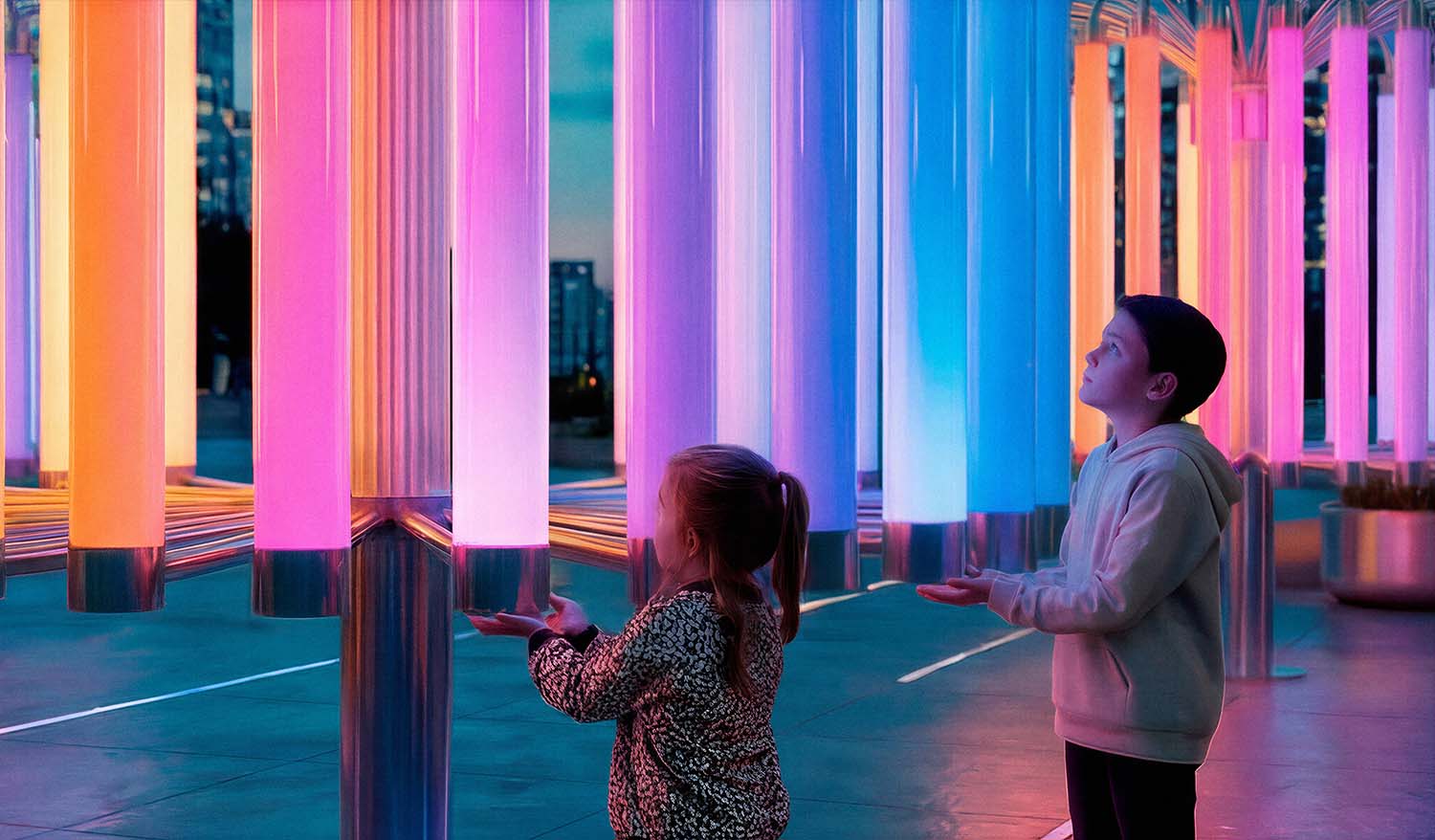
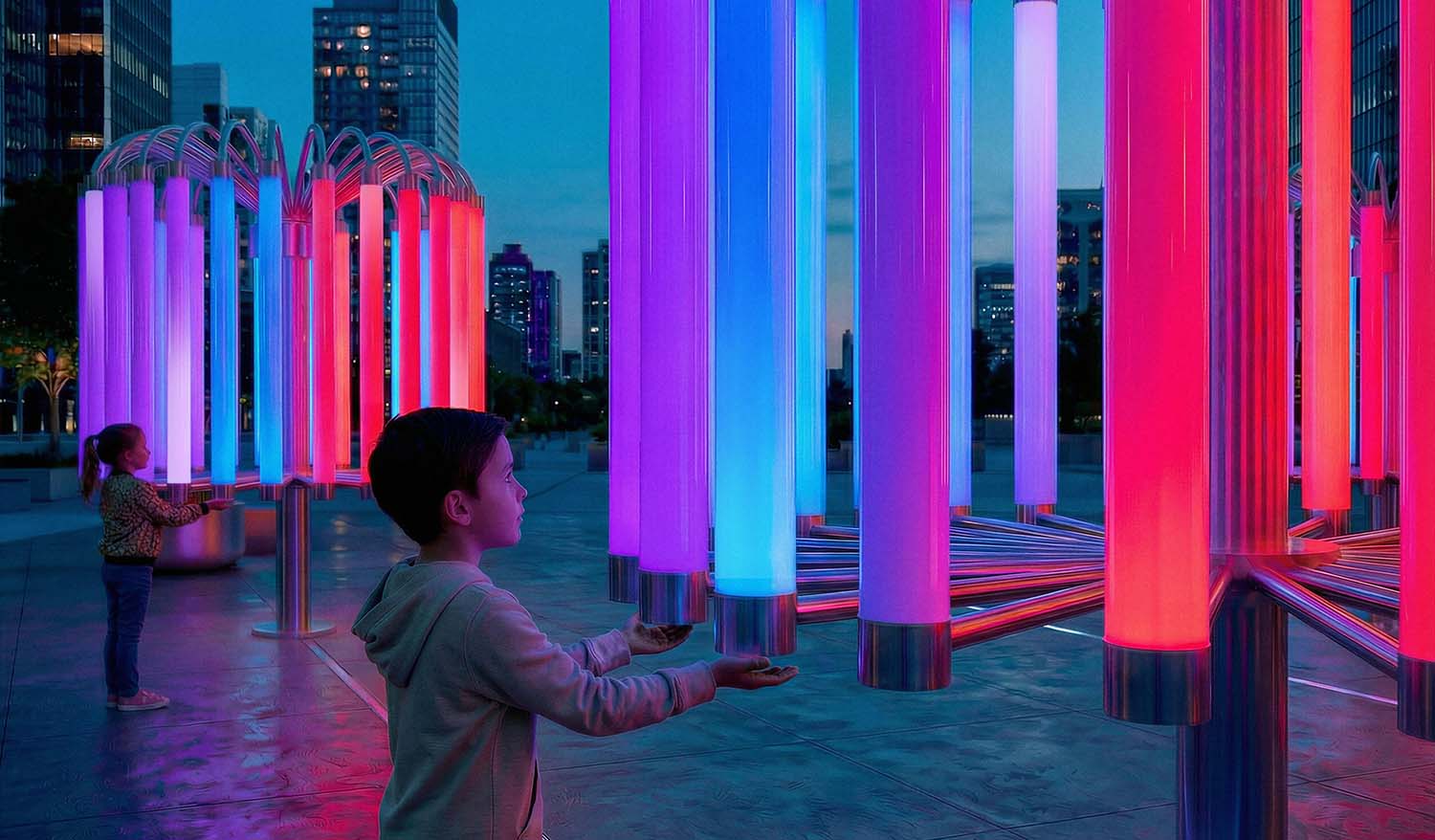
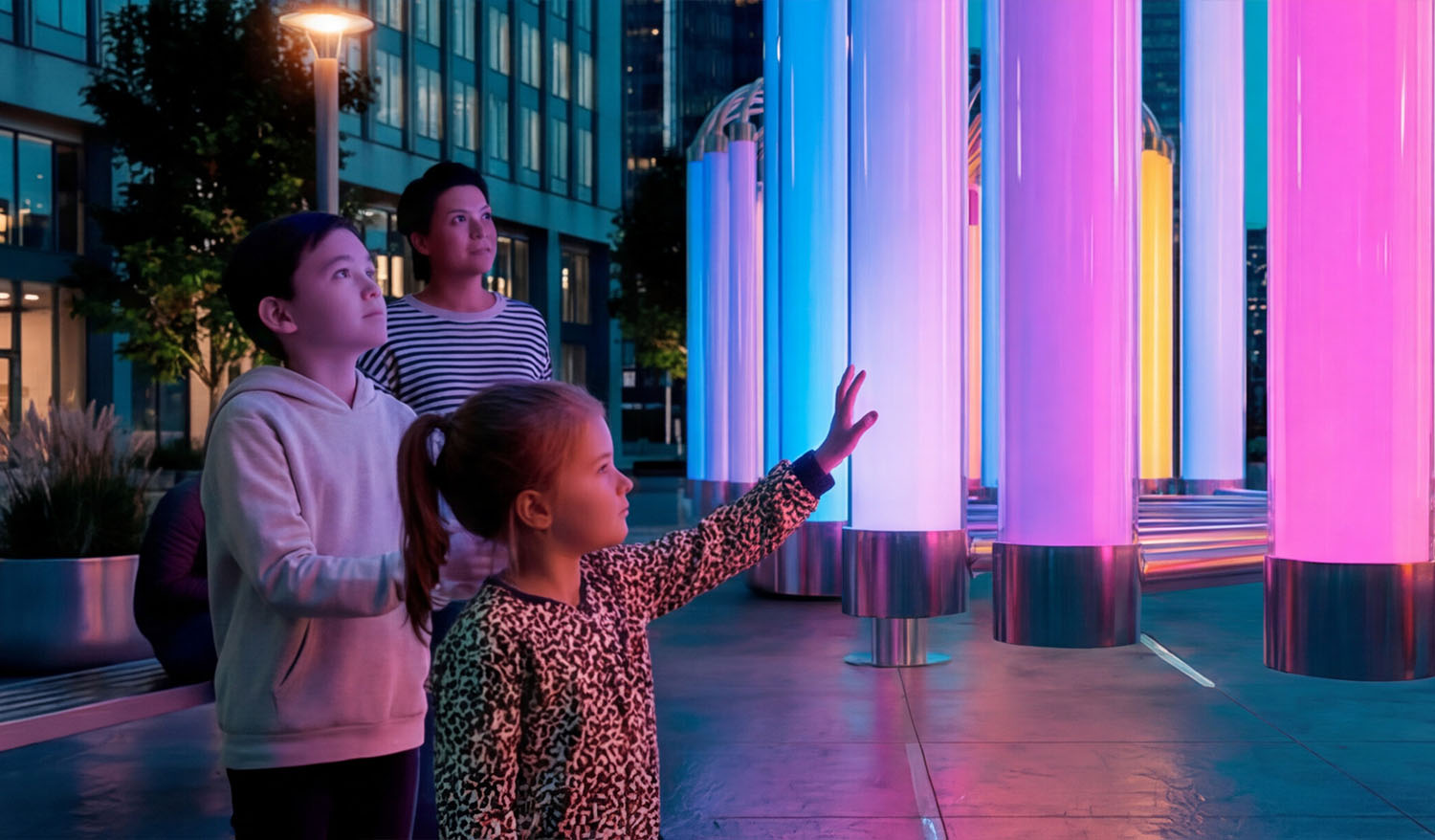
The main value of “Pulse of Light” lies in its living dialogue with people. A sensor is installed beneath each tube and reacts instantly when a hand is brought close to it. At that moment, the selected tube seems to come alive: inside it, a beautiful lighting scenario begins, with color flowing, pulsing, and changing in real time. At the same time, a sound response is played through the acoustic system integrated into the installation, enhancing the sense of presence. Thus, one simple gesture creates a complete event — both visual and sonic. A person does not merely observe the object, but enters into direct interaction with it, feeling that the space responds back.
Collective experience and the effect of involvement
The installation becomes especially expressive when several people interact with it at the same time. Then light impulses arise at different points of the composition, the responses layer over one another, and the object begins to function as a collective instrument of emotion, movement, and presence. The space around the installation is filled not only with light, but with a scenario of shared experience — one that people want to repeat, record on video, show to others, and relive again.
Role in the urban environment
At the same time, “Pulse of Light” does not function only when visitors interact with it. The installation also operates as an independent light-and-sound Public Art installation, remaining active throughout its programmed operating hours. Even when no one touches it, the object continues to live within the space: lighting scenarios gently transition from one to another, while the sound environment shapes atmosphere and attracts the attention of passersby. In this way, the installation constantly sustains the visual and emotional activity of the location, inviting people to come closer and engage with it.
Today, installations of this kind are becoming one of the most relevant directions in the development of contemporary public and urban spaces. These are no longer merely decorative objects, but advanced technological art systems within Public Art that create a new type of interaction between people and their environment. Around the world, such solutions are increasingly being integrated into city squares, cultural clusters, shopping centers, waterfronts, and landmark development projects because they generate what is especially valuable in today’s environment: engagement, emotional connection, place identity, and a powerful visual image.
“Pulse of Light” operates precisely at this level. It is not only an art object, but also a contemporary tool for shaping the identity of a place. By day, it is perceived as an elegant technological sculpture; by night, it transforms into a living light-and-sound environment that attracts people, evokes emotion, and makes the location truly memorable. The installation creates a sense of novelty, relevance, and cultural contemporaneity — precisely the feeling that is so important for spaces seeking to speak to their audiences in the language of the future.