KINETIC INSTALLATIONS
Today, public spaces need to be more than just beautiful—they need to inspire, engage, and create lasting memories. SKYFORM STUDIO brings interiors to life with kinetic installations, integrating movement, light, and cutting-edge engineering technologies. We transform public interiors into vibrant, dynamic environments that capture attention and become focal points.
SKYFORM STUDIO » Kinetic Art Eng
Why is kinetic art important?
Kinetic installations are impossible to ignore or pass by. They glow, move, and breathe—evoking curiosity, emotion, and a desire to share. Whether in hotels, airports, shopping malls, or museums, kinetic art transforms static environments into unforgettable experiences.
- Attracts attention and creates a WOW effect.
- Evokes emotions and creates long-term memories of the place.
- It becomes a visual magnet both in real life and on social media.
Our approach to kinetic art
At SKYFORM STUDIO, we combine artistic vision, engineering precision, and innovative technology to create complex yet robust kinetic sculptures:
- Custom equipment – we design and manufacture specifically for each facility.
- Durable mechanisms and European components are designed for long-term use.
- Smart control systems synchronize movement, lighting effects and interactivity.
- Full implementation cycle – from concept and design to production, installation and maintenance.
We stand behind every project and provide a 3-year warranty on all equipment.
Portfolio of kinetic projects
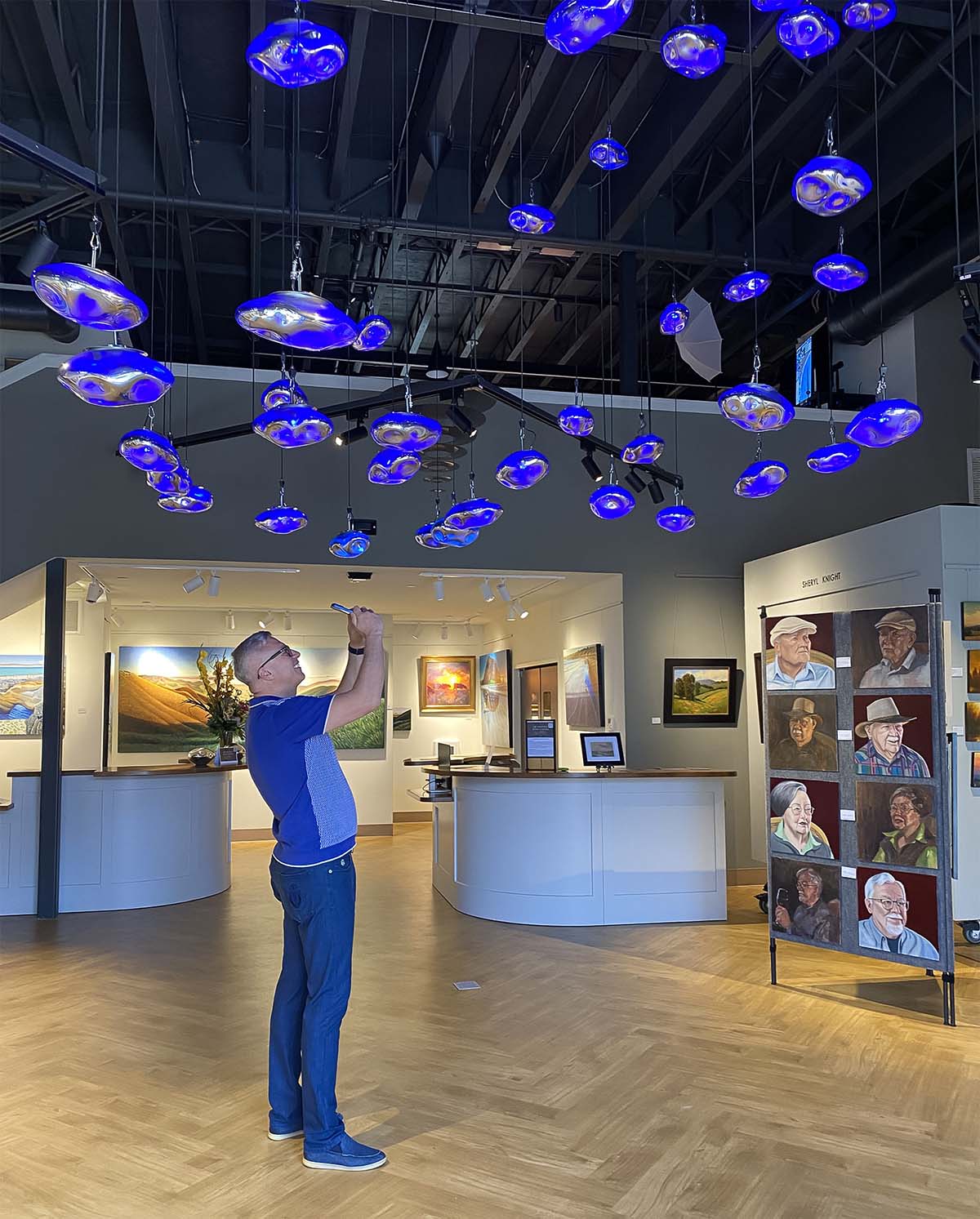
“Meteorites” is a high-tech kinetic installation by Skyform Studio, created for Gallery Arroyo Grande in California.
64 unique glass sculptures, specially designed and manufactured by our studio, are suspended from the gallery’s ceiling and come to life in the space, mimicking the graceful movements of meteorites.
This installation combines innovative technology, lighting designs, and contemporary art, transforming the gallery space into a spectacular and memorable art venue.
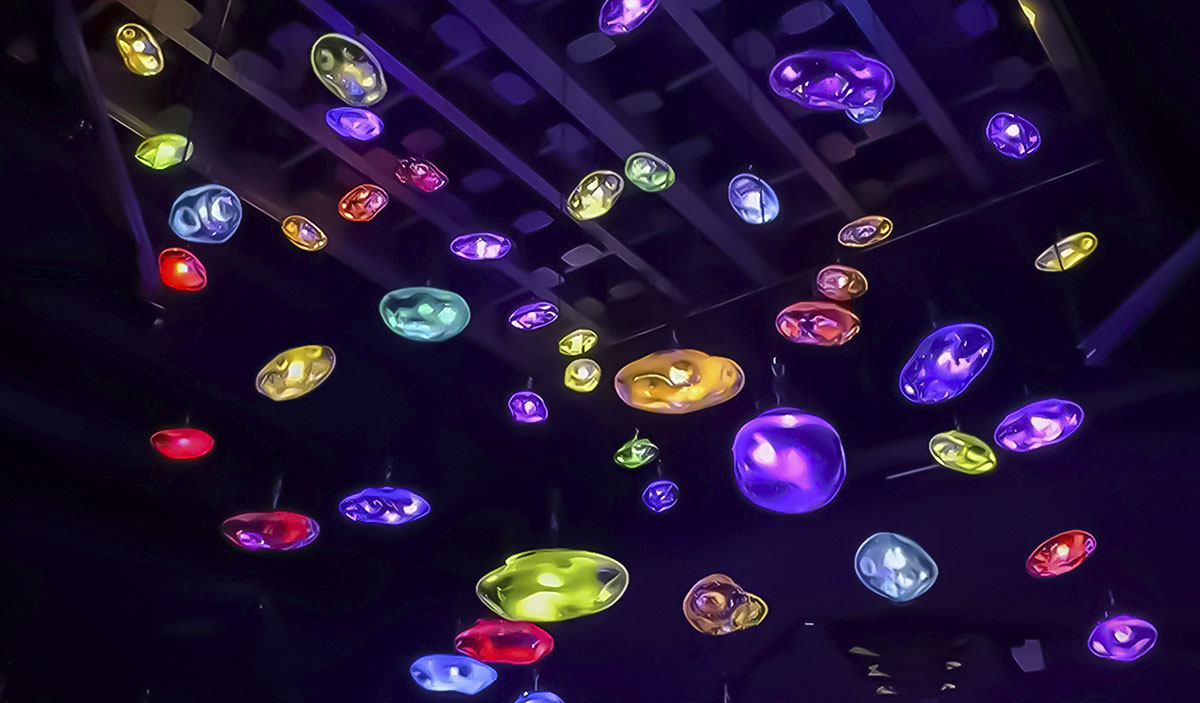
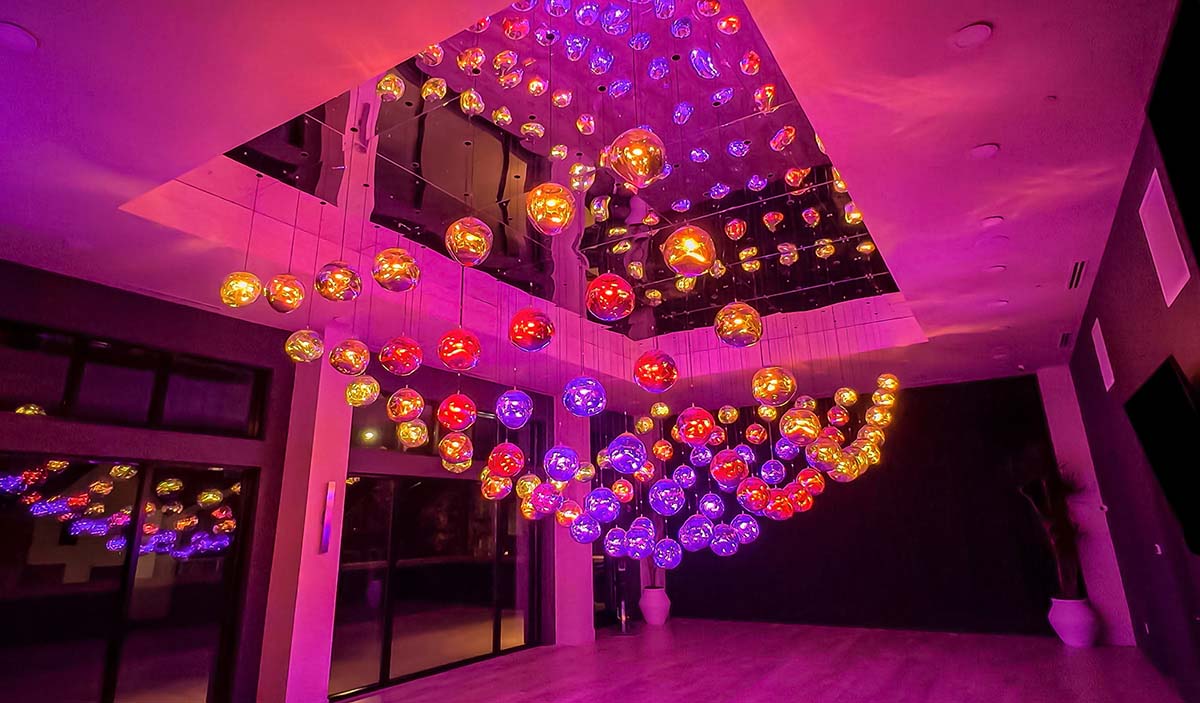
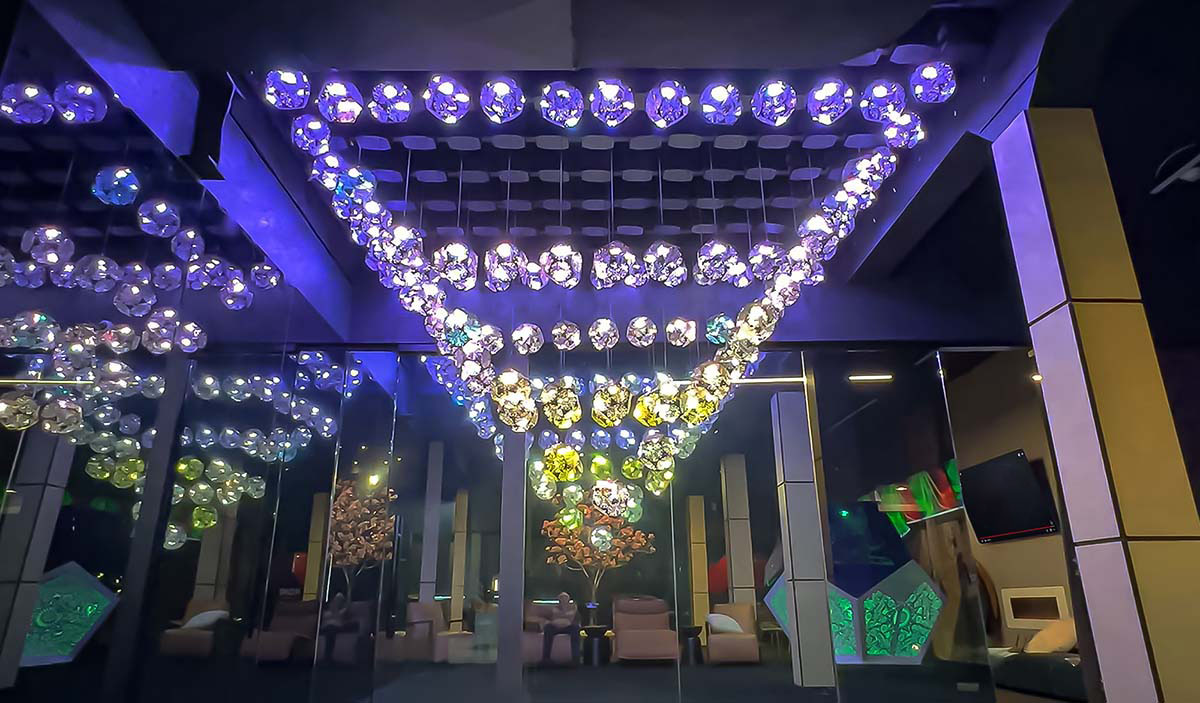
“Waves of Light” is a high-tech kinetic installation by Skyform Studio, created for the SOUL SPACE wellness center in Cleveland, Ohio.
Ninety-one elements with integrated lighting, designed in the center’s signature colors, come to life on the ceiling, creating a sense of endless movement and reflected in mirrored panels.
The installation combines movement, light, and space, transforming the yoga, Pilates, and events space into a memorable art space that inspires guests to share photos and videos on social media.
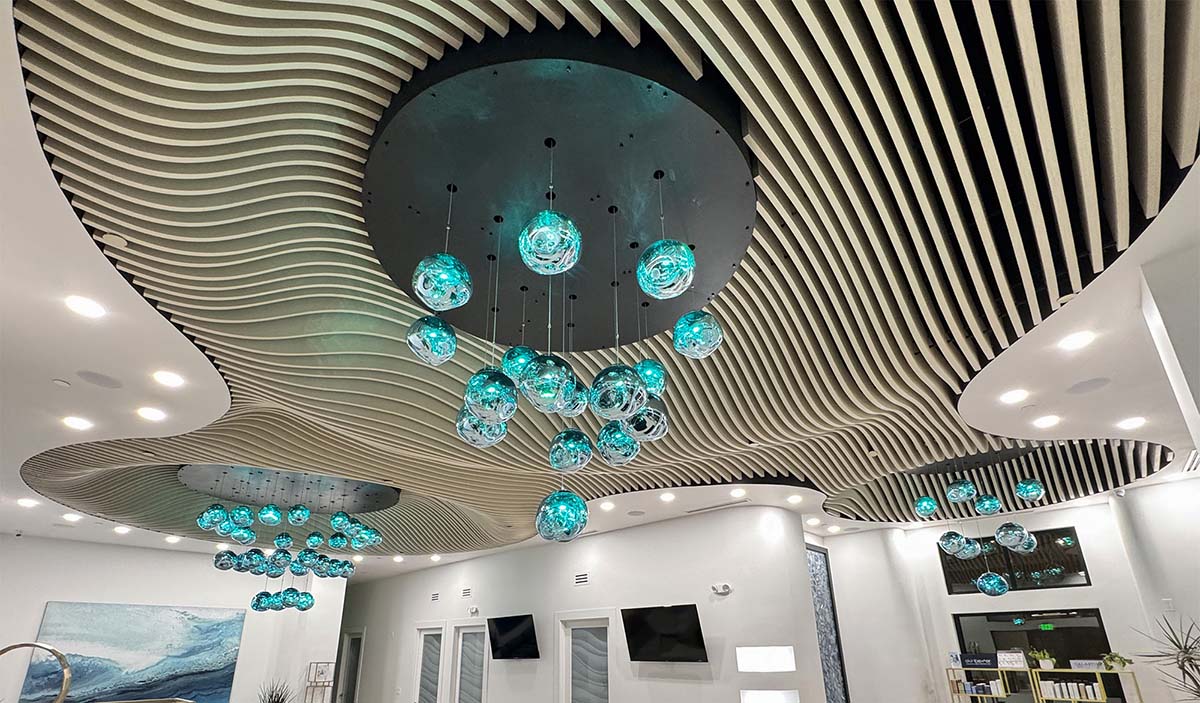
“Orbits” is a kinetic installation by Skyform Studio created for NüIQ Wellness Lounge & Med Spa in Cleveland. Three circular structures with 58 suspended light elements are built into the center’s parametric ceiling, transforming it into a living sculpture.
The installation changes the atmosphere depending on the scenario: from soft light for relaxation to dynamic effects for events.
The “Orbits” surprise visitors, highlight the center’s signature style, and transform the ceiling into an emotional accent.
“Space Ballet” is a next-generation kinetic installation created by Skyform Studio for its own showroom in Chicago. 92 three-dimensional copper-colored polygons come to life through lighting sequences and synchronized winches, transforming the space into a living sculpture.
The installation captivates with its smooth transformations and play of light, creating a sense of wonder and inspiring guests to film it and share the moment on social media.
It is an art object that combines technology, geometry and emotion into a single artistic experience.
Frequently Asked Questions
1. What is a kinetic installation?
A kinetic installation is a contemporary art form in which movement serves as the primary means of expression. Unlike static sculptures, kinetic art installations exist in time: they change, respond to their surroundings and the viewers, creating a constant dialogue between people, light, and architecture.
Key features of kinetic installations:
- Movement as a medium. Sculptures in motion are brought to life by motors, winches, gears, or natural forces such as wind and water.
- Lighting scenarios. Many projects include kinetic light installations, where LED technology creates a choreography of color and shape.
- Interactivity. Some art objects react to sound, light, or human movement, turning the viewer into a co-author of the work.
- Architectural integration. These projects become part of the space—from facades and lobbies to public squares and parks—transforming them into kinetic architectural installations.
- Artistic depth. Despite its technical complexity, it is first and foremost an art form designed to evoke emotions, inspire, and shape a sense of place.
At SKYFORM STUDIO, we create moving art installations that don’t just decorate interiors or urban landscapes—they make spaces vibrant, dynamic, and unique. Our works become focal points, sparking interest among residents and visitors alike, and shaping the image of modern public spaces.
2. What types of kinetic installations exist?
Kinetic installations encompass a wide range of artistic and technological formats. They can be minimalist and elegant or monumental and high-tech. At SKYFORM STUDIO, we create projects of all types—from interior design solutions to large-scale urban art installations.
Classification of kinetic installations
By source of movement:
- Mechanical – controlled by motors, winches and gears, providing precision and programmability.
- Natural (wind) – movement is created by the force of the wind, giving rise to organic and unpredictable dynamics.
- Interactive – respond to human presence, sound, light or movement using sensors and control systems.
By type of movement:
- Rotational – rotation around one or more axes.
- Pendulum – oscillations under the influence of gravity.
- Linear — vertical or horizontal translational motion.
- Hybrid – a combination of several types of movement in a single system.
By scale:
- Small – interior solutions for lobbies, atriums and offices.
- Medium – installations for public spaces: parks, squares, shopping centers.
- Large – monumental art objects integrated into facades and the urban environment.
Based on materials from:
- Metal – stainless steel, aluminum, bronze.
- Glass—art glass, tempered glass, colored glass.
- Plastics—acrylic, polycarbonate, and modern composites.
- Mixed media—a combination of different materials to achieve artistic and structural balance.
By level of technological integration:
- Lighting — the movement of the elements is accompanied by LED lighting and lighting scenes.
- Audio — the motion is synchronized with audio effects or generates its own sounds.
- Multimedia — a combination of movement, light, sound, video, and projection mapping.
At SKYFORM STUDIO, we specialize in all these areas, developing both classic and unique hybrid solutions. Each installation is tailored to a specific space, purpose, and audience, ensuring that kinetic art integrates seamlessly into the architecture, creates an emotional atmosphere, and becomes a new symbol of the place.
3. How much does a kinetic installation cost?
The cost of a kinetic installation at SKYFORM STUDIO is always calculated on a case-by-case basis and depends on a number of factors: the scale of the project, the level of design, the materials used, the degree of interactivity, and the complexity of installation and logistics. We adhere to the principle of transparency—which is why every client receives a detailed estimate covering all stages: from concept development and 3D visualization to production, delivery, and installation.
Key factors affecting price
- Scale. The larger the installation, the more materials, production time, and logistical solutions are required.
- Design. Unlike our competitors’ standard solutions, we develop a unique design for each project. Shapes and elements are created individually to highlight the artistic vision and enhance the spatial concept. Custom solutions are more expensive, but they are precisely what create that “wow” factor and transform the work into a true work of art.
- Materials. We use only proven, premium materials—stainless steel, aluminum, bronze, and art glass. While these materials are more expensive than steel and plastic, they offer clear advantages in terms of durability, aesthetics, and prestige, allowing us to create pieces that retain their appearance for decades.
- Interactivity. If an installation is designed to respond to movement, light, or sound, it requires complex programming, sensors, and additional equipment.
- Control systems. We use specialized software that allows us to create virtually any operating scenario. We can synchronize with music, integrate with a mobile app, and fully automate scenarios. Remote control is also available, allowing our engineers to connect for diagnostics and support at any time.
- Creative design. This is the heart of the project. We not only develop the artistic concept but also meticulously work out the engineering solutions. We prepare 3D visualizations, animations, and technical drawings so that the client can see the project before it is implemented. At this stage, unique lighting and kinetic scenarios are developed, control algorithms are written, and software is designed. This comprehensive approach ensures a balance between artistic vision and engineering precision.
- Manufacturing and assembly. Here, the concept becomes reality. All components are manufactured using high-precision equipment (laser cutting, CNC machines, 3D modeling) and then undergo hand assembly and finishing. Special attention is paid to material processing to ensure that every detail meets functional and aesthetic requirements. The more complex the form, the more unique the elements, and the deeper the integration of technologies (sensors, lighting, mechanisms)—the higher the budget, but this is precisely what makes the project exclusive.
- Delivery and installation. The cost depends on the size of the structure, the country where the project is being carried out, and whether specialized equipment (cranes, hoists, etc.) is required.
Approximate price ranges
- Small interior installations—from $50,000 to $150,000
- Medium-sized projects for public spaces — $100,000–$500,000
- Large-scale, monumental, and high-tech projects — starting at $500,000
Thus, the cost is determined after analyzing the project brief and developing a conceptual design. We take a flexible approach to each project to ensure that the artistic solution perfectly aligns with the client’s objectives and budget.
As a result, the client receives not just an art object, but a unique kinetic sculpture that serves as a focal point, enhances the value of the space, and contributes to the image of the city or brand.
4. How long does it take to design and install a kinetic sculpture?
The timeline for creating a kinetic installation at SKYFORM STUDIO is always determined on a case-by-case basis and depends on the scale, design complexity, materials used, and level of technological integration. We strive to work as efficiently as possible, but our top priorities remain the quality, safety, and durability of the final piece.
Key stages and deadlines
- Concept development and creative design—2–4 weeks This includes creating the artistic concept, producing visualizations, and finalizing details with the client. The more iterations or additional research required, the longer this phase will take.
- Technical design and documentation—approximately 4 weeks Preparation of drawings, structural calculations, control system logic, and specifications. Larger projects may require more time.
- Production and manufacturing — 2 to 4 months
This is the longest stage, depending on:- in terms of size and design complexity,
- the specific characteristics of working with certain materials (such as stainless steel or art glass),
- the number of unique parts,
- delivery schedules for individual components and technologies.
- Logistics and shipping — from a few days to several weeks Delivery times depend on the destination, the mode of transport selected (air, sea, or road), and customs procedures for international shipments.
- On-site installation—from a few days to several weeks This depends on the size and conditions at the site. Sometimes special equipment (cranes, hoists) or the assistance of specialized crews is required.
- System commissioning and testing—from a few days to several weeks After installation, the mechanical systems, lighting, interactive systems, and software are configured to ensure stable and synchronized operation.
Estimated timelines by project type
- Small interior installations—3–4 months
- Average projects for public spaces — 4–6 months
- Large-scale monumental or interactive projects — 6–12 months
Important: These timelines are approximate and will be finalized following the conceptual phase and a detailed briefing. SKYFORM STUDIO ensures transparency at every stage: clients receive regular progress reports and are promptly informed of any changes. Our principle is to meet deadlines without compromising on artistic or technical quality.
5. Do you create 3D renderings before production?
Yes, at SKYFORM STUDIO, we always create 3D visualizations (renders and animations) during the conceptual design phase. This phase is one of the most critical, as it allows the client to see what the future kinetic installation will look like and how it will function even before production begins.
Why are 3D renderings needed?
- Understanding the concept. Visualizations help assess the aesthetics of a project, view it from different angles, and examine it under various lighting conditions.
- Integration into the space. We place the model in a real architectural or landscape setting to demonstrate its proportions and harmony with the surroundings.
- Motion demonstrations. In addition to static images, we create animations that showcase the movement of elements, the operation of mechanisms, and lighting effects.
- Choosing materials and colors. During the modeling phase, you can test different options to find the best solution.
- Flexibility for adjustments. The client can make changes to the design, materials, or lighting scenarios without the risk of costly modifications down the line.
- Ease of coordination. Visualization serves as a clear basis for final project approval.
- Marketing and Public Relations. High-quality renderings and animations can be used for investor presentations, demonstrations to partners, or publication in the media.
Types of visualizations we offer
- Photorealistic renders are static images taken from various angles, featuring detailed lighting and materials.
- Contextual visualizations — integrating an object into real-world photos or digital site models.
- Animated visualizations are short videos that demonstrate motion, interactivity, and lighting scenarios.
We use state-of-the-art 3D modeling and visualization tools (such as Syncronorm and other professional software) to achieve maximum accuracy and realism.
Result: The client gains a detailed understanding of the future installation—from its aesthetics to its mechanics—and the project becomes transparent and clear even before production begins.
6. How do you maintain kinetic installations?
To ensure that a kinetic installation continues to function reliably and retains its original appearance for many years, regular and professional maintenance is essential. At SKYFORM STUDIO, we offer comprehensive maintenance services and provide detailed operating recommendations tailored to each project. The scope and frequency of maintenance depend on the structure, materials used, technologies, and operating conditions.
Main types of services
- Regular inspection.Routine inspections to check for wear, contamination, signs of corrosion, deformation, or loose fasteners. The recommended frequency is at least once every three months.
- Maintenance.
Mechanical: Diagnostics of kinetic winches and moving parts.
• Electrical: Inspection of connections, grounding, power supplies, and control devices.
• Electronics: testing controllers and sensors, calibrating sensors, updating software.
• Lighting: cleaning optics, checking for leaks, replacing LED modules as needed.
• Interactive systems: diagnostics of cameras, sensors, and interfaces; verifying software operation. - Minor restoration.Repairing scratches, cracks, and chips; repainting; or restoring protective coatings.
- Emergency restoration.Repair work in the event of damage caused by external factors or force majeure.
Recommended maintenance intervals
- Monthly—basic inspection and functional check.
- Quarterly — comprehensive diagnostics and cleaning.
- Every 6–12 months—full maintenance.
Support from SKYFORM STUDIO
We provide both in-warranty and post-warranty service, as well as long-term service contracts. If necessary, we can train the customer’s staff in basic maintenance procedures for the system.
Result: With proper maintenance, a kinetic installation will operate reliably, retain its visual impact, and delight viewers for decades, enhancing the value of the space and reinforcing the brand’s image.
7. What kind of warranty do you offer?
At SKYFORM STUDIO, we offer a comprehensive warranty on all our kinetic installations. This is part of our philosophy: we are responsible not only for the artistic vision but also for the reliable operation of the installation. Our confidence stems from our use of premium materials, proven technologies, and rigorous quality control at every stage of production and installation.
Warranty Coverage
- Kinetic winches and mechanical assemblies—1-year warranty.
- Lighting and Control Systems—3-year warranty on LED fixtures, power supplies, and control electronics.
- Structural components (stainless steel, aluminum, durable materials) — extended warranty of up to 5 years, to be agreed upon on a case-by-case basis depending on the project.
What is covered by the warranty
- Material defects: corrosion, cracks, or failure of metals, glass, or composites.
- Manufacturing defects: welding, assembly, and fitting errors.
- Mechanical failures: breakdowns of motors, gearboxes, bearings, or winches during normal operation.
- Control system malfunctions: faults in controllers, sensors, or software.
- Malfunctions in lighting systems: defects in LED modules or control units.
Warranty Terms and Conditions
- The system must be operated in accordance with the technical documentation.
- Regular maintenance is performed in accordance with SKYFORM STUDIO’s recommendations (by our specialists or certified contractors).
- The warranty does not cover:
improper use,
• vandalism,
• force majeure,
• unauthorized interference. - Consumables (such as traditional light bulbs) are not covered by the warranty unless otherwise specified.
Post-warranty support
We offer service contracts for long-term operation. These include regular inspections, maintenance, repairs, and upgrades. This approach ensures that your installation will remain safe, visually appealing, and technically reliable for many years to come.
SKYFORM STUDIO takes responsibility for its projects: we create not only works of art, but also systems designed for long-term performance and flawless results.
8. Where can kinetic installations be used?
Kinetic installations are a versatile tool that can be integrated into both commercial and public spaces. Through movement, light, and human interaction, these art installations become focal points, create an emotional atmosphere, and enhance the architectural experience.
Main areas of application
- Commercial properties—shopping centers, business districts, hotels, and restaurants. Kinetic art installations enhance a brand’s atmosphere, attract visitors, boost customer loyalty, and generate PR opportunities.
- Museums and galleries—kinetic art seamlessly complements the exhibits, transforming the space into an interactive experience and making it memorable for visitors.
- The city’s public spaces — squares, parks, waterfronts, and pedestrian streets. Kinetic sculptures become landmarks and cultural hubs.
- Transport hubs—airports, train stations, and subway stations. These installations make waiting times more enjoyable, serve as visual landmarks, and enhance the city’s image.
- Wellness and cultural centers—wellness spaces, yoga studios, concert halls, and exhibition halls. Movement and light create an atmosphere suitable for both relaxation and dynamic events.
- Building facades — architectural kinetic installations—transform ordinary buildings into living screens that reflect the character of a brand or a city.
- Interiors—lobbies, atriums, office spaces. Kinetic art makes the interior environment more expressive and memorable.
SKYFORM STUDIO undertakes projects of all sizes, ranging from intimate interior designs to large-scale urban art installations. In each case, the kinetic installation becomes more than just a decoration; it serves as a dynamic focal point that shapes the identity of the space.
9. Do you work with architects and designers?
Yes, at SKYFORM STUDIO, we actively collaborate with architects, interior designers, landscape architects, engineers, and other professionals. We understand that a kinetic installation is part of the overall architectural concept, and we strive to make it a harmonious extension of the project.
Forms of cooperation
- Expert consultations.We can assist at any stage: from choosing the type of installation and recommending materials to technical solutions and budget estimates.
- Joint concept development.We work closely with architects and designers to ensure that the kinetic installation blends seamlessly into the space and enhances the project’s vision.
- Engineering based on your idea.If you have a concept, we’ll develop a complete technical package: drawings, calculations, specifications—everything needed for implementation.
- Manufacturing and installation.We handle the precise fabrication and installation of custom designs, ensuring full compliance with all technical and design specifications.
- Author supervision.We provide on-site supervision and monitoring to ensure that the project stays on track and is executed to the highest standards.
Why do architects choose SKYFORM STUDIO?
- Effectiveness.A full-service process — from concept to installation — without any middlemen.
- Reliability.We guarantee high quality at every stage: from design and material selection to precision manufacturing and professional installation. All processes are transparent, and the final result fully reflects the original concept.
- Seamless integration.We speak the same language as architects and designers, understand their objectives, and know how to seamlessly integrate a project into the overall design.
- Technical inspection.Our in-depth knowledge of mechanics, electronics, motion control systems, and materials enables us to bring even the most ambitious concepts to life.
- Creative partnership.We inspire and support unconventional ideas, turning them into large-scale, striking works of art.
Our goal is to work with architects and designers to create not just an installation, but an iconic feature of the space that will serve as a symbol of the project and leave a lasting emotional impression.
10. How do I order a kinetic installation from SKYFORM STUDIO?
Ordering a kinetic installation from SKYFORM STUDIO is a transparent and collaborative process. We work closely with each client to create a unique work of art that reflects your specific vision.
How it works:
- Initial Contact
Please contact us in any way that is convenient for you:
Phone:
USA: +1 (312) 877-2681
Kazakhstan:+7 (727) 311-53-82
Email:
USA: info@skyformstudio.com
Kazakhstan: infoKZ@skyformstudio.com
Website: Fill out the contact form.
Please provide the key details of the project: type of space (commercial, public, or private), location, conceptual ideas, and estimated budget.
- Consultation
We arrange a meeting (in person or online) to:
- understand your goals and expectations,
- propose creative and technical solutions,
- discuss possible timelines and budgets.
- Concept development
We create several 3D visualizations and animations showcasing the design and movement. You provide feedback, and we refine the concept based on your feedback. - Agreement
Once the concept is approved, we finalize the agreement, which includes:
- technical specifications (materials, dimensions, control systems),
- production schedule,
- pricing and payment terms,
- warranty and service obligations.
- Design documentation
Our engineers prepare a complete set of technical drawings, specifications and control logic required for production and installation. - Production
We manufacture components in-house or through trusted partners, ensuring strict quality control at every stage. - Delivery and Installation
We handle logistics and provide professional on-site installation. - Surrender and support
We launch the installation, conduct final tests, train staff (if necessary), and hand over the project with a full documentation package. Further support is available.
Throughout the project, we maintain transparent communication and flexibility to ensure the process is clear, timely, and smooth.
SKYFORM STUDIO is committed to excellence, artistic integrity, and reliability. Let’s create a kinetic masterpiece that’s perfectly suited to your space.
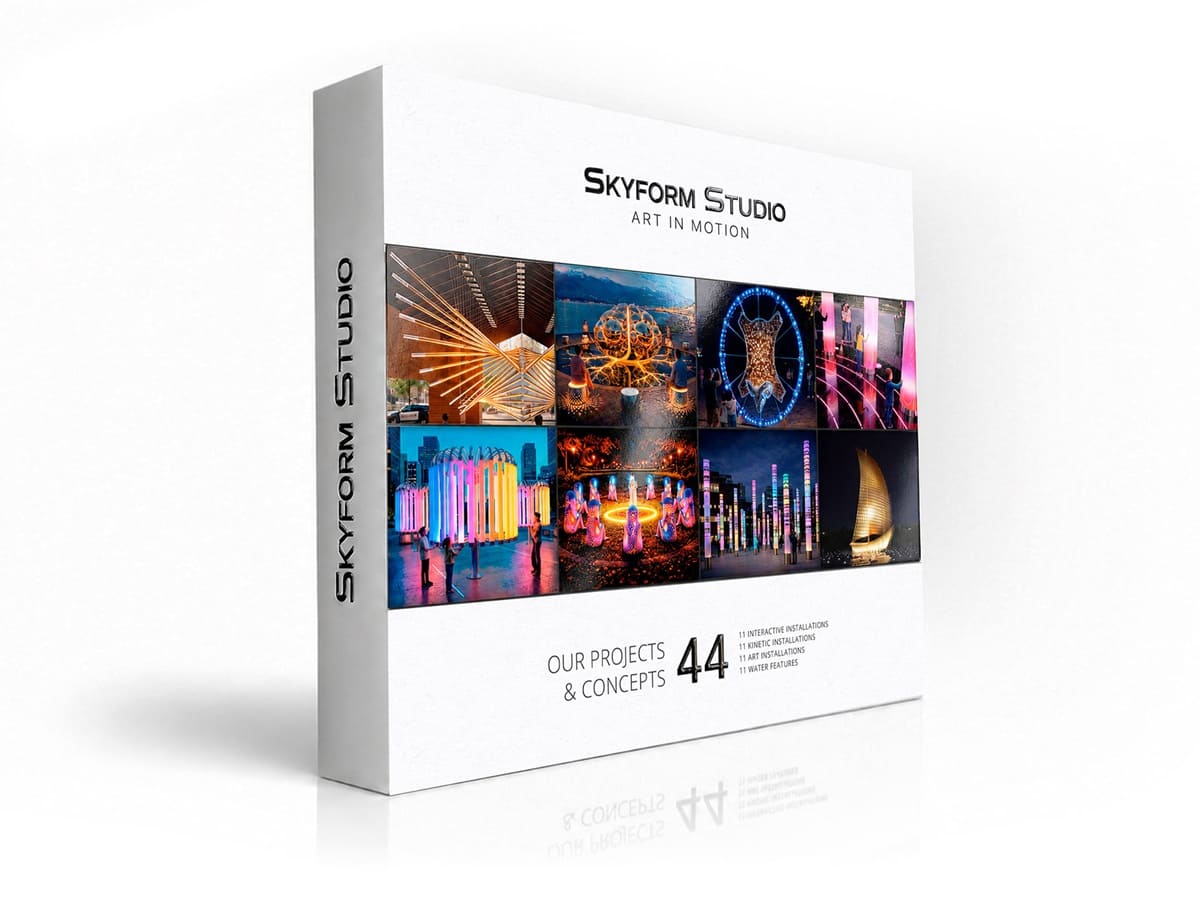
Download the catalog
Skyform Studio
44 projects and concepts that can serve as modern focal points for your spaces.
Igor Velikiy
Creative Director at Skyform Studio
I am personally involved in every project.