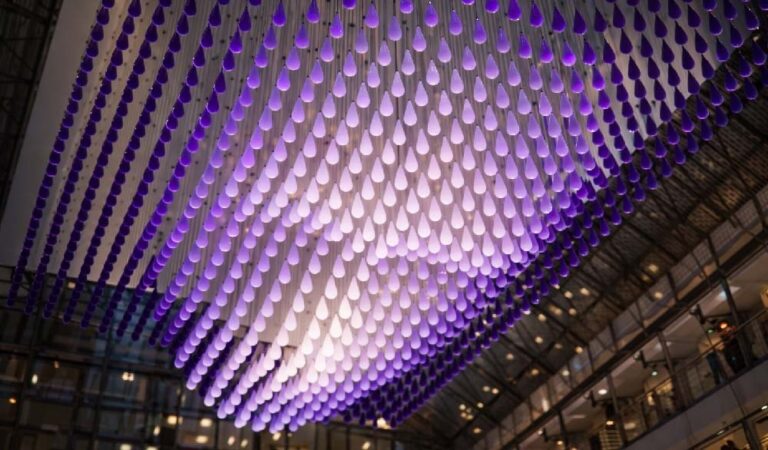
Outdoor kinetic installations are often understood through their motion: rhythm, reflection, transformation, lightness, and response to wind or programmed control. What is less visible is that all of these effects depend on materials performing correctly over time. In outdoor kinetic work, materials are never only about appearance. They are part of the engineering logic of movement, structural stability, weather resistance, servicing, and long-term credibility.
This makes material selection critical. A material may look refined in a render or prototype, yet perform poorly once exposed to sun, moisture, dust, thermal fluctuation, wind load, pollution, salt, repeated motion, and maintenance cycles. In static sculpture, aging may be acceptable or even desirable. In a moving installation, the same aging can alter friction, increase stress, accelerate fatigue, degrade tolerances, and weaken motion quality itself.
For architects, developers, fabricators, and design teams, the question is not simply which material is beautiful or strong. It is which material remains visually convincing and mechanically reliable under real environmental and operational conditions. In serious kinetic work, material choice is not a late specification task. It is part of how the installation is engineered from the beginning.
Many outdoor kinetic works lose quality not because the concept is weak, but because materials were chosen for visual effect without enough regard for climate, motion cycles, maintenance access, or long-term finish behavior. In public work, that mistake is expensive. It affects not only appearance, but performance, service burden, client confidence, and the long-term value of the installation itself.
Outdoor kinetic installations place different demands on materials
Materials in outdoor kinetic installations face a different set of stresses than those used in interior kinetic works or static exterior sculpture. Temperature shifts change tolerances. Moisture affects joints and finishes. Wind load alters dynamic behavior. UV exposure degrades coatings and polymers. Dust and airborne contaminants accumulate in moving interfaces. In coastal or urban environments, salts and pollutants can accelerate corrosion far beyond what a visually similar static object might experience.
The key difference is that a kinetic installation is exposed to weather while moving. A static steel surface may weather slowly while remaining structurally sound. A moving steel assembly with exposed joints, bearings, fasteners, and articulated connections faces very different long-term risks. Corrosion is no longer only a visual issue. It becomes a performance issue. So do contamination, expansion, coating breakdown, and surface wear.
Mass is equally important. In outdoor work, material weight affects not only structural sizing, but actuation load, response speed, inertia, energy demand, fatigue behavior, and support strategy. A material that appears robust may create unnecessary mechanical burden if its weight is too high relative to the motion concept. A lighter alternative may reduce stress across the system, but only if it performs well enough in stiffness, finish durability, and environmental resistance.
This is why outdoor kinetic materials are selected as part of a system rather than as isolated components. Their value is measured not only in how they look on site, but in how they behave across thousands of motion cycles in changing conditions. For clients, the practical implication is clear: material decisions should be made alongside engineering, fabrication, and maintenance planning. Once those conversations split apart, the project usually becomes more expensive to correct later and less convincing once built.
Stainless steel and why it remains a core material
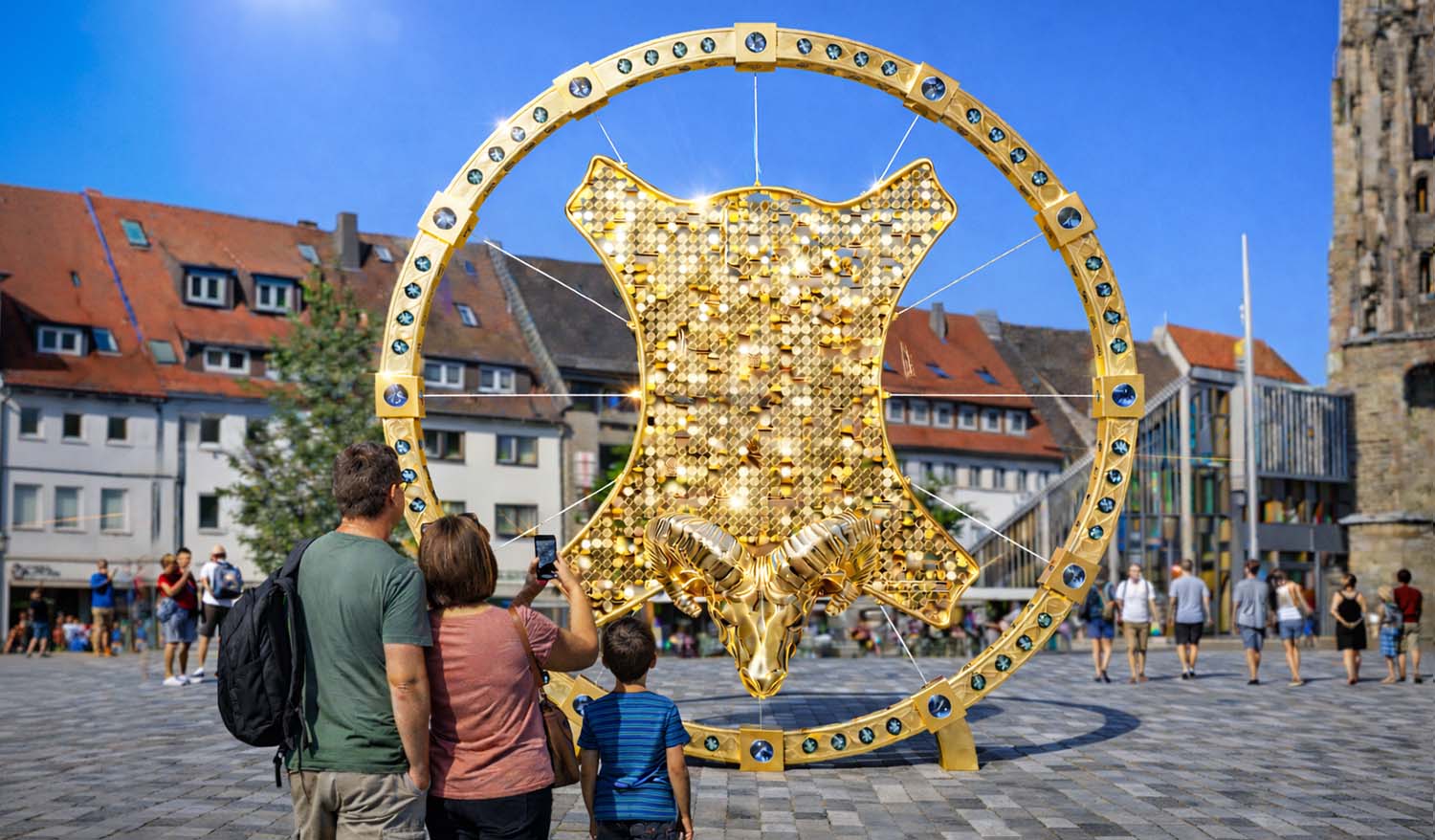
Stainless steel remains one of the most widely used materials in outdoor kinetic installations for a reason. It combines structural integrity, corrosion resistance, machinability, and finish potential. In many public works, it provides the balance required between visual clarity and environmental durability.
Its value is especially clear where the installation must maintain a clean, refined appearance while also performing mechanically. Stainless steel can support polished, brushed, satin, or bead-blasted finishes, and depending on grade selection, it can perform reliably in a wide range of climates. This makes it particularly suitable for visible moving elements, support components, fasteners, and exposed structural details where both appearance and long-term behavior matter.
But stainless steel is not a generic answer. Grade selection is critical. Marine environments, humid climates, or polluted urban settings may require significantly higher corrosion resistance than dry inland conditions. Surface finish also matters beyond aesthetics. A mirror finish may create dramatic visual effects, but it can also increase visible soiling, maintenance frequency, and surface sensitivity. A brushed or directional finish may hide wear more effectively while still maintaining a premium appearance.
Mass must be considered just as carefully. Stainless steel is durable, but it is not light. In larger kinetic systems, excessive weight can increase motor demand, structural load, inertia, and bearing wear. This is why stainless steel is often most successful when used selectively and strategically rather than across every moving part.
Aluminum and the value of lower mass
Aluminum is often chosen when lower weight is a decisive advantage. In moving systems, reduced mass can significantly improve performance. It can lower actuation demand, decrease inertia, reduce stress on structural supports, and make synchronized movement across multiple elements easier to control.
This makes aluminum especially valuable in installations with distributed moving parts, suspended components, or larger arrays where total weight quickly becomes a major engineering factor. It can also be highly effective in works where a thinner or crisper visual language is required but the system cannot absorb the burden of heavier metals.
Its environmental performance is also important. Aluminum offers strong corrosion resistance in many outdoor conditions and can perform well when appropriately finished. Anodizing, powder coating, and related surface treatments can improve both durability and visual quality, depending on the demands of the project.
But aluminum requires careful judgment. It is softer than stainless steel, which affects behavior at connection points, high-wear interfaces, and exposed details. It also responds differently to temperature, especially in large exterior components where expansion and contraction may affect alignment. In some applications, its lower stiffness becomes a constraint, particularly where long spans or highly precise movement are involved.
Used intelligently, aluminum can significantly improve system efficiency. Used casually, it can create long-term issues in rigidity, interface wear, and visual aging.
Composites and advanced lightweight strategies
In some outdoor kinetic installations, especially those requiring lower mass with high geometric control, composite materials become highly relevant. Fiber-reinforced composites can offer a useful combination of stiffness, low weight, corrosion resistance, and form flexibility. This makes them especially valuable where the concept depends on large moving surfaces, aerodynamic behavior, or sculptural components that would become too heavy if fabricated in metal.
Composites can also perform well in harsh environments because they are not vulnerable to corrosion in the same way metals are. For coastal, humid, or chemically aggressive settings, that can be a major advantage. Their ability to reduce system weight can improve motor efficiency, decrease support loads, and help preserve motion smoothness over time.
But composites also introduce different challenges. Surface finish quality, UV resistance, repairability, edge detailing, and long-term aging behavior all require careful control. Unlike metals, composites are not always as easy to refinish, rework, or inspect within conventional maintenance regimes. Their behavior under repeated localized stress also has to be understood precisely, especially where fixings, inserts, or articulated joints are involved.
For this reason, composites are most effective when they are treated as engineered materials rather than lightweight substitutes. A composite surface may look visually resolved, but unless inserts, edge conditions, repair logic, and UV durability are considered at design stage, the built work may become difficult to maintain or inconsistent in aging.
Surface finishes are part of performance, not decoration
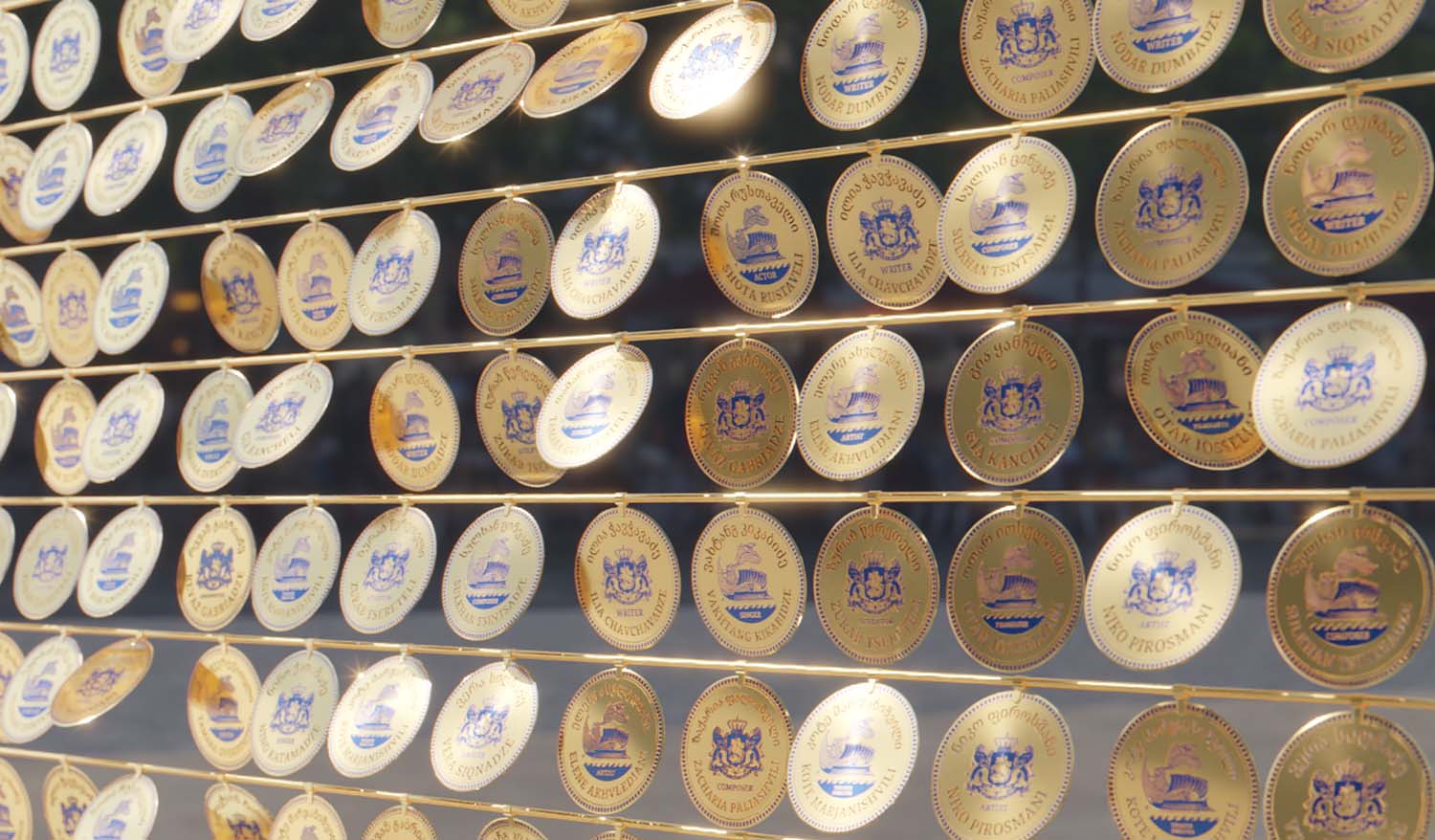
In outdoor kinetic installations, finishes are often discussed as aesthetic decisions, but in practice they are performance systems. Finish affects how the work reflects light, how quickly it shows contamination, how it weathers, how often it must be cleaned, and in some cases how surface wear develops at critical points.
A polished stainless steel surface may create a strong visual signature and dramatic environmental reflections, but it may also demand more frequent cleaning, reveal scratches more readily, and become visually unstable in highly exposed environments. A brushed finish may appear more controlled and durable in daily use. Powder coating may create strong color and surface consistency, but only if the coating system is appropriate for UV exposure, mechanical movement, and long-term adhesion. Anodized aluminum can perform well, but the finish strategy must match both the climate and the intended visual tone of the work.
Moving installations reveal finish failure more quickly than static ones. Abrasion, vibration, repeated contact, environmental contamination, and servicing activity all expose weak finishing strategies. A surface that performs acceptably on a static façade element may degrade far faster on a moving component.
The right finish is not always the most dramatic one. It is the one that preserves the intended visual quality within the real cleaning, servicing, and weathering conditions of the site.
Corrosion resistance is a system issue, not a single-material issue
Corrosion in outdoor kinetic work is rarely solved by selecting a corrosion-resistant metal alone. It is a system-level issue involving the relationships between materials, coatings, fixings, drainage, detailing, and maintenance access.
A project may specify stainless steel, but still encounter corrosion problems if dissimilar metals are introduced carelessly, if water is trapped in connections, if protective coatings fail around fixings, or if polluted moisture remains in poorly ventilated cavities. The same is true for aluminum or coated steel systems. Corrosion often appears not because the primary material is wrong, but because interfaces were not engineered with enough discipline.
This is especially important in kinetic installations because movement increases exposure at joints, edges, bearings, and interfaces. Water ingress, salt accumulation, galvanic interaction, and micro-abrasion at moving contact points can all accelerate degradation in ways that are not obvious at concept stage.
For serious outdoor work, corrosion resistance depends on material pairing, drainage strategy, shielding of sensitive components, access for inspection, and the ability to replace vulnerable parts without disrupting the sculpture as a whole. A poorly resolved corrosion strategy may not be obvious at handover, but it will reveal itself through staining, seized movement, uneven weathering, and premature servicing demand.
Bearings, joints, and hidden wear surfaces need different material thinking
One of the most common mistakes in evaluating outdoor kinetic installations is to focus only on visible sculptural materials. In reality, some of the most important material decisions occur in the hidden zones of the system: bearings, bushings, shafts, pins, joints, housings, and wear surfaces.
These elements experience concentrated stress, repeated motion, contamination, and often the highest maintenance demands in the installation. Their material behavior directly affects movement quality. If a bearing assembly is poorly protected or the wrong wear pairing is chosen, the sculpture may become noisy, inconsistent, resistant, or unsafe long before the visible outer surfaces show serious degradation.
This is why kinetic engineering requires a layered material strategy. The visible skin may be one material, the load-bearing structure another, and the moving interfaces another still. The viewer may never see these hidden systems directly, but they feel their consequences. Smoothness, silence, consistency, and long-term precision all depend on material decisions in places the public will never notice.
For clients evaluating implementation quality, this is crucial: many failed outdoor kinetic works do not fail first in the visible skin. They fail in the hidden interfaces where wear, contamination, and maintenance access were underestimated.


Mass affects motion quality as much as structural demand
Mass is one of the most decisive material-related variables in outdoor kinetic work. It affects not only whether the structure is strong enough, but how the sculpture behaves while moving. A heavier system may feel slower, more inertial, and more mechanically demanding. A lighter system may be more responsive, but also more vulnerable to wind effects, flutter, or insufficient visual presence depending on scale and concept.
This is why material selection must always be evaluated in relation to movement behavior. If the concept depends on subtle collective motion, excessive weight can destroy the softness and precision of the effect. If the installation relies on wind response, too much mass may suppress motion entirely. If the sculpture operates through programmed actuation, high mass may increase motor size, energy demand, structural reinforcement, and wear across the entire system.
At larger scales, these effects compound. What looks acceptable in a single element becomes a major engineering burden when repeated across a canopy, suspended field, or distributed façade installation. For this reason, designers often use material strategies that balance visible solidity with hidden lightness.
In outdoor kinetic art, mass is not only a structural number. It is part of the expressive quality of motion.
Outdoor servicing should shape material choice from the beginning
Outdoor kinetic installations do not exist in controlled museum conditions. They accumulate dust, moisture, biological contamination, pollution residues, and wear from repeated maintenance access. In some climates, they may also face ice, salt spray, fine sand, or prolonged UV stress. This makes servicing one of the most important filters through which material choice should be evaluated.
A material may be visually impressive and theoretically durable, but still be a poor choice if it demands unrealistic maintenance cycles or cannot be repaired gracefully. Likewise, a finish may appear elegant in mock-ups, but become difficult to clean or easy to damage once the installation enters full operation. The question is not only whether the material can survive outdoors. It is whether it can survive outdoors while still moving and while being serviced as a real public installation.
This is why maintenance strategy needs to be part of material selection from the beginning. Can vulnerable finishes be renewed? Can exposed components be replaced without dismantling the system? Will the maintenance team be able to work safely and effectively on the material surfaces in question? Is the aging pattern acceptable if servicing intervals extend longer than originally expected?
The strongest outdoor kinetic works are those in which material behavior and maintenance reality have been aligned early enough that long-term performance does not depend on ideal conditions. In practical terms, that often means fewer surprises after installation, more predictable upkeep, and better preservation of the original visual and kinetic quality.
No single material is universally best
There is no universal best material for outdoor kinetic installations. Stainless steel, aluminum, composites, coated steels, engineered polymers, elastomeric elements, and hybrid material assemblies all have valid roles depending on the concept, environment, scale, motion type, and maintenance strategy of the work.
What matters is not choosing the most prestigious material or the most technologically interesting one. It is choosing the material system that best supports the intended movement, finish durability, environmental resistance, serviceability, and spatial presence of the installation. In many successful projects, the answer is not one material but a hierarchy of materials, each assigned according to structural, visible, or mechanical function.
This is where serious engineering and realization discipline become essential. Outdoor kinetic sculpture succeeds when materials are chosen as part of a long-term performance strategy, not as isolated aesthetic decisions. For clients, this is also the difference between commissioning an object and commissioning a system that will continue to perform.
Materials used in outdoor kinetic installations are never only about appearance. They determine durability, finish stability, corrosion resistance, mass, servicing demands, and ultimately the quality of movement itself. In moving public art, material choice is inseparable from engineering logic.
Stainless steel, aluminum, composites, and specialized hidden material assemblies all play important roles, but their value depends on how they are integrated into the total system of the work. Surface finishes must be judged through performance, not only aesthetics. Corrosion must be understood as a system issue, not a single-material problem. Weight must be evaluated through motion behavior as much as through structural demand. Maintenance must shape material decisions from the start.
Mass affects motion quality as much as structural demand
Mass is one of the most decisive material-related variables in outdoor kinetic work. It affects not only whether the structure is strong enough, but how the sculpture behaves while moving. A heavier system may feel slower, more inertial, and more mechanically demanding. A lighter system may be more responsive, but also more vulnerable to wind effects, flutter, or insufficient visual presence depending on scale and concept.
This is why material selection must always be evaluated in relation to movement behavior. If the concept depends on subtle collective motion, excessive weight can destroy the softness and precision of the effect. If the installation relies on wind response, too much mass may suppress motion entirely. If the sculpture operates through programmed actuation, high mass may increase motor size, energy demand, structural reinforcement, and wear across the entire system.
At larger scales, these effects compound. What looks acceptable in a single element becomes a major engineering burden when repeated across a canopy, suspended field, or distributed façade installation. For this reason, designers often use material strategies that balance visible solidity with hidden lightness.
In outdoor kinetic art, mass is not only a structural number. It is part of the expressive quality of motion.
Outdoor servicing should shape material choice from the beginning
Outdoor kinetic installations do not exist in controlled museum conditions. They accumulate dust, moisture, biological contamination, pollution residues, and wear from repeated maintenance access. In some climates, they may also face ice, salt spray, fine sand, or prolonged UV stress. This makes servicing one of the most important filters through which material choice should be evaluated.
A material may be visually impressive and theoretically durable, but still be a poor choice if it demands unrealistic maintenance cycles or cannot be repaired gracefully. Likewise, a finish may appear elegant in mock-ups, but become difficult to clean or easy to damage once the installation enters full operation. The question is not only whether the material can survive outdoors. It is whether it can survive outdoors while still moving and while being serviced as a real public installation.
This is why maintenance strategy needs to be part of material selection from the beginning. Can vulnerable finishes be renewed? Can exposed components be replaced without dismantling the system? Will the maintenance team be able to work safely and effectively on the material surfaces in question? Is the aging pattern acceptable if servicing intervals extend longer than originally expected?
The strongest outdoor kinetic works are those in which material behavior and maintenance reality have been aligned early enough that long-term performance does not depend on ideal conditions. In practical terms, that often means fewer surprises after installation, more predictable upkeep, and better preservation of the original visual and kinetic quality.
No single material is universally best
There is no universal best material for outdoor kinetic installations. Stainless steel, aluminum, composites, coated steels, engineered polymers, elastomeric elements, and hybrid material assemblies all have valid roles depending on the concept, environment, scale, motion type, and maintenance strategy of the work.
What matters is not choosing the most prestigious material or the most technologically interesting one. It is choosing the material system that best supports the intended movement, finish durability, environmental resistance, serviceability, and spatial presence of the installation. In many successful projects, the answer is not one material but a hierarchy of materials, each assigned according to structural, visible, or mechanical function.
This is where serious engineering and realization discipline become essential. Outdoor kinetic sculpture succeeds when materials are chosen as part of a long-term performance strategy, not as isolated aesthetic decisions. For clients, this is also the difference between commissioning an object and commissioning a system that will continue to perform.
Materials used in outdoor kinetic installations are never only about appearance. They determine durability, finish stability, corrosion resistance, mass, servicing demands, and ultimately the quality of movement itself. In moving public art, material choice is inseparable from engineering logic.
Stainless steel, aluminum, composites, and specialized hidden material assemblies all play important roles, but their value depends on how they are integrated into the total system of the work. Surface finishes must be judged through performance, not only aesthetics. Corrosion must be understood as a system issue, not a single-material problem. Weight must be evaluated through motion behavior as much as through structural demand. Maintenance must shape material decisions from the start.
In the strongest outdoor kinetic works, materials do not simply survive the environment. They allow the installation to remain visually convincing, mechanically reliable, and experientially precise over time. That is what turns a moving object into a durable public artwork — and what separates a visually appealing concept from an installation that can truly be realized with long-term integrity.
Contact Us
Ready to develop a kinetic installation with the right motion system? Explore our portfolio or contact the SKYFORM STUDIO team to discuss your project.
In kinetic installations, movement is not an added effect — it is the core behavior that defines how the work is perceived in space. The choice of motion system shapes precision, reliability, maintenance, and overall spatial experience, making it a fundamental design and engineering decision.
At SKYFORM STUDIO, we design and realize kinetic installations through an integrated process that connects motion logic, engineering, fabrication, and implementation — ensuring each system is precise, durable, and aligned with real-world conditions.
Frequently asked questions (FAQ)
Common materials include stainless steel, aluminum, composites, coated steels, and specialized components for joints, bearings, and hidden moving interfaces.
Because it offers strong corrosion resistance, structural reliability, and a wide range of finish options, making it suitable for visible and structural elements in many outdoor environments.
Not always. Lower mass can improve motion efficiency and reduce mechanical burden, but the right balance depends on scale, wind behavior, stiffness, finish durability, and the intended movement quality.
Because finishes affect not only appearance, but also cleaning, weathering, UV resistance, visible wear, and in some cases the long-term performance of moving surfaces.
A common mistake is choosing materials primarily for visual effect without fully considering corrosion, weight, servicing, environmental exposure, and how the material will behave under repeated motion over time.
Author of the article