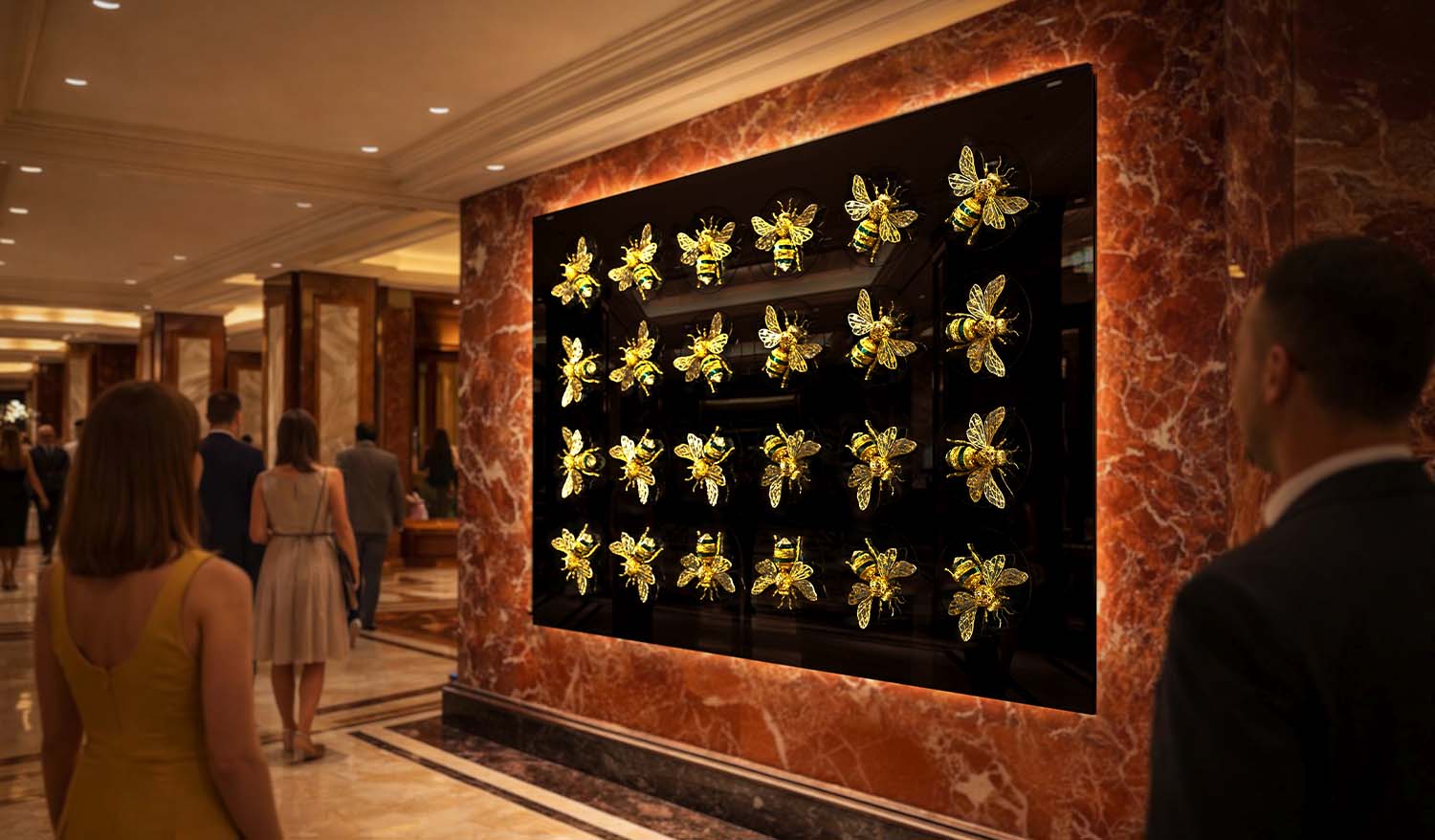
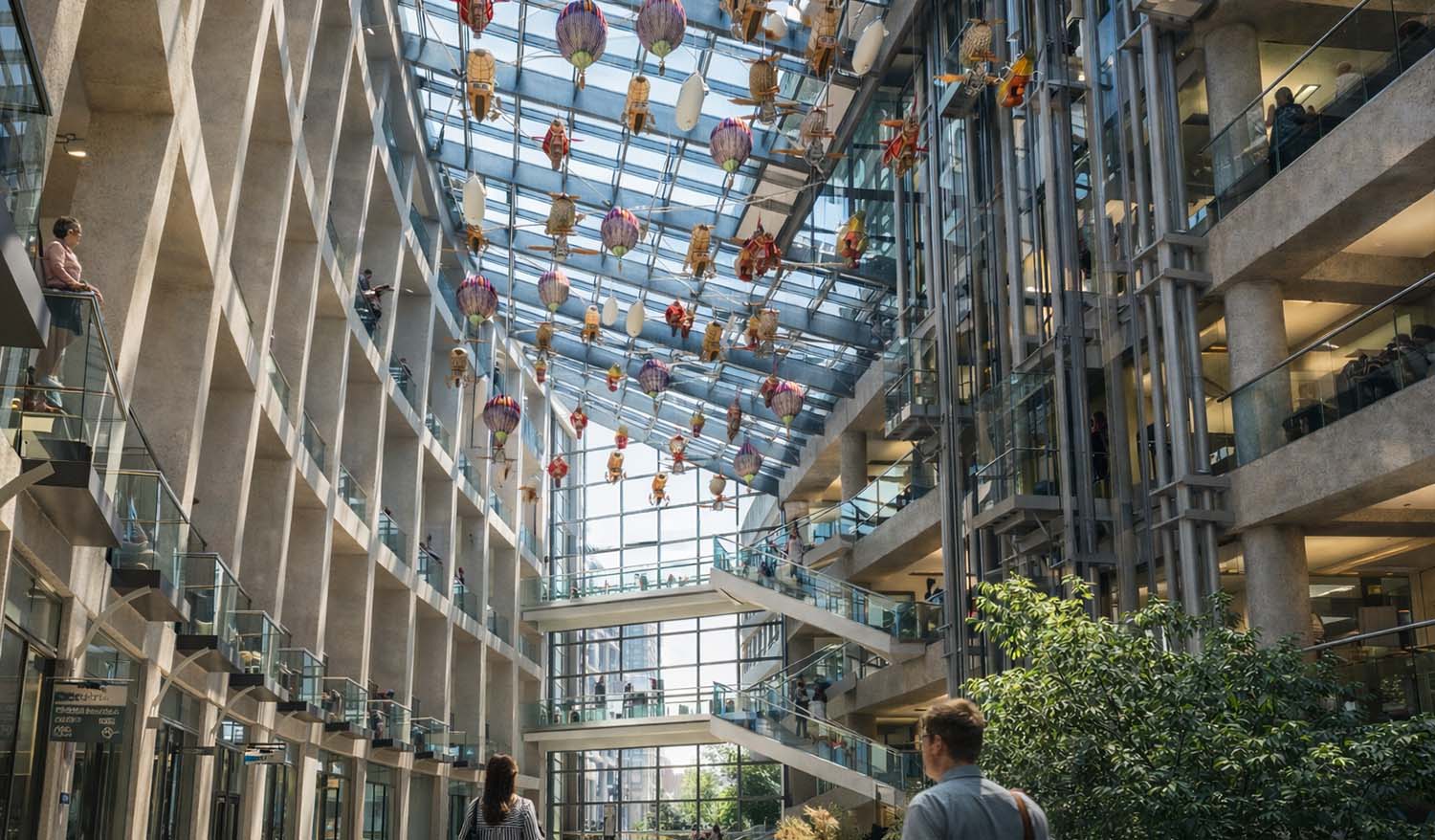
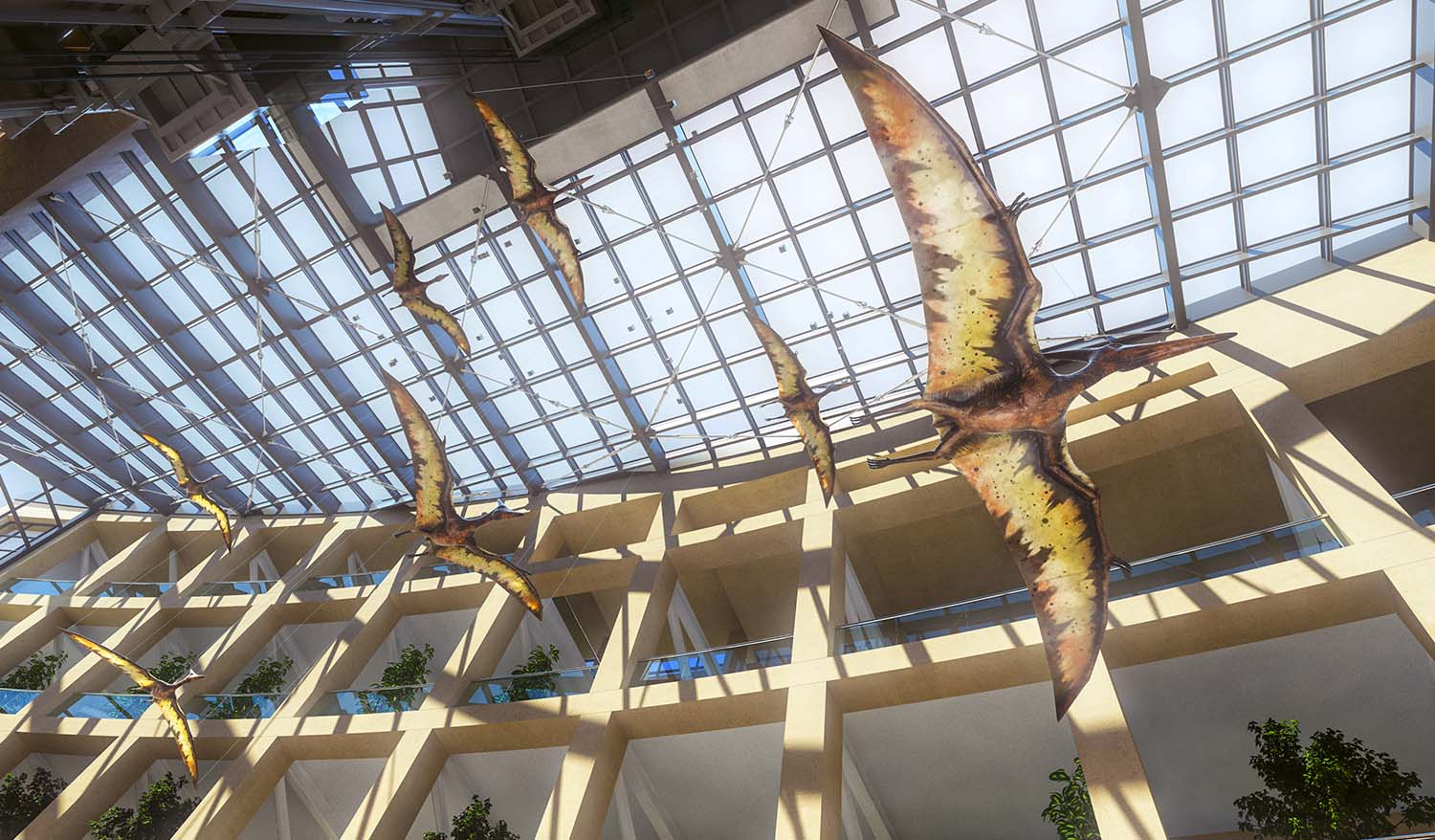
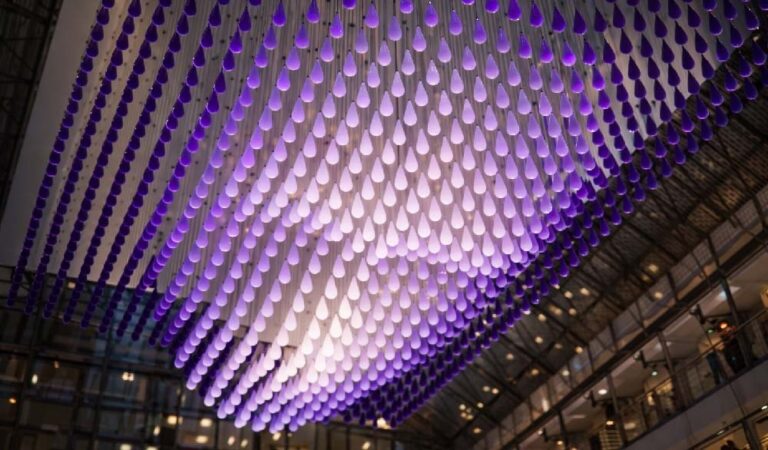
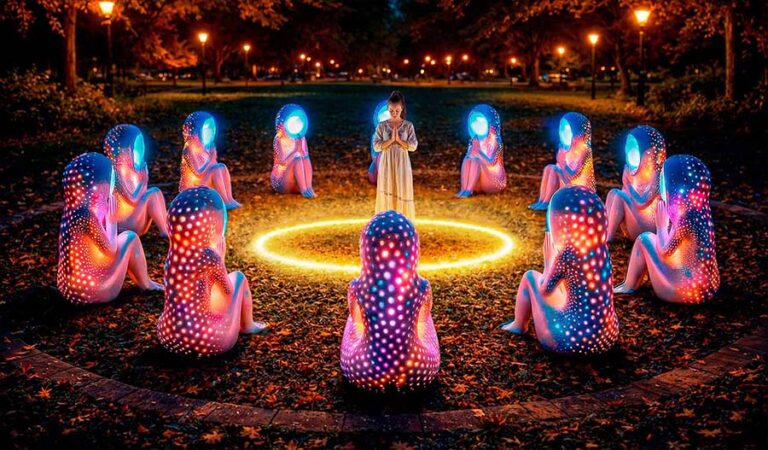
Movement has always fascinated architects, engineers, and artists. In sculpture, motion introduces a temporal dimension that transforms static objects into dynamic spatial events. Kinetic art installations occupy a unique position at the intersection of art, engineering, architecture, and technology. They change continuously, respond to forces such as wind or human presence, and reshape how people perceive space.
In contemporary cities, the best kinetic art installations are rarely confined to galleries. They appear in airports, museums, plazas, shopping centers, and corporate headquarters. These works operate simultaneously as sculptures, landmarks, and architectural infrastructure.
Over the last two decades, advances in robotics, digital control systems, and generative software have allowed artists to design increasingly sophisticated installations. From massive moving sculptures suspended inside atriums to wind-powered structures integrated into building facades, kinetic art has become a defining feature of contemporary public space. Below are ten of the top kinetic art installations that demonstrate how movement can transform architecture and urban environments.
What makes kinetic art unique
Unlike traditional sculpture, kinetic art introduces time as a core design element. Motion can occur through mechanical systems, environmental forces, digital programming, or complex combinations of all three. What distinguishes kinetic art from simple moving objects is the intentional choreography of motion. Movement is not merely functional; it becomes the primary artistic language of the work.
Many installations operate as spatial instruments. They manipulate light reflections, alter the perception of scale, or guide visual attention across architectural volumes. In large public interiors, kinetic sculptures often serve as visual anchors that help orient visitors within complex environments. The most successful kinetic installations also blur disciplinary boundaries. They require collaboration between artists, architects, structural engineers, software developers, and mechanical specialists. The final result is rarely a single object but rather an integrated system of movement, structure, and digital control.
Top 10 famous kinetic art installations
1. Rain Oculus – Singapore
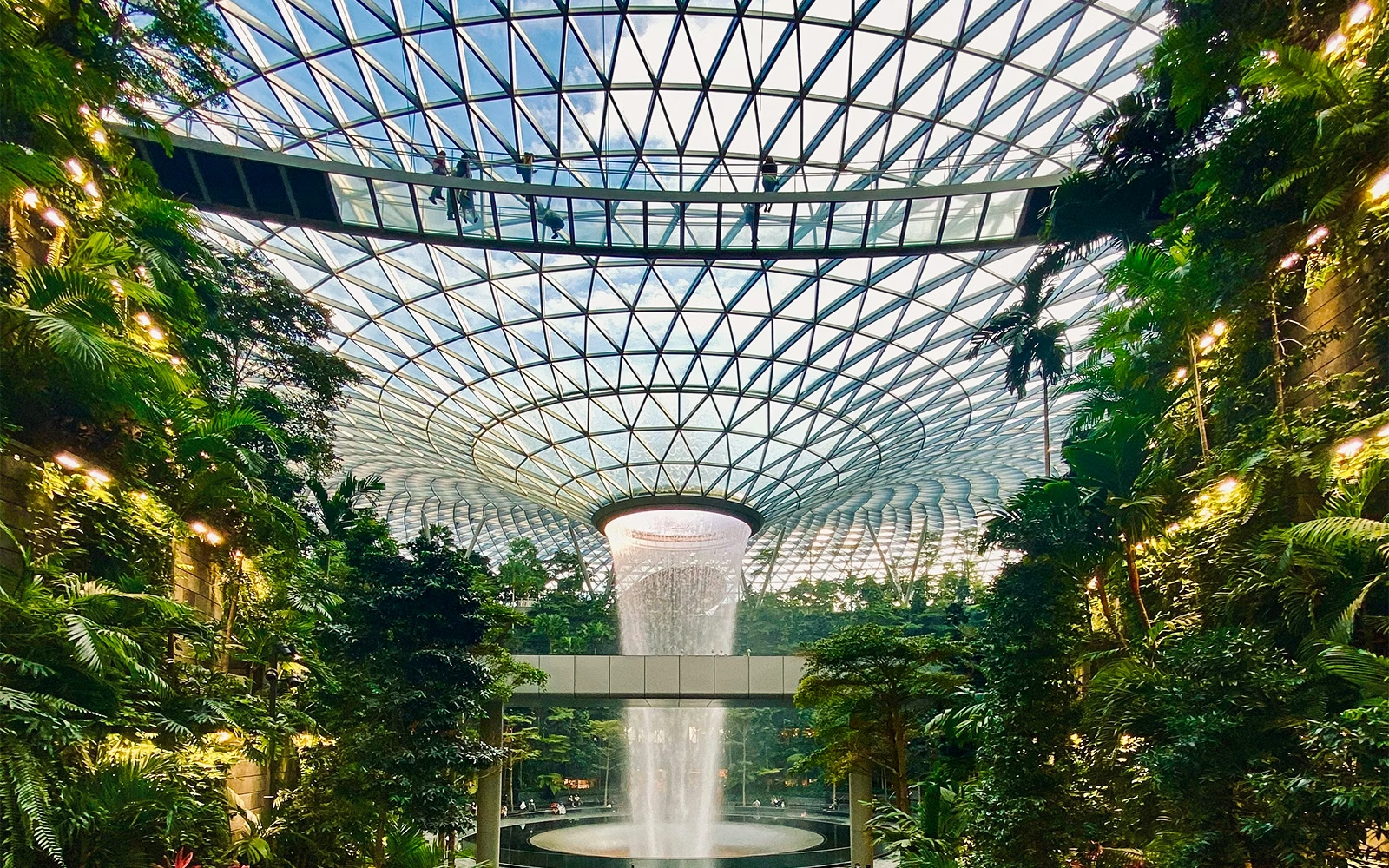
At the center of the retail complex at Jewel Changi Airport stands one of the most dramatic kinetic installations ever built. The Rain Oculus is a massive circular opening in the roof that directs water into the world’s tallest indoor waterfall. The installation combines architecture, water engineering, and lighting choreography. While the waterfall itself appears constant, the system continuously adjusts water flow and lighting sequences, creating a dynamic environment that changes throughout the day.
2. Kinetic Rain – Singapore Airport
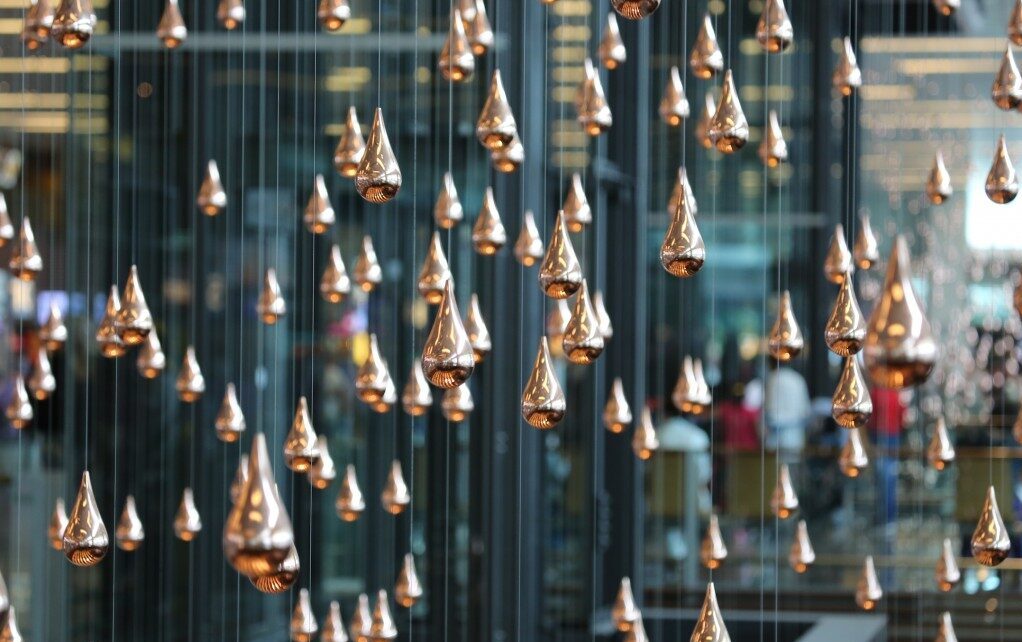
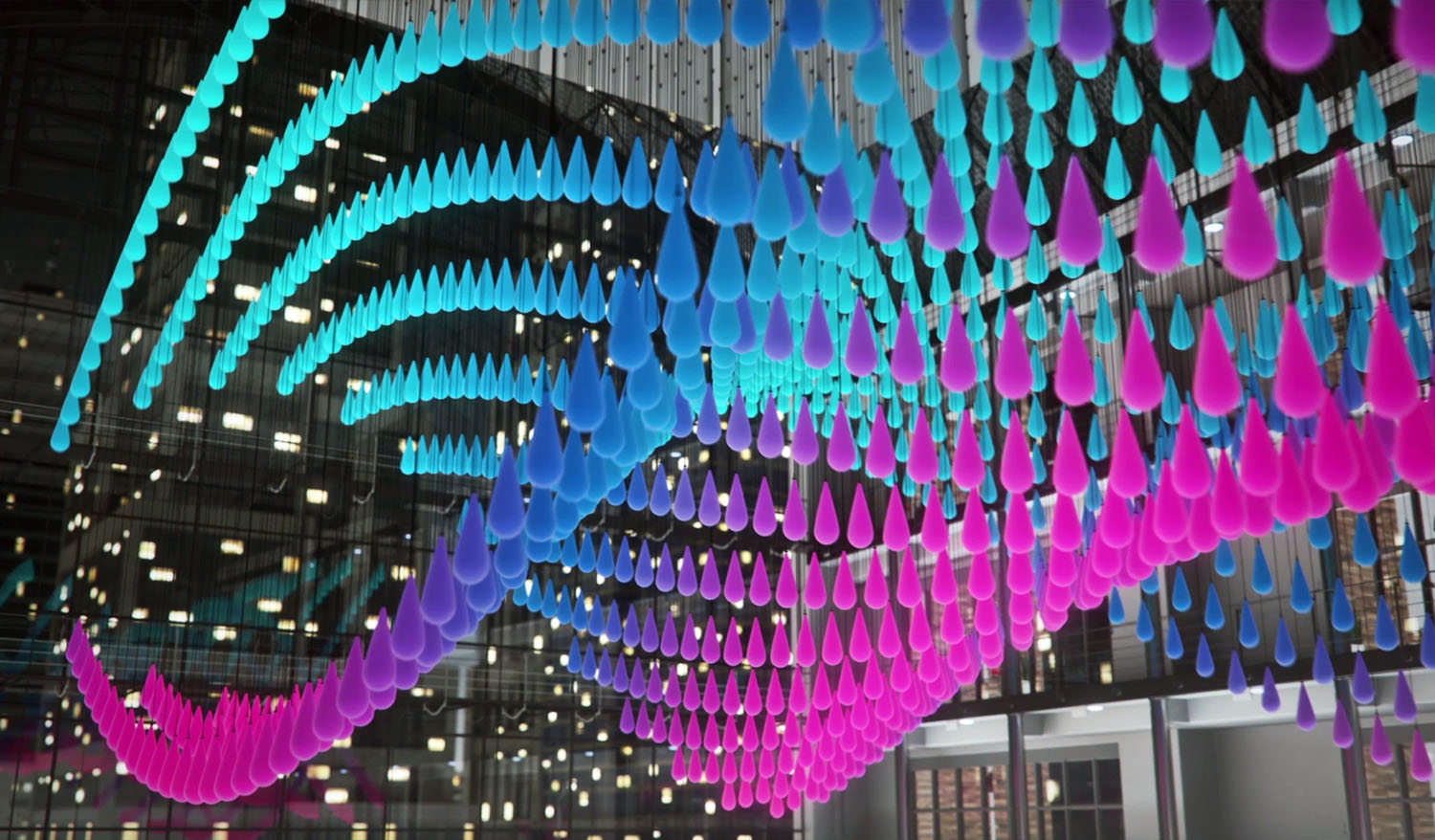
One of the most widely recognized airport installations in the world is Kinetic Rain at Changi Airport Terminal 1. Designed by the studio ART+COM, the installation consists of 1,216 bronze droplets suspended from the ceiling. Each droplet moves independently, forming evolving three-dimensional shapes such as airplanes, waves, and abstract forms. The sculpture demonstrates how synchronized motion programming can transform a large interior space into a constantly shifting visual performance.
3. As If It Were Already Here – Sydney
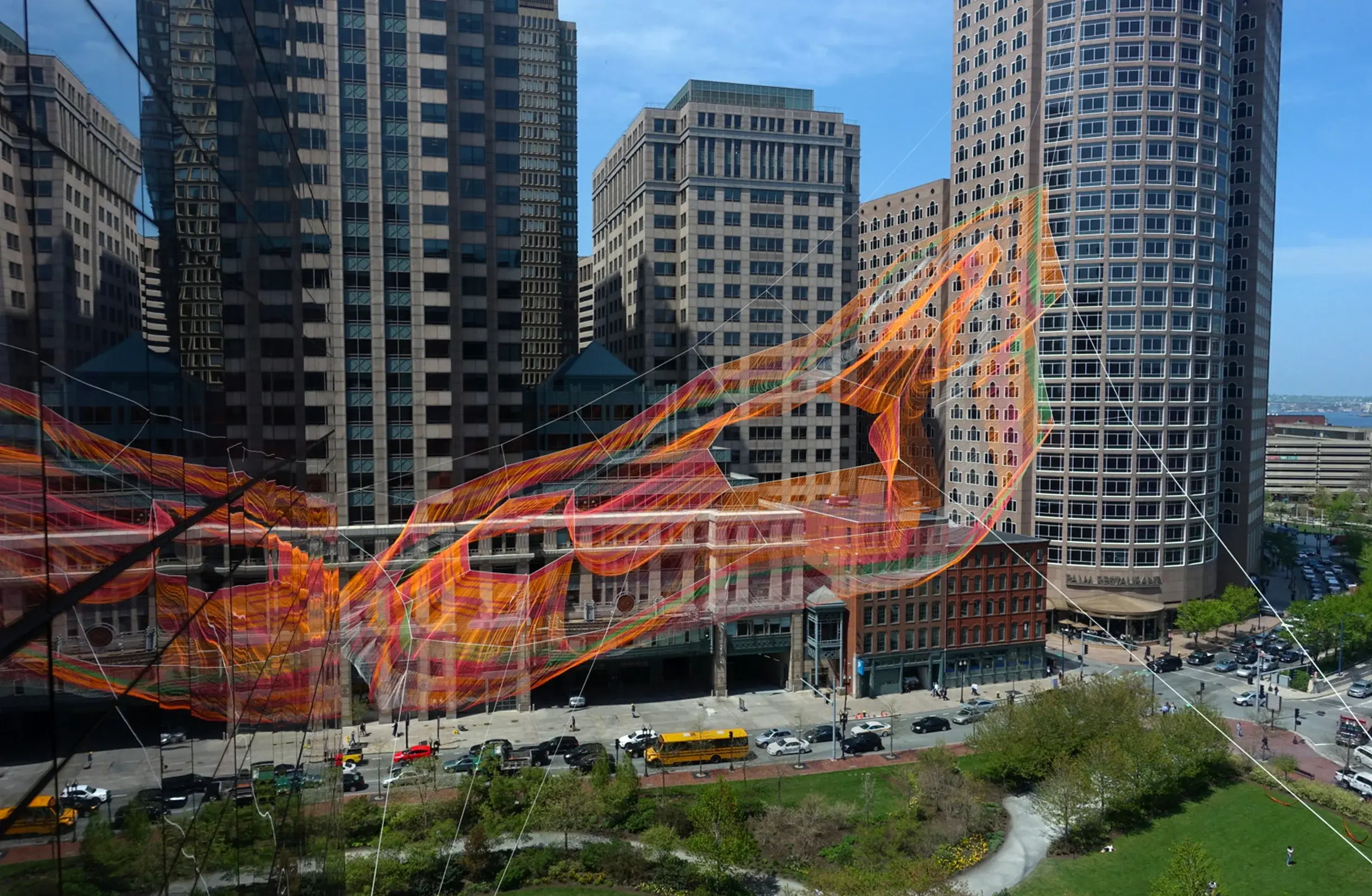
Installed in the atrium of the Museum of Contemporary Art Australia, this monumental installation by Daniel Rozin features hundreds of suspended reflective elements that move in response to air currents and environmental changes. The work constantly reshapes itself, producing fluid waves of light across the space.
4. BMW Kinetic Sculpture – Munich
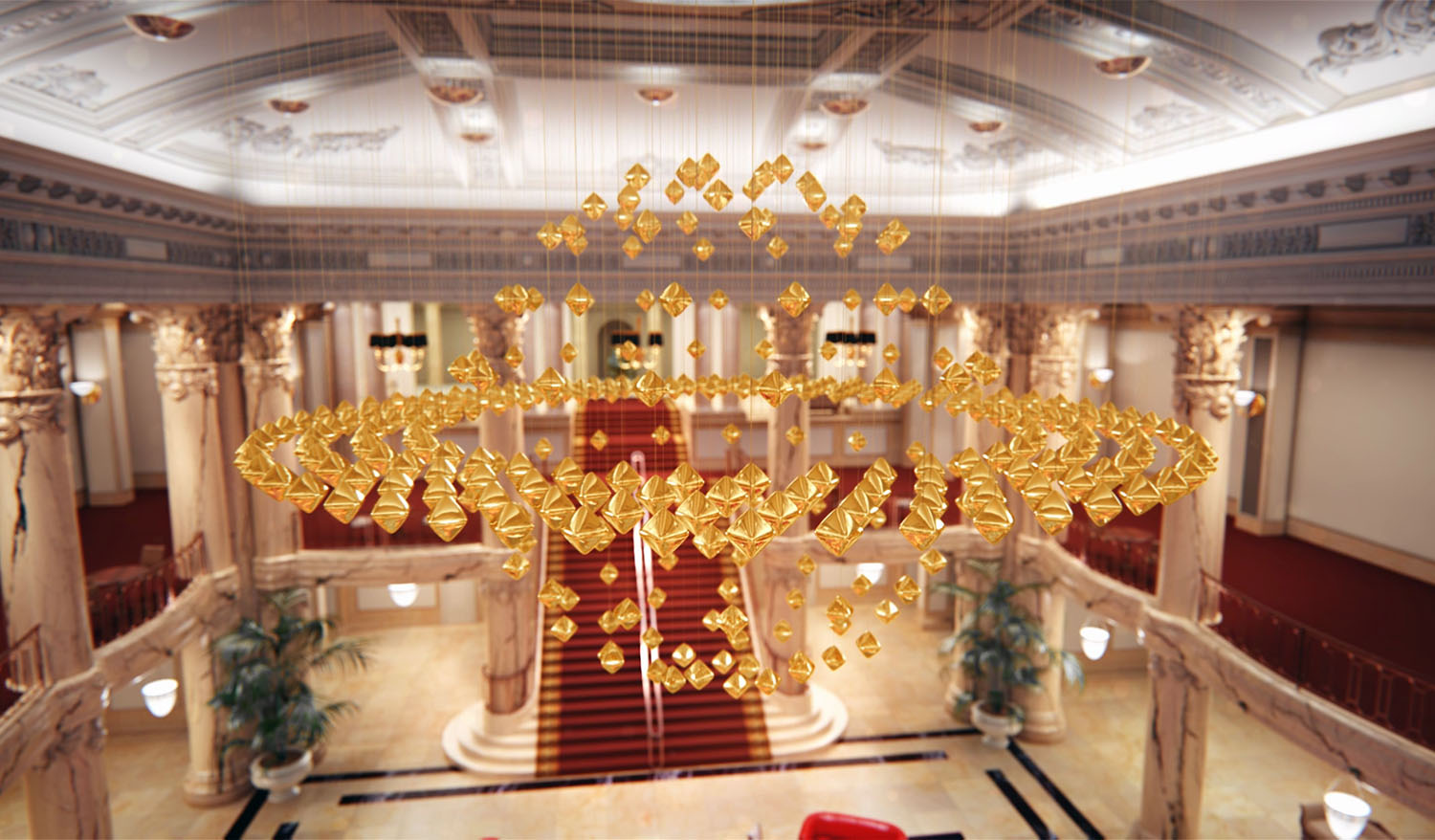
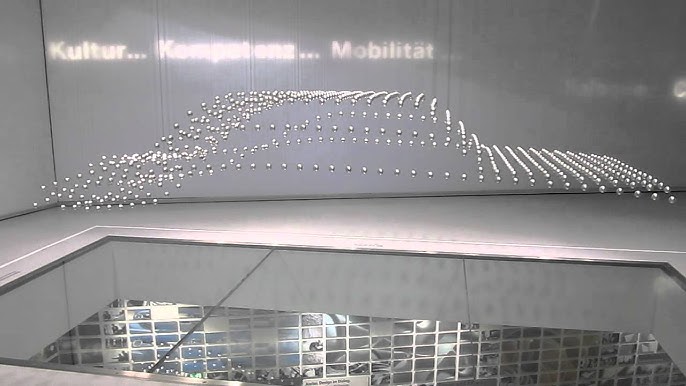
Inside the BMW Museum, a breathtaking kinetic installation composed of hundreds of metallic spheres moves in precise synchronization. Each sphere is suspended by a cable controlled by a motorized system. Together they form evolving three-dimensional shapes that morph seamlessly into new forms. The installation acts as a spatial performance illustrating the transformation of automotive design.
5. Wind Arbor – Charlotte
Located at Charlotte Douglas International Airport, the Wind Arbor installation by Ned Kahn covers a large portion of the terminal facade. Thousands of small aluminum panels move in response to wind currents. The installation effectively visualizes invisible atmospheric forces, turning the building itself into a kinetic instrument.
6. Crown Fountain – Chicago
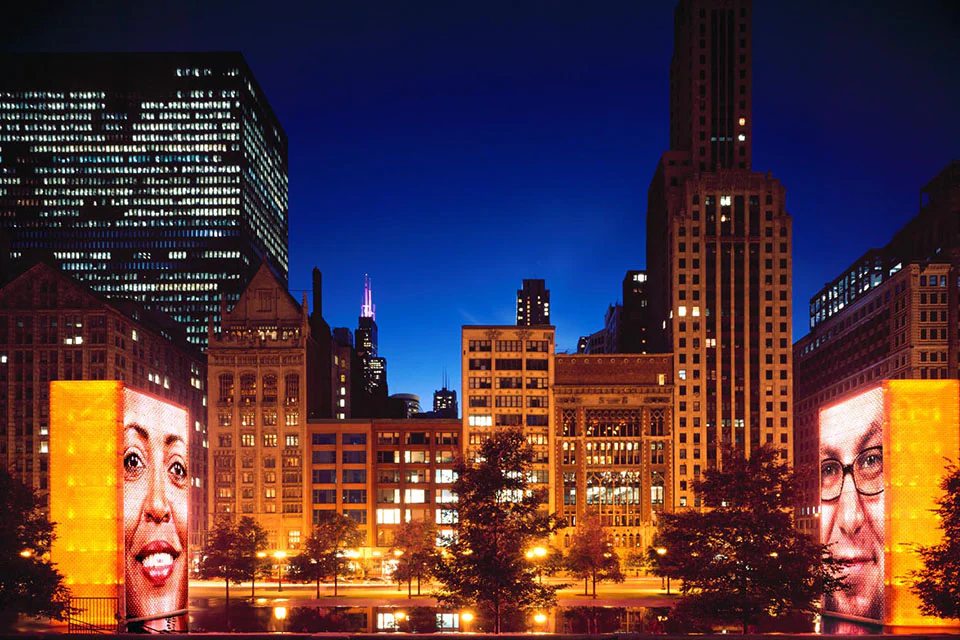
At Millennium Park, the Crown Fountain by Jaume Plensa combines digital media, water choreography, and public interaction. Two tall glass towers display video portraits of Chicago residents. Water periodically flows from the towers into a reflecting pool where visitors can interact with the fountain. The installation merges technology, urban space, and participatory art.
7. Hylozoic Ground – Venice Biennale
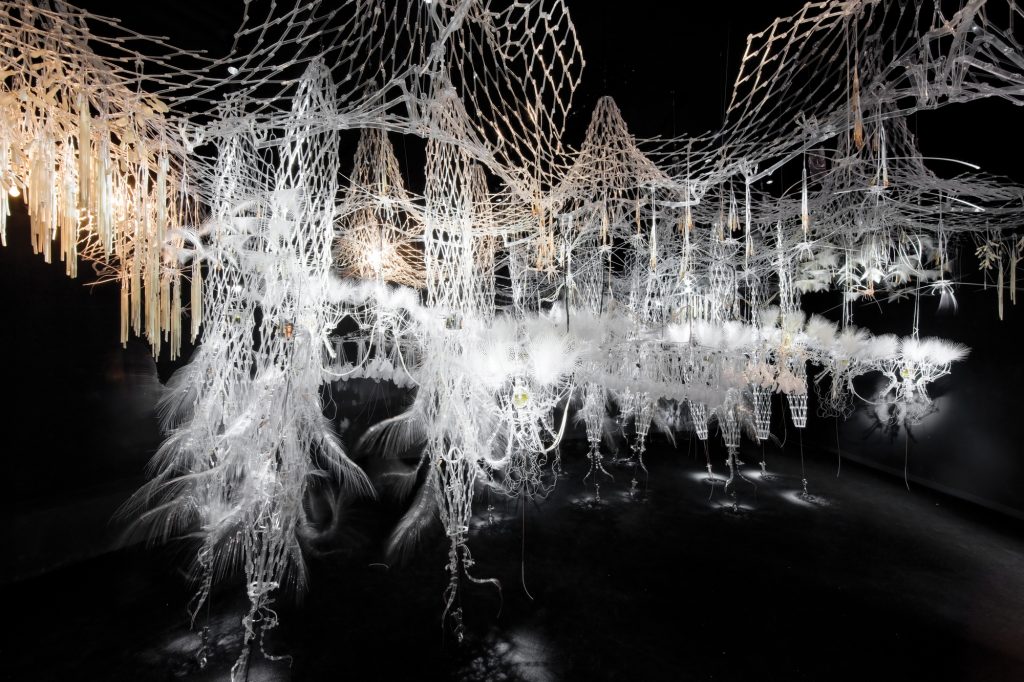
Created by Philip Beesley, this experimental installation was exhibited at the Venice Biennale. The structure consists of thousands of lightweight components that move and respond to visitor presence. Sensors trigger subtle movements across the installation, giving the impression that the structure is alive.
8. The Tipping Wall – Toronto
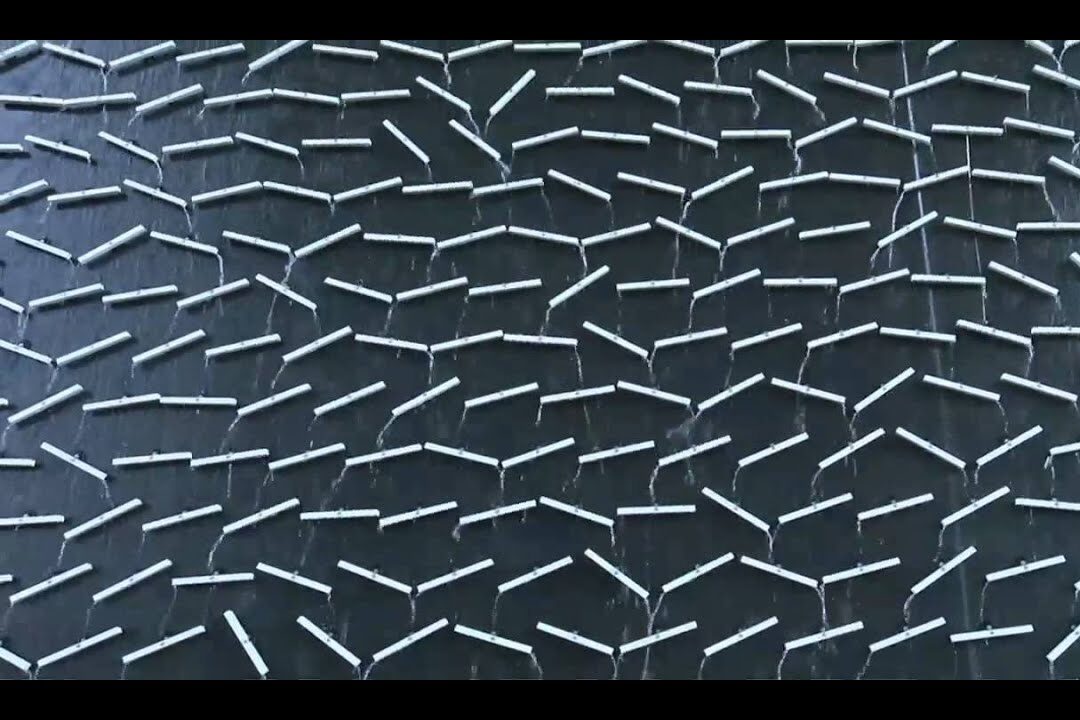
Installed at Toronto Pearson International Airport, The Tipping Wall features thousands of rotating aluminum panels that flip as travelers move past them. Motion sensors detect the presence of people walking along the corridor, causing waves of movement to ripple across the surface.
9. Aeolus Wind Pavilion – London
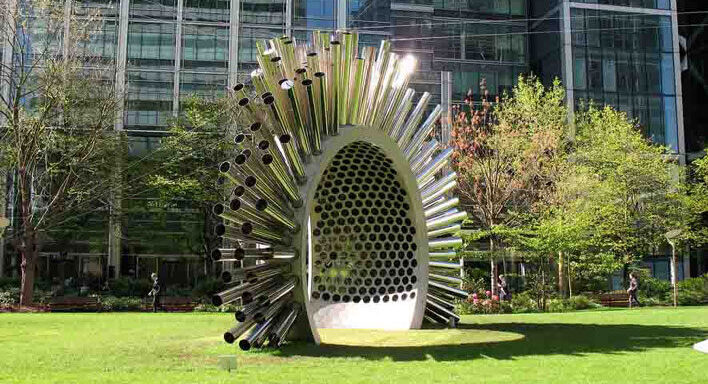
Designed by Luke Jerram, the Aeolus Pavilion transforms wind into sound and vibration. The structure contains hundreds of tubes that resonate as wind flows through them. Visitors can climb inside the installation and experience the invisible movement of air translated into acoustic vibrations.
10. Kinetic Wave – Seoul
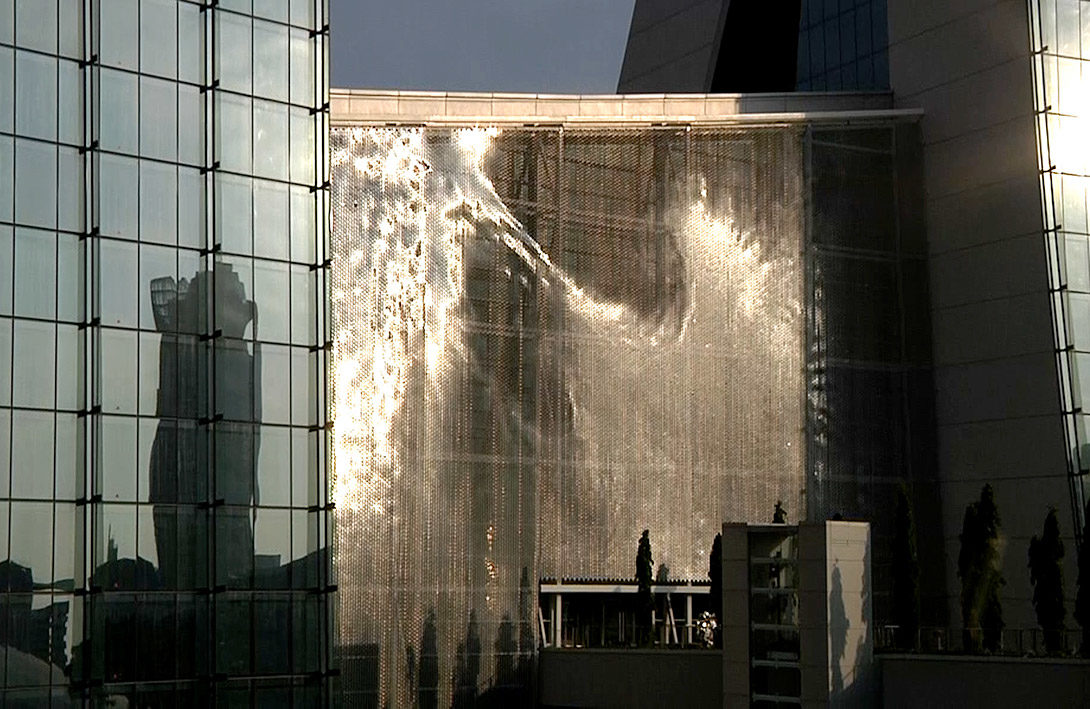
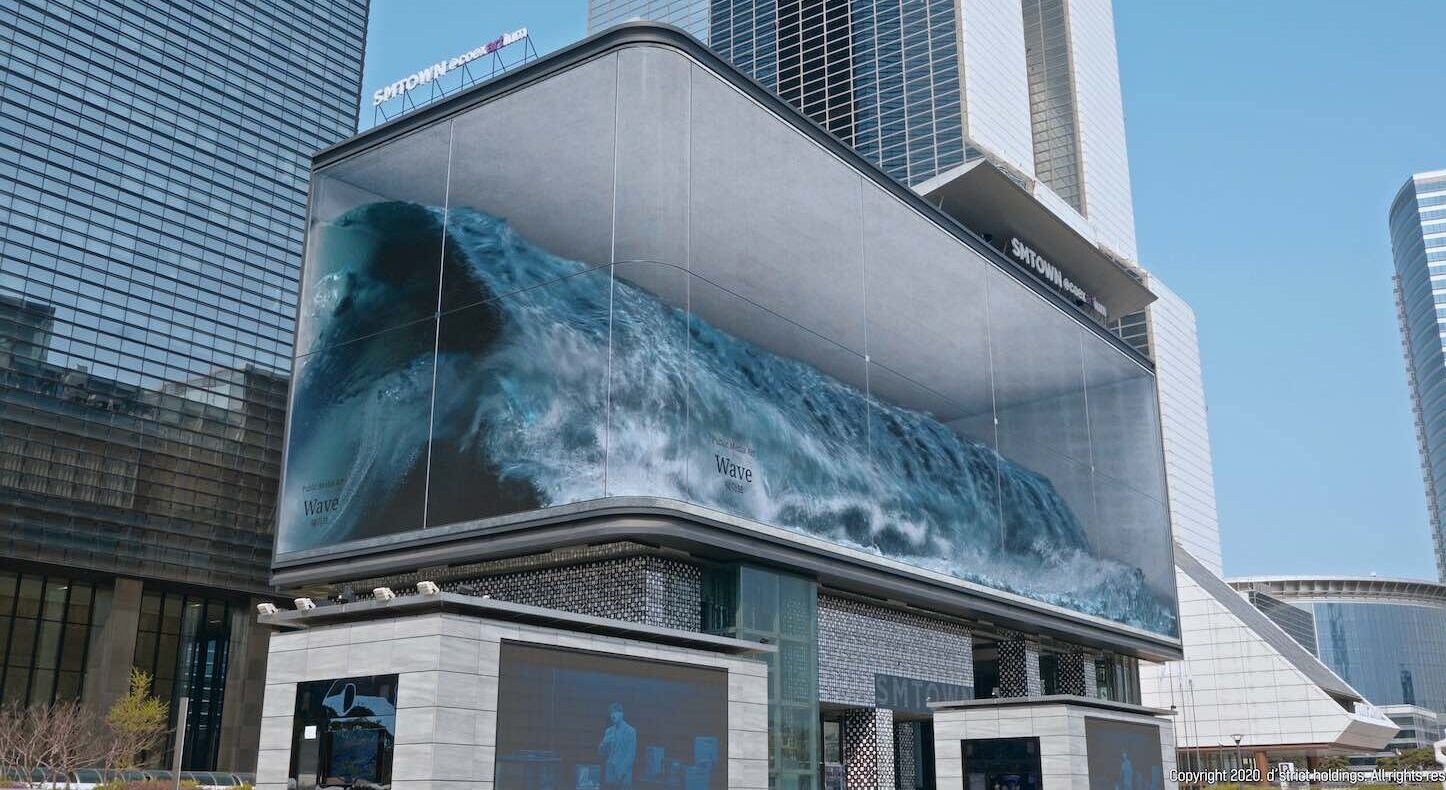
In the urban district of Gangnam, Seoul, the enormous digital kinetic façade known as Wave transforms the exterior of the COEX K-Pop Square into a giant moving ocean. The illusion of a massive wave crashing inside a transparent cube is created through advanced digital animation and large-scale LED technology, representing a new hybrid between digital media and kinetic sculpture.
Artists behind these sculptures
Many of the most influential kinetic art installations were created by artists who combine artistic vision with engineering experimentation. Artists such as Alexander Calder pioneered the concept of movement in sculpture through his famous mobiles. Later innovators like Theo Jansen explored mechanical creatures powered entirely by wind. Contemporary kinetic artists often work within multidisciplinary teams that include programmers, robotics specialists, and structural engineers. Studios like teamLab create immersive environments where digital algorithms control complex spatial behaviors. Studios operating at the intersection of art and engineering, including Skyform Studio, develop installations that combine kinetic mechanics with software-driven control systems, enabling large-scale artworks to operate reliably in complex architectural environments such as airports, plazas, and commercial centers.
Technology used in kinetic art
Modern kinetic installations rely on sophisticated technological infrastructure.
Mechanical motion is typically generated through servo motors, stepper motors, cable-driven systems, or pneumatic actuators. These components are controlled by distributed microcontroller networks that translate digital instructions into precise mechanical movements. Many installations incorporate software kinetic art systems capable of coordinating thousands of independent elements simultaneously. Motion programming software defines the choreography of movement while sensors collect environmental data such as wind speed, temperature, or visitor proximity. Advanced installations may also incorporate generative algorithms or artificial intelligence to produce continuously evolving behaviors. The result is a hybrid system where sculpture, robotics, and software merge into a single artistic platform.
Impact on public spaces
Kinetic art installations have a profound impact on how people experience public space.
In large architectural environments such as airports or shopping malls, these installations often become the primary visual landmark of the space. They help organize circulation patterns, attract attention, and encourage visitors to pause within otherwise transitional environments. The best kinetic art installations transform anonymous architectural interiors into memorable destinations. A moving sculpture can define the identity of an entire building, becoming the feature most visitors remember long after leaving the space. Cities increasingly recognize the cultural and economic value of these installations. They attract tourism, generate social media visibility, and reinforce the cultural identity of public environments.
Why kinetic art attracts visitors
Human perception is naturally drawn toward motion. Even subtle movement captures attention more effectively than static objects. Kinetic installations exploit this psychological principle. Slow transformations, rhythmic oscillations, or responsive movements create a sense of anticipation that encourages visitors to remain engaged with the artwork. In public environments, this effect can significantly influence visitor behavior. People often gather around moving installations, photograph them, and share them online. As a result, top kinetic art installations frequently become iconic symbols of the locations where they are installed.
Kinetic art has evolved from simple mechanical experiments into one of the most technologically advanced forms of contemporary sculpture. By combining motion, engineering, and digital control systems, artists create installations that continuously transform the spaces around them. The best kinetic art installations are more than artworks. They become landmarks, architectural instruments, and cultural symbols that redefine how people interact with public environments. As digital technologies continue to advance, kinetic sculpture will likely play an increasingly important role in shaping the identity of contemporary architecture and urban space.
Contact Us
Planning to integrate interactive art into your architectural project? Explore our portfolio or contact the SKYFORM STUDIO team to discuss your development.
In contemporary architecture, interactive installations are most effective when considered from the earliest design stages. Rather than acting as decorative additions, they become part of the spatial strategy — shaping circulation, reinforcing visual hierarchy, and defining how users experience the environment.
Successful integration requires coordination between architecture, engineering, and digital systems. Interactive façades, kinetic atrium installations, and responsive environments must align with building structure, infrastructure, and long-term operational requirements.
At SKYFORM STUDIO, we collaborate with architects and developers to design and deliver interactive installations as fully integrated architectural elements. From concept and spatial strategy to engineering and realization, each project is developed to enhance identity, engagement, and the overall architectural experience.
Author of the article

Igor Velikiy
Founder and creative director of SKYFORM STUDIO
MFA in Art Education and Public Art (Art Institute of Chicago, USA)
Author of the book “Points of Attraction in Modern Cities”