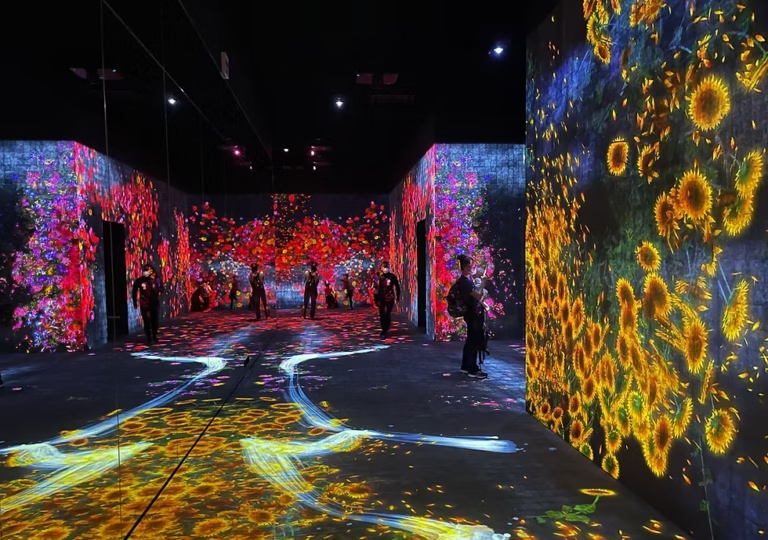
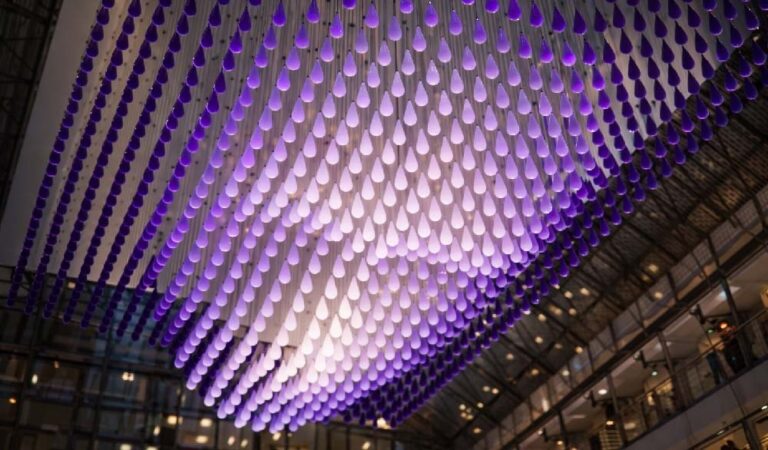
In kinetic installations, motion is never a neutral effect. It is the core behavior through which the work becomes legible in space. A kinetic piece may appear effortless to the viewer, but behind that apparent ease sits a highly specific motion system: a technical framework that determines how the work moves, how precisely it performs, how it ages, how it is maintained, and how convincingly it supports the artistic concept.
This is why motion systems matter so much in contemporary kinetic art. They do not simply animate a sculpture after the design is complete. They define the physical language of the work from the beginning. The quality of movement — whether calm or dramatic, continuous or episodic, responsive or predetermined — depends on the logic of the system beneath it. In practice, that means the motion system is not only a mechanical choice. It is a design decision, an engineering decision, and often an architectural decision at the same time.
For architects, developers, fabricators, and design teams working with kinetic installations, understanding motion systems means understanding how movement is actually produced. It means recognizing that different systems create different spatial effects, different operational burdens, and different constraints on scale, precision, safety, and maintenance. A suspended installation in an atrium, a wind-responsive sculpture in a plaza, and an interactive piece in a public lobby may all belong to the same family of kinetic art, yet the systems behind them can be radically different.
For SKYFORM STUDIO technical depth becomes essential. The choice of motion system affects not only how an installation behaves on opening day, but whether that behavior remains credible over time. It shapes the relationship between artistic intent and real-world performance. In kinetic work, movement is only as strong as the system that makes it possible.
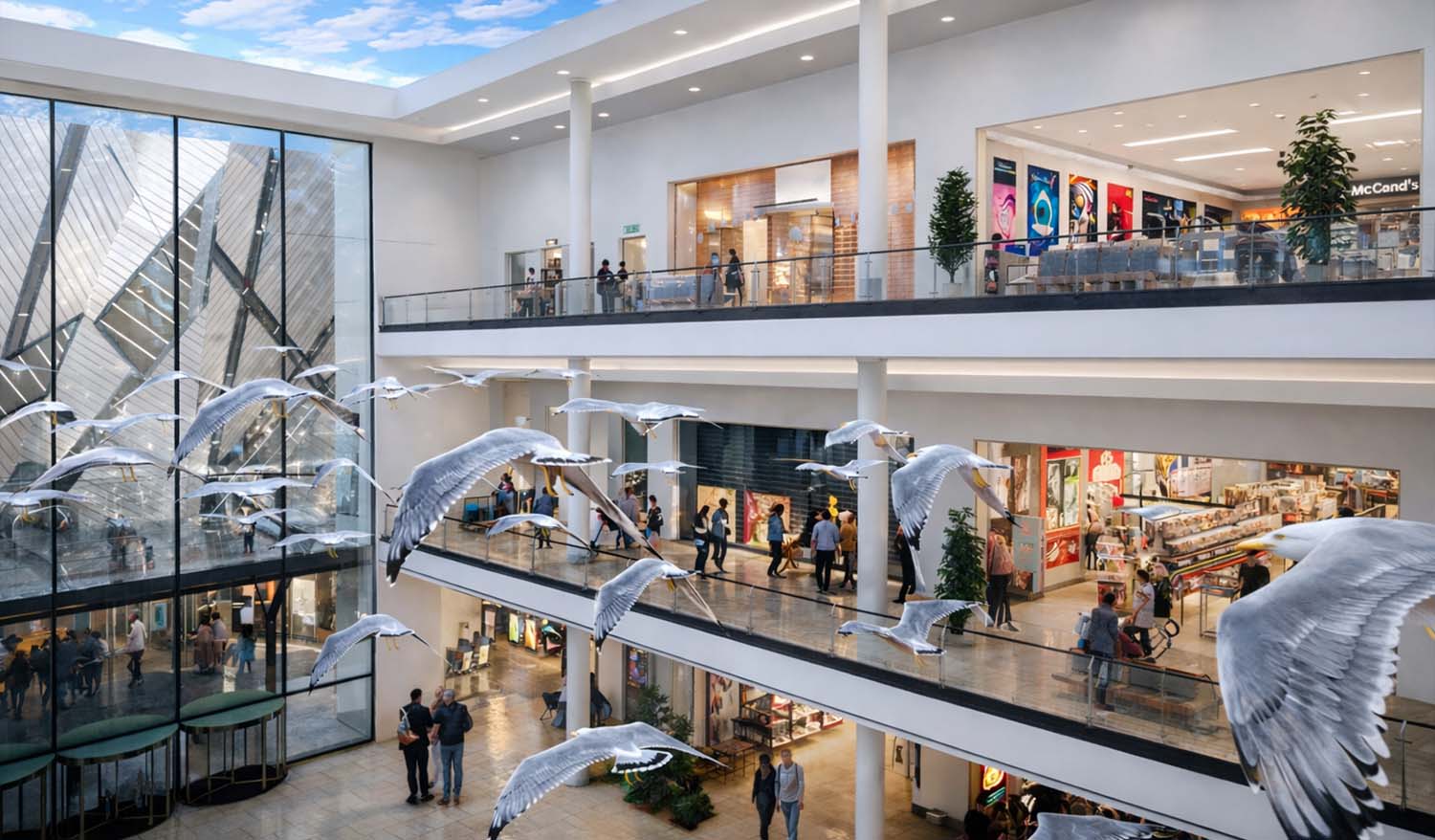
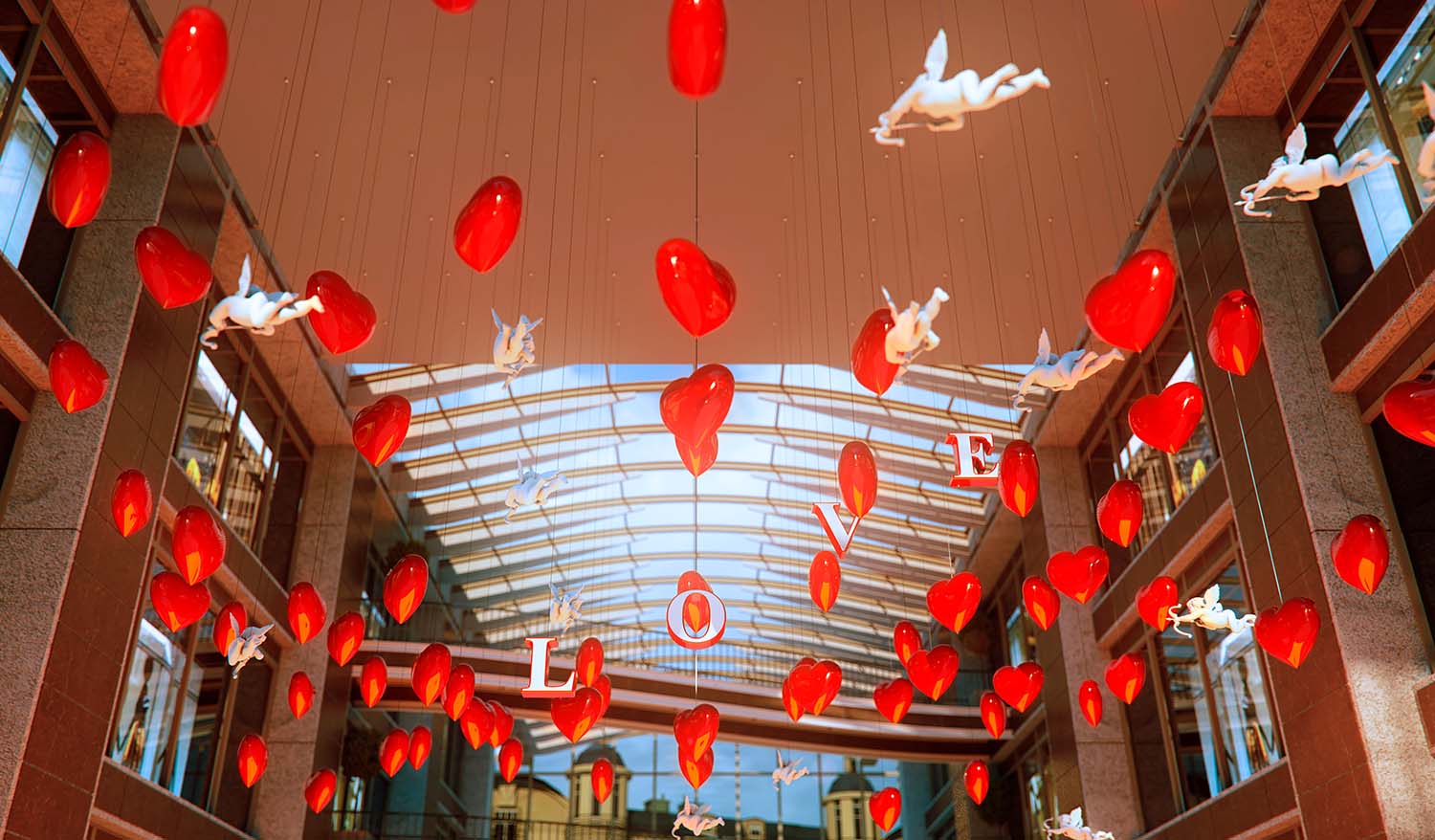
Motion systems are chosen by behavior, not by mechanism alone
One of the most common misunderstandings in kinetic design is the assumption that motion systems can be selected in a generic way, as though the project simply requires “a motorized solution” or “a kinetic mechanism.” In reality, the system is chosen according to the behavior the installation needs to achieve.
The first engineering question is not what hardware will be used. It is what kind of movement the work actually requires. Does the installation need continuous motion or occasional activation? Is the movement synchronized across many components or localized to one element? Should it be smooth and silent, visibly mechanical, environmentally reactive, or responsive to presence and data? Is precision more important than amplitude? Should the movement read as natural, programmed, architectural, or performative?
These decisions determine the motion system long before specific components are selected. A work based on subtle collective ripple will require a different system logic than a sculpture based on slow rotation, a shifting canopy, or a responsive hanging field. Some systems are appropriate for precision and repeatability. Others are better when the concept depends on variability or passive environmental response. This is why motion systems cannot be treated as interchangeable technical packages. They are part of the conceptual foundation of the piece.
The strongest kinetic installations are those in which the motion system and the artistic intent are inseparable. The viewer may never see the full technical complexity of the system, but they feel its consequences in the quality of the motion itself.
Direct-drive systems and controlled rotational motion
Direct-drive systems are among the clearest examples of motion logic in kinetic installations. In these systems, motion is transferred directly from the motor to the moving element without multiple intermediate translations. This can create smooth, highly controlled movement and is particularly useful where the artwork depends on precision, repeatability, and stable sequencing.
Direct-drive motion is often associated with rotational behavior: discs, rings, panels, blades, arms, and suspended elements that rotate on a fixed axis or within a tightly defined range. The main advantage of this approach is clarity. Because the system path is relatively direct, the motion can be easier to calibrate and the overall behavior may remain more predictable over time. In installations where quiet performance and clean synchronization matter, that control is especially valuable.
But direct-drive does not automatically mean simplicity. At larger scales, rotational elements generate significant structural and mechanical consequences. Even slow motion can create inertial loads, torsional stress, and long-term wear at bearings, shafts, and support connections. When the motion is distributed across multiple elements, calibration becomes more demanding. The smoother the installation appears, the more disciplined the alignment and tolerance strategy must be.
This type of system is especially useful in architectural interiors, suspended fields, and installations where movement needs to remain visually precise rather than visibly expressive. It often performs well when the artistic concept depends on disciplined choreography rather than irregular motion.
Linkage, cam, and translated motion systems
Not all kinetic installations rely on direct motion. Many require one kind of mechanical input to be translated into a different visible behavior. This is where linkage systems, cams, and other motion-conversion mechanisms become important.
These systems are used when the installation needs to transform rotational energy into lifting, folding, oscillating, opening, closing, tilting, or wave-like motion. In other words, the visible movement is not the same as the motion generated by the primary drive. A cam may create an irregular sequence or controlled timing pattern. A linkage may translate one rotational movement into multiple coordinated shifts. A lever-based mechanism may amplify or moderate a gesture depending on the desired visual effect.
This is a powerful approach in kinetic art because it allows the work to move in ways that feel more organic or conceptually specific than simple rotation. But it also introduces greater mechanical complexity. Every translated motion creates more interfaces, more friction points, more tolerance dependencies, and more opportunities for cumulative wear. Precision becomes harder to maintain because each connection affects the total behavior of the system.
For this reason, linkage-based and cam-based systems are often among the most demanding to prototype. They can produce beautifully expressive motion, but only when their geometry, resistance, and sequencing have been tested rigorously. A movement that seems elegant in a digital animation may become noisy, unstable, or visually unclear when built at full scale if the translation logic is not properly resolved.
These systems are often chosen when the concept requires a more articulate physical language — motion that unfolds, bends, ripples, or changes state rather than simply turns.
Cable-driven and distributed movement systems
Cable-driven systems are especially relevant in kinetic installations where movement needs to be distributed across many components or across larger spatial fields. Instead of relying on a compact visible mechanism at each moving point, cable systems can transfer force across distance, allowing motors or actuation equipment to be located away from the visible elements of the artwork.
This is particularly useful in suspended installations, ceiling-based kinetic fields, and works where visual lightness is essential. A cable-driven system can allow a sculpture to appear almost immaterial while the actual motion logic is concentrated in concealed support zones, control cabinets, or peripheral service areas. For architects and designers, this creates a major advantage: the visible artwork can remain spatially clean, while the technical density is displaced into manageable locations.
But cable-driven systems demand very careful calibration. Tension, stretch, friction, routing geometry, environmental effects, and cumulative tolerance all affect performance. In a large installation, even slight differences in cable behavior can produce uneven motion, timing drift, or inconsistent visual response. The challenge becomes even greater when many moving elements must stay synchronized across a distributed system.
These systems are often selected when the concept depends on floating behavior, vertical displacement, gentle lift, or the illusion of weightless transformation. They are powerful because they can separate the visual language of motion from the apparent location of the machine. But that same invisibility makes engineering discipline even more important. If cable behavior is not carefully resolved, the work can quickly lose the sense of effortlessness it depends on.

Pneumatic and fluid-responsive systems
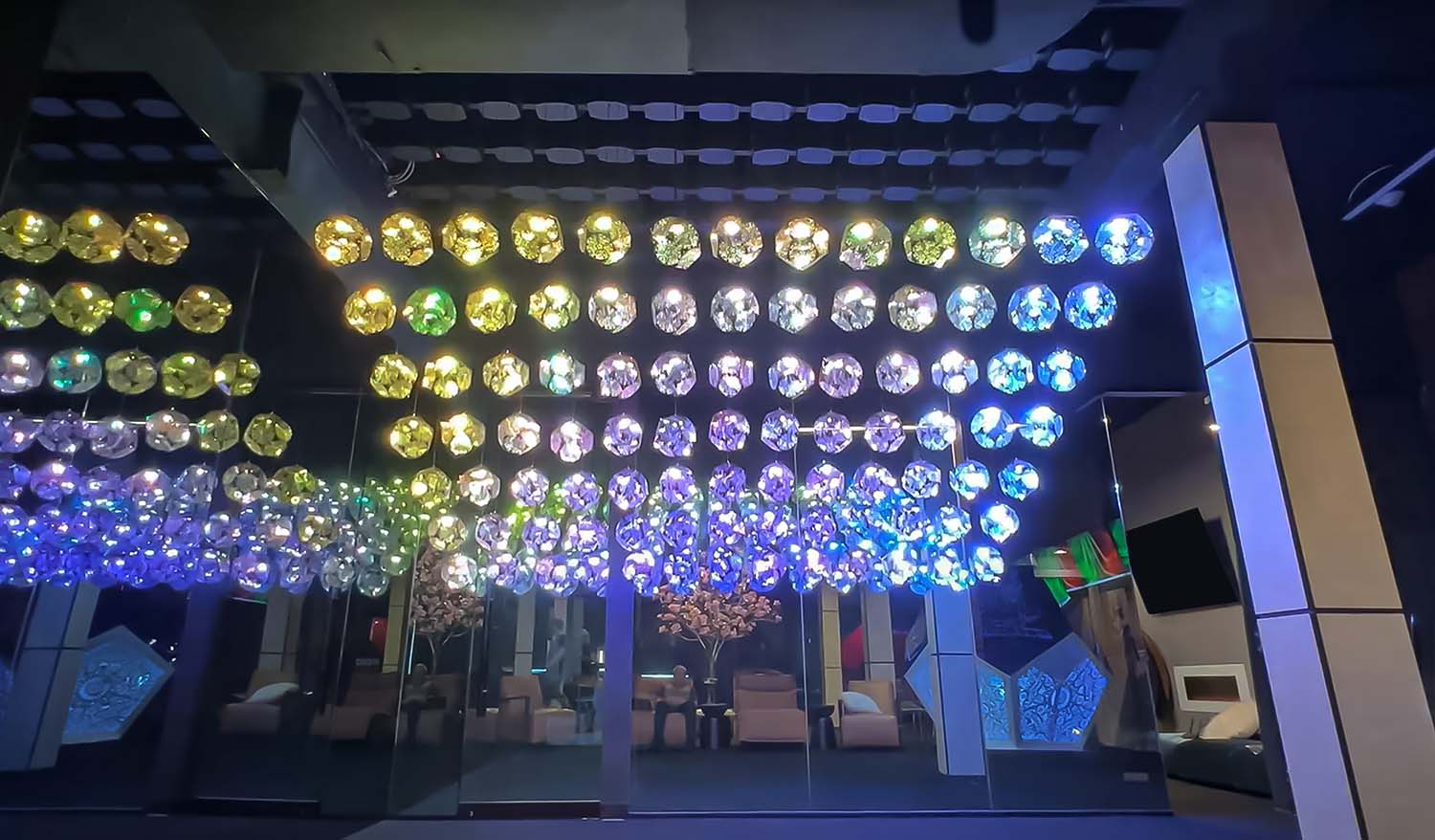
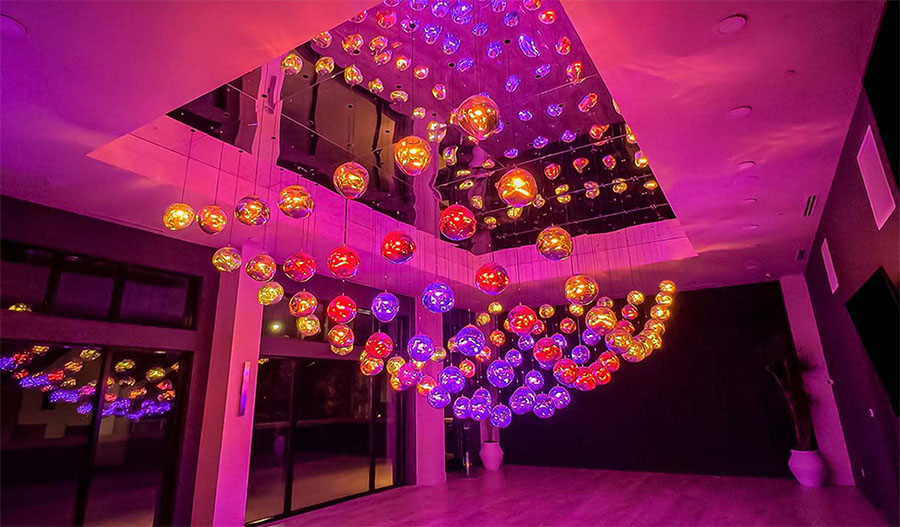
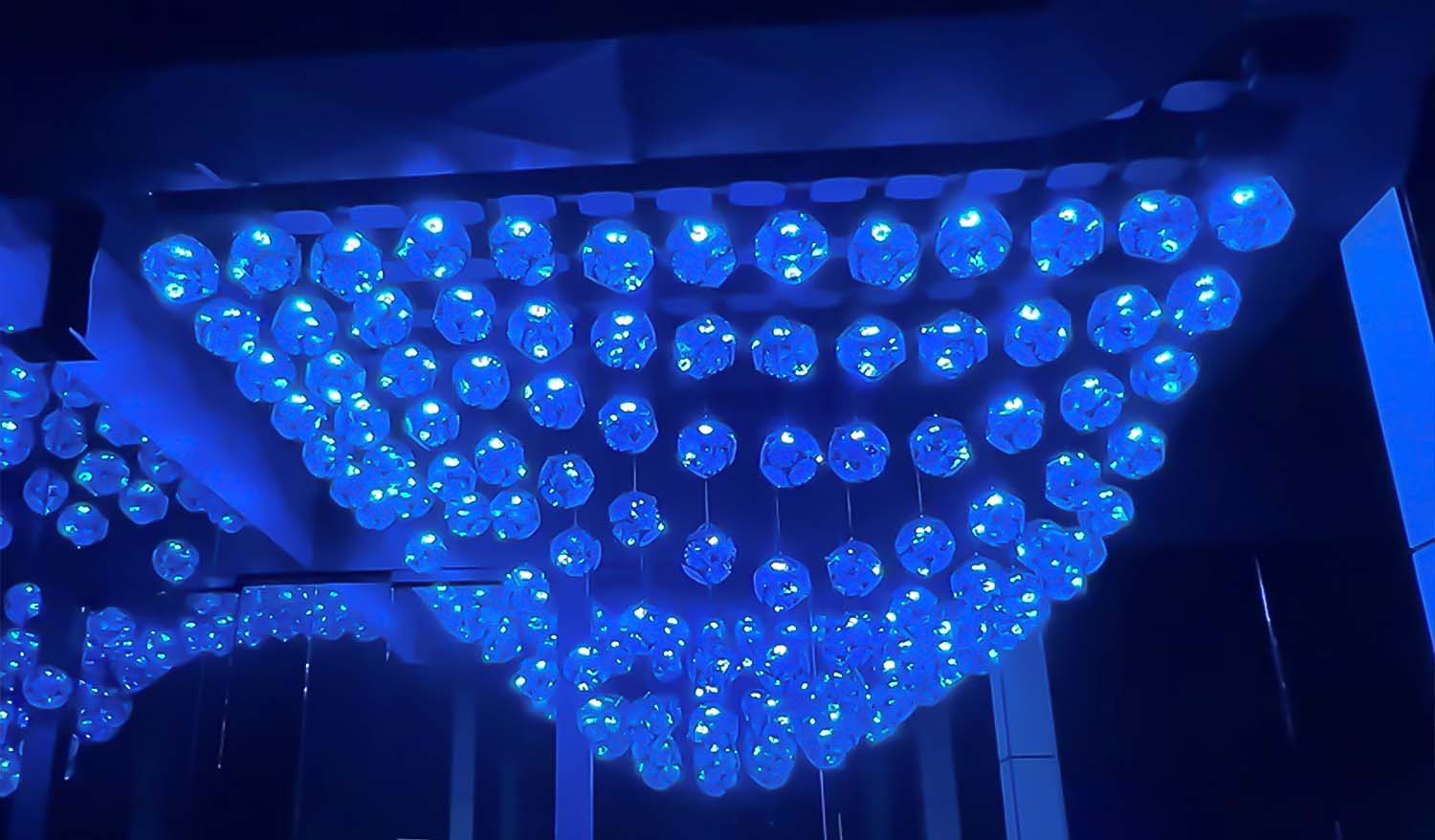
Some kinetic installations rely on pneumatic logic or fluid-based motion behavior rather than conventional rigid mechanical systems. These approaches are especially relevant when the concept demands inflation, soft deformation, pulse-like expansion, breathing effects, or more atmospheric motion qualities.
Pneumatic systems can create motion that feels fundamentally different from gear-driven or motor-rotated behavior. Instead of mechanical articulation, they produce shifts in volume, pressure, and surface tension. This can be especially useful in immersive environments or installations where the movement should feel less machine-like and more environmental, bodily, or atmospheric.
Fluid-responsive systems, including hydraulic logic in some cases, can also be used when force transmission, damping, or controlled resistance is central to the behavior of the work. But these systems are usually more demanding in terms of maintenance, sealing, pressure management, environmental stability, and operational reliability. They are rarely chosen unless the specific behavior they create is essential to the concept.
In large-scale public or permanent installations, these systems require a very careful balance between effect and serviceability. A visually compelling pneumatic behavior may not be the right long-term choice if environmental dust, temperature fluctuation, moisture, or maintenance access compromise the system’s performance. This is why the presence of a technically interesting motion logic is never enough on its own. The system has to be appropriate not only for the movement, but for the lifecycle of the work.
These motion systems are often most successful when the project needs a softer or more atmospheric kind of motion that cannot be achieved convincingly through rigid mechanical articulation.
Passive systems: wind, gravity, and environmental response
Not all kinetic installations are actively powered. Some of the most compelling motion systems are passive, relying on wind, gravity, balance, or other environmental forces to generate movement. In these works, engineering is not focused on driving motion through continuous actuation, but on designing a structure capable of responding to the environment in controlled and meaningful ways.
Wind-responsive sculptures are a clear example. The installation may appear freely animated by air movement, but in reality the range of motion, pivot behavior, balance point, damping, material flexibility, and structural support all have to be engineered very carefully. Without that precision, environmental response becomes either too weak to read, too erratic to remain legible, or too severe for long-term durability.
Gravity-based systems can be equally sophisticated. Counterweights, pendular motion, rebalancing systems, and slow-return mechanisms can all create movement without constant energy input. These systems often produce elegant, low-energy motion, but they depend on extremely disciplined mass relationships and carefully controlled tolerances.
Passive systems have major advantages. They often reduce power demand, simplify certain infrastructure requirements, and create a stronger relationship between the work and its site conditions. But they also introduce less predictability. A passive outdoor installation may behave beautifully in one weather band and almost disappear in another. That makes environmental response both an aesthetic asset and an engineering challenge.
These systems are most successful when variability is part of the concept itself. If the artwork depends on exact repeatability, a passive approach may be too unstable. But if the intention is for the work to respond to climate, atmosphere, and natural change, passive motion can create a uniquely site-specific form of kinetic experience.
Sensor-driven and interactive motion systems
Interactive installations introduce another layer of motion logic: responsive behavior. In these works, the movement is not merely pre-programmed or environmentally driven. It responds to presence, proximity, sound, movement, data, or other forms of input. This shifts the engineering task from motion generation alone to motion interpretation.
Sensor-driven systems are therefore not just mechanical systems with an interactive overlay. They are hybrid frameworks combining actuation, sensing, control logic, input filtering, behavioral rules, safety conditions, and often media coordination. The motion is only one part of the total system. The real engineering challenge lies in making the work respond in a way that feels intentional rather than reactive in a crude or literal sense.
This is more difficult than it may appear. Public environments are unpredictable. Sensor data can be noisy. Users behave irregularly. Inputs may overlap or trigger conflicting responses. Without carefully designed logic, interactive motion can become jumpy, repetitive, chaotic, or visually exhausting. The work may technically respond, but fail to create a compelling experience.
The best interactive systems are often those in which the responsiveness feels composed. The installation acknowledges presence without becoming mechanically subservient to every signal. This requires careful control engineering, because the system must translate raw input into behavior that still feels artistic, legible, and architecturally appropriate.
Interactive motion systems are especially powerful in cultural buildings, public lobbies, immersive installations, and experiential environments where user engagement is central to the concept. But they demand more than sensors alone. They require a motion system that can respond with intelligence, consistency, and long-term reliability.



Synchronized multi-element systems
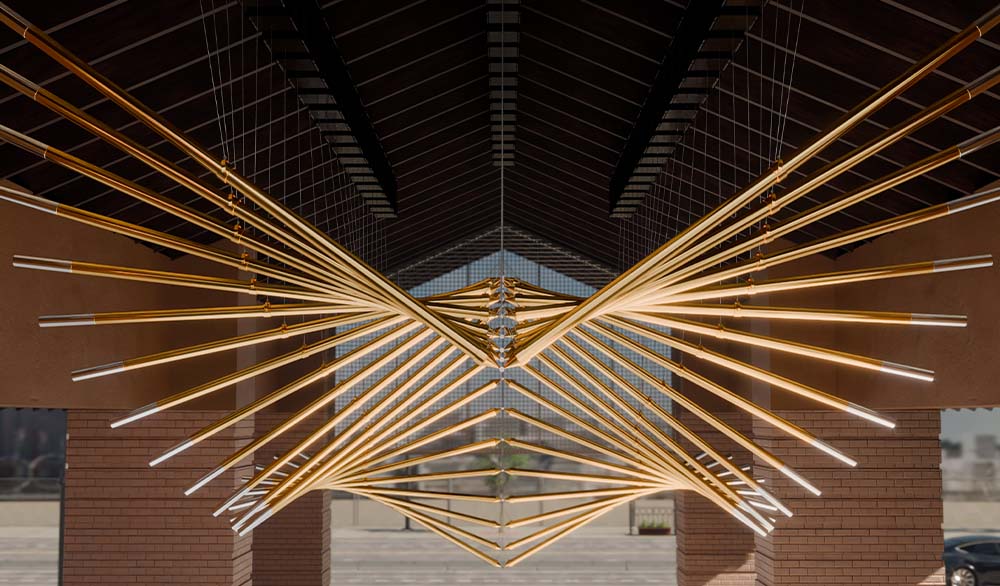
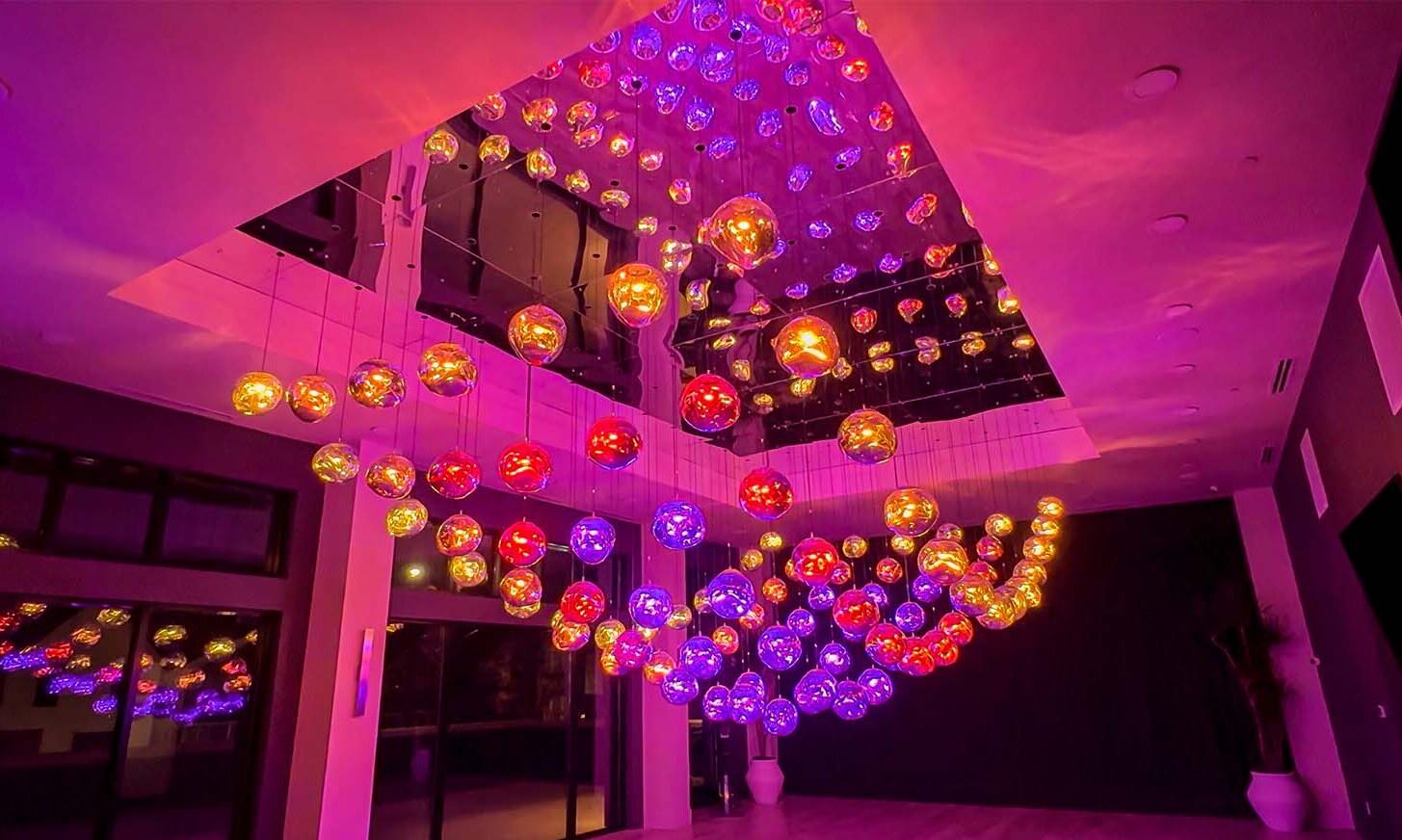
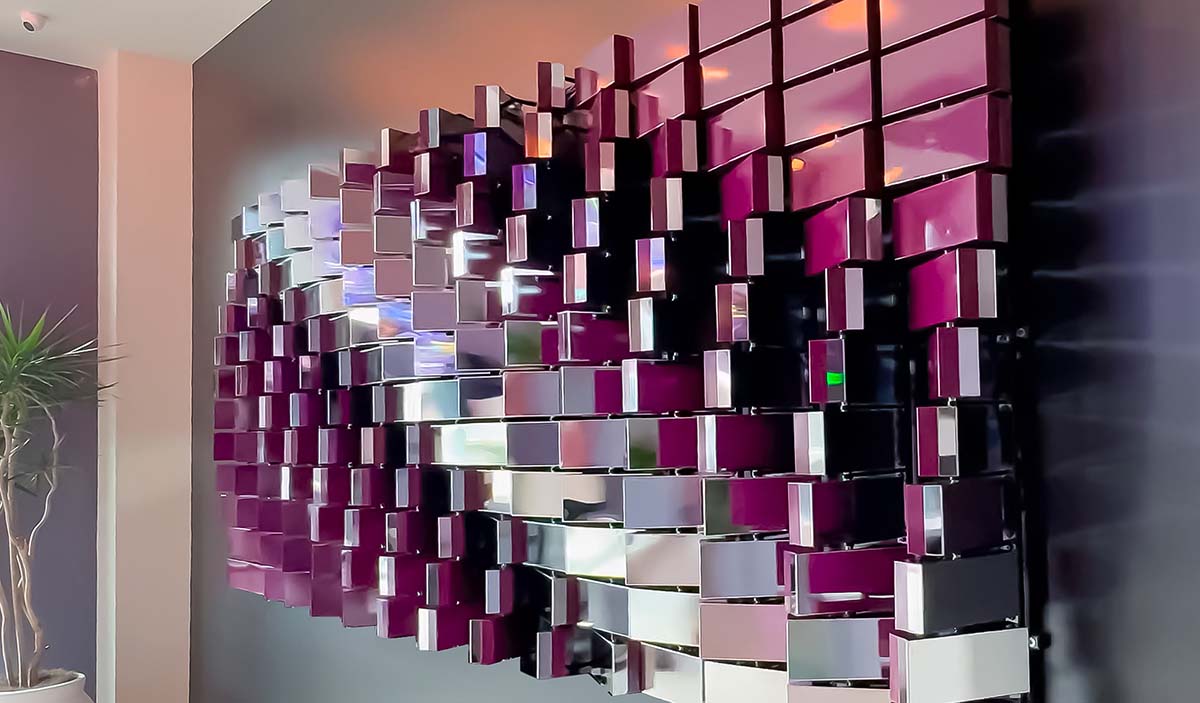
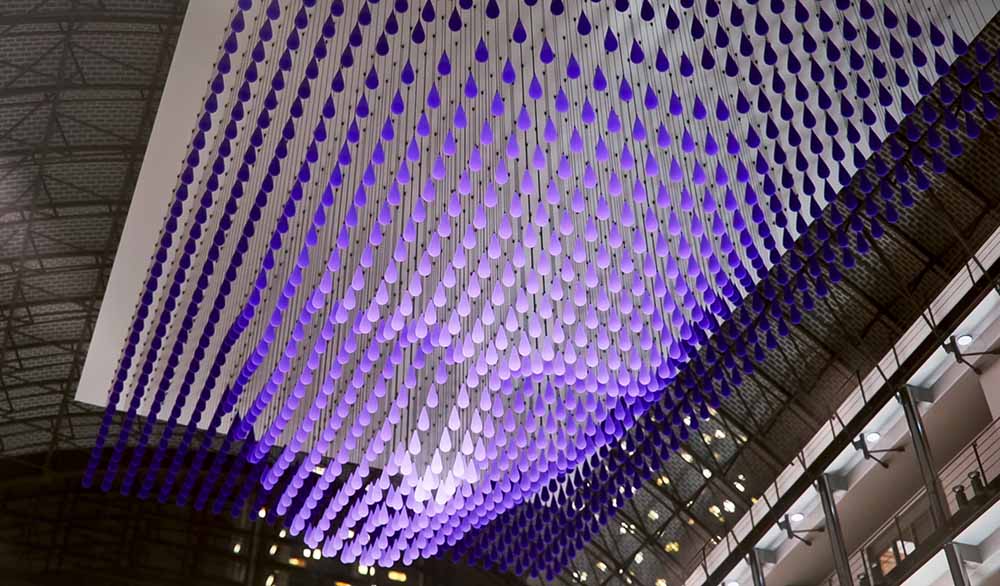
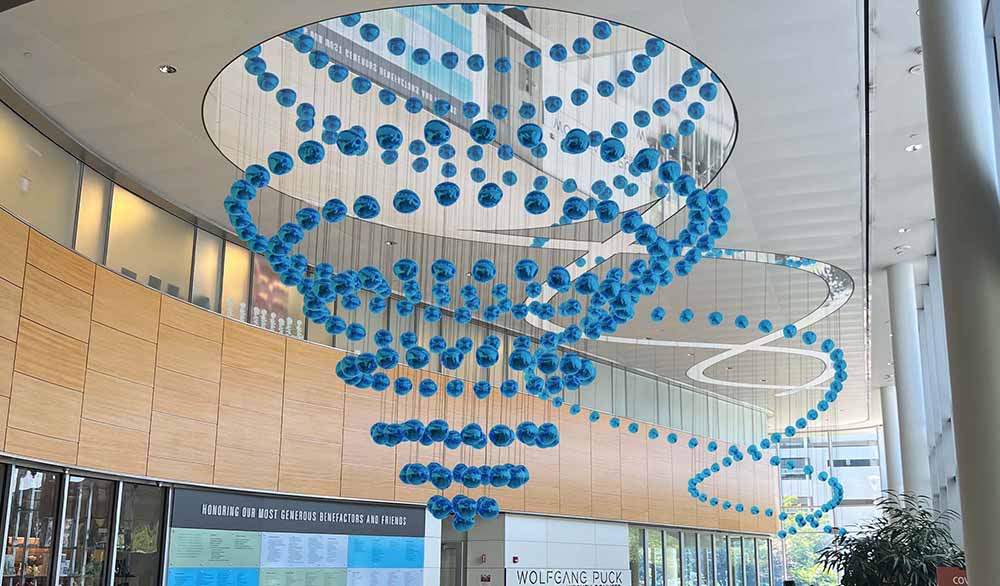
Many of the most visually ambitious kinetic installations rely not on a single moving part, but on large arrays of coordinated components. In these works, the motion system is not about one mechanism. It is about orchestration across a field.
This introduces a major engineering challenge: synchronization. Multiple moving elements may need to start, pause, accelerate, change state, or return in highly disciplined relation to one another. Even very small discrepancies in timing or alignment can weaken the overall effect. What is perceived by the viewer as fluid collective motion may depend on an extremely demanding system of sequencing, control, calibration, and fault tolerance.
These systems are common in suspended kinetic ceilings, responsive canopies, media-integrated installations, and sculptural fields where the behavior of the whole is more important than any single element. The engineering challenge is not only how to make each part move, but how to make the entire field read coherently across time.
In practice, this often requires deeper coordination between mechanics, controls, fabrication tolerances, installation procedures, and commissioning sequences than more localized motion systems. The larger the installation, the more important it becomes to think about how motion quality survives escalation in scale. What works beautifully across five elements may become unstable or hard to maintain across one hundred.
This is one reason realization strategy matters so much in multi-element systems. If the control architecture, calibration logic, or service access are weak, the installation may quickly lose the synchronized quality on which its spatial effect depends.
Motion systems must be designed for maintenance, not just performance
A motion system is successful not because it moves convincingly in a prototype or at opening, but because it continues to move convincingly over time. This makes maintainability one of the defining criteria in motion system selection.
Different systems carry different service burdens. A highly precise driven mechanism may offer beautiful motion, but require tight maintenance cycles. A cable-distributed system may preserve visual lightness while increasing calibration demands. A sensor-driven responsive installation may create an engaging public experience while adding complexity in fault diagnosis and control behavior. A passive system may reduce energy input while making environmental performance harder to predict.
For this reason, the “best” motion system is never chosen in abstraction. It is chosen within the realities of the site, the client’s operational capacity, the environment, the intended lifespan of the work, and the performance expectations built into the concept. A system that is ideal for a museum installation with dedicated technical oversight may not be appropriate for a commercial public space with limited servicing windows. A motion logic that works beautifully indoors may become unsustainable outdoors.
In serious kinetic design, maintenance is not a technical afterthought. It is part of the motion system itself. The engineering question is not only how the installation moves, but how that movement is preserved.
Choosing the right system means choosing the right kind of movement
What ultimately matters in kinetic installations is not whether the system is technically impressive, but whether it produces the right kind of movement for the work, the site, and the intended experience. A more complex motion system is not inherently better. In many cases, restraint produces stronger results.
The appropriate system is the one that aligns concept, environment, reliability, serviceability, and spatial effect. It is the one that gives the sculpture or installation the right behavioral character — whether that means calm continuity, reactive intelligence, atmospheric variability, disciplined sequence, or subtle transformation.
This is why motion systems are so central to kinetic art. They are not hidden technical support beneath an artistic surface. They are the means through which the work thinks, moves, and exists in space.
Contact Us
Ready to develop a kinetic installation with the right motion system? Explore our portfolio or contact the SKYFORM STUDIO team to discuss your project.
In kinetic installations, movement is not an added effect — it is the core behavior that defines how the work is perceived in space. The choice of motion system shapes precision, reliability, maintenance, and the overall spatial experience, making it a fundamental design and engineering decision .
At SKYFORM STUDIO, we design and realize kinetic installations through an integrated process that connects motion logic, engineering, fabrication, and implementation. This ensures that each system is not only visually compelling, but also technically precise, durable, and aligned with real-world conditions.
Author of the article